Follow Us on Google
From Scholastica Hir, Makurdi
The Nigerian Institute of Town Planners (NITP) has called for an efficient urban crisis response in urban areas to improve livability standard of the people.
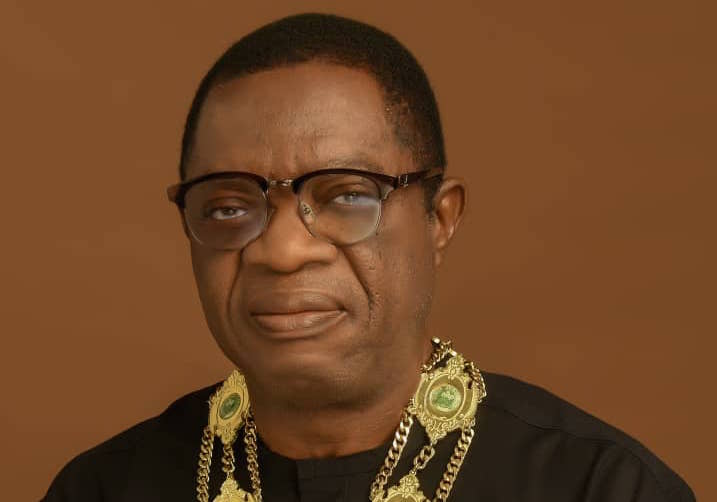
National President of NITP Ogbonna Chime made this call as part of message to celebrate the 2025 World Habitat Day which holds every October 6.
Dr. Chime noted that the theme for this year’s celebration which is “Urban Crises Response” is very apt, as it directs attention to critical area of sustainability in human settlements development.
According to him, it is only when urban areas are crises free, that livability standard can improve.
He said the institute have observed that urban spaces as engines of development and management are key activators of the urban economy, as well as Gross Domestic Product (GDP).
He stated that “Urban crisis are multidimensional and include social crisis; over population, congestion, social unrest, slum formation and health deficiency, environmental crisis like climate extreme events.
“Others are waste management, land degradation, natural hazards, desertification, heat waves, flooding, fire disasters and pollution and economic including market failure, urban poverty, deterioration of urban services, limited financial capacities of urban dwellers and municipal government to meet up with living standard and others.
He also noted the drivers of such crisis include large scale influx, and the demand for land for infrastructure such as housing, road, rail, drainage system, schools and health care services, development adding that a great number of urban dwellers are vulnerable and at risk of these crisis as a result of increased urbanization without adequate service provision.
He also observed that responses to urban crisis over the years are reactive, rooted in the form of public interventions, private sectors’ initiative and some global agenda such as the Sustainable Development Goals.
The NITP President recommended that for an efficient urban crisis response, there was need for context specific and coordinated urban management strategies which are rooted in the socio-economic realities rather than imported ideas to ensure proactive and preventive responses to urban crises, not just reactive responses.
“There is an urgent need for managers of cities and urban areas to ensure that all types of physical development plans are prepared as this remains critical in order to effectively respond to urban disorders.
“There should be co-creation of knowledge and co-design of solutions in managing urban anomalies must be done with all stakeholders. This will allow inclusion, community engagement and prioritization of municipal and local government capacities in managing urban crisis.
“Private sector partnership should be strengthened for provision of urban services and management.”
He said the Institute believes that the public should continuously be carried along in initiating policies, laws, activities, and programmes that are directed or related to the management of urban problems expressing confidence that only then that the residents, as well as all stakeholders in Nigerian cities can live in crisis free setting.