Follow Us on Google
From Isaac Anumihe, Abuja
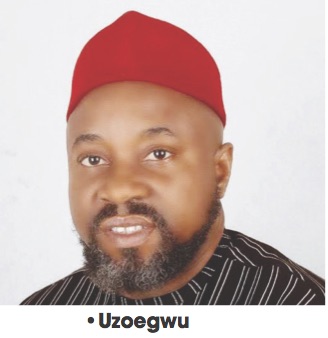
“Power privatisation is not working. We’re still hovering around 4,000 megawatts when we should be doing over 10,000 megawatts by now. Let’s return to the status quo”. These are the words on the lips of Martin Uzoegwu, the President, National Union of Electricity Employees (NUEE) as he tackles the Power Minister, Adebayo Adelabu over lingering issues in the sector.
However, altercation seems to have simmered down after the two parties met recently.
Trouble started when the Minister recently threatened to engage the National Security Adviser (NSA) to man the electricity assets across the nation and insulate them from vandalism. But the statement did not go down well with the members of the union who felt neglected by the new minister in the scheme of things.
So, they threatened to withdraw their members if the minister made good his threats.
According to Uzoegwu, the sight of security operatives will create fear and destabilise the workers. He said that the minister should have secured their nod before making the statement.
The meeting, which held at the instance of the minister, exposed a lot of other issues, which include; 16 months severance package which has remained unpaid for 10 years; salary disparity between the expatriates and the local engineers, as well as non-unionisation of workers in the generation companies.
Daily Sun exclusively conducted the interview immediately after the closed-door meeting.
What was the outcome of the meeting with the minister?
We are here on the invitation of the minister as stakeholders in the power sector following some of the issues that we raised affecting the power sector which have been discussed extensively with the minister. Part of the discussion was the outstanding 16 months severance package which the government is yet to pay workers after they were disengaged over 10 years ago.
We also discussed the non-unionisation of workers of the generation companies (GenCos) and also the issue of privatisation which we believe needs to be revisited. For over 10 years since the private sector was privatised, we are still hovering around 4,000 megawatts. We expect that by now we should be talking more than 10,000 megawatts.
The issue of welfare in the power industry was also discussed and asked that the minister in his capacity should take it as something that he has to do so that the workers there can benefit from his goodwill. The issue of power pricing also came up, especially gas pricing performance in the generating stations and distribution stations, funding of the power sector, skilled and unskilled in the power sector especially the investors who bought these industries. We then talked about allowing the transmission companies to remain under government control. We learnt from the grapevine that they are planning to privatise the Transmission Company of Nigeria (TCN). This should be a no-go area because the experience that we had in the privatisation of the distribution and generation companies is very traumatising and up till now, we have not been able to come out of it, so we should not be talking about privatising TCN.
The minister equally gave us his word that the transmission company will be privatised under his watch, but that they can do a reform which is still under the government control between the market operator and system operation. The minister said that he wants us to work as a team and bring in every issue we have to his attention so that we can address it because he is open to every communication. He wants us to have a harmonious relationship and for us to make sure that we assist him to improve his target as the minister in the power sector. For us as stakeholders, we equally need to work as a team. It was a fruitful meeting and we believe that the minister came with an open mind. Though we expect a lot from him, we told him how we can pilot the affairs of the Ministry of Power for him to succeed and we are ready to work with him as long as he is equally ready to work with us
What do you proffer as the way forward to have a regular power supply for Nigerians?
There are lots of issues in the power sector. It’s something the minister needs to sit down and understudy. We have issues that have to do with generation and we should look into that direction to see how he can improve it. He has to look at how he can change bad equipment, units that are not working need to be replaced. For those areas that have been privatised, he has to talk to those who bought them to fund them so that they can have increase in generating power.
We equally talked about the distribution angle which is an area that needs funding. Though the government has put in more than N2 trillion in that sector, he has to be able to talk to those investors who are owing the distribution companies to be able to invest more especially in infrastructure, meters, transformers and so many other areas so consumers can feel the impact of government. We discussed transmission expansion, collaboration and expanding the value chain.
We suggested quarterly engagements to enable us analyse some certain issues that could come up at the end of the day so that if there are challenges, we can nip it in the bud before it escalates. We brought up the issue that has to do with incessant sacking of workers without due process especially at the distribution, of which the minister promised to address, promising that such will not happen under his watch.
On the issue of 16 months severance package, he said that he is going to take it up and find out what has really happened and then start from there. I believe that with what we have discussed we have set a pace for him and I believe that if he is able to apply this approach then he can make progress in the Ministry of Power.
Disparity of salary between local employees and foreign workers.
The minister told us that he is going to look into it because he believes in the local content. What we noticed is that most times, people who don’t have capacity to manage the industry are paid better than those who are running the industry. This is an aberration because it demoralises workers who have been there for ages and who have the capacity to even maintain the grid. So, we believe that if they were able to pay the people that they employed, whether they call them expatriates or those that came with higher qualifications that use laptops without putting much effort, then they should be able to look at those who are doing this job and improve their salary. Once people are happy, then it will help them to improve in whatever thing they are doing. That’s the message we are trying to send to the minister, that people are demoralised because of the salary disparity especially at the distribution level.
Why did previous administrations send in security operatives at the slightest crisis?
It was one of the issues that necessitated this meeting because we heard a comment that he made somewhere when he went for a programme talking about involving NSA into the structures of electricity industries and we felt that as a new minister, he should study what is on ground and interact with the stakeholders especially the workers to understand the actual problems. We frowned at such words but he has been able to explain that he never meant it that way, saying that he was talking about infrastructure which had been vandalised, especially those ones that are not within the power locations.