Follow Us on Google
By Gabriel Dike
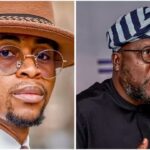
President, Institute for Governance and Economic Transformation and former deputy governor, Central Bank of Nigeria (CBN), Prof. Kingsley Moghalu, has advocated a reform of the nation’s public education system.
Moghalu, presidential candidate of Young Progressives Party (YPP) in the 2023 general election, said there was no alternative but to reform Nigeria’s public education system and make it world class.
He spoke at the fifth Arthur Mbanefo Lecture, titled “Education and National Development: Meeting Nigeria’s Challenge in the 21st Century,” held at Arthur Mbanefo Digital Research Centre (AMDRC), University of Lagos, Akoka.
His words: “We must return to education as a national priority, and to education that has a clear objective and purpose. No country in the world has risen with a reliance on private sector educational institutions alone. The reason is obvious: private education is expensive, and only a tiny percentage of citizens can afford it.
“Education is a fundamental human right. If that right is to be respected, then education must be a national public good – accessible, qualitative and affordable. This is the path to Nigeria’s rise in the 21st century.”
Moghalu disclosed that Nigeria was urgently in need of educational policy that could enhance its human capital, make it globally competitive and bolster it’s standing within the global community.
According to him, this kind of education must prioritize access and quality by emphasizing literacy, skills and national values, adding that the country has suffered a massive, progressive collapse of values over the past several decades.
He said the situation has persisted because the nation have taken its eyes off the ball of education, which is the foundation upon which every society rises or falls: “the progressive loss of respect for ideas and education as a value naturally extended to a loss of priority for education as a national priority, as the national focus shifted to the effects of Nigeria’s resource curse from the oil boom – easy money and illicit wealth from rent-seeking activities.”
Moghalu explained that the domino effect of the decline in values was felt in the death of a drive for access to education and the quality of education.
“As the private sector became increasingly involved in education through the establishment of both elite and pseudo-elite private schools, Nigeria’s public education system increasingly faced a struggle for survival and relevance,’’ he observed.
He acknowledged that the nation does not lack education policy but implementation, which has always been a big weakness, noting, “even the policies we have are out of date and out of place, if we seek to transform Nigeria to become a nation, not just a country, to become a global power and not just a potential power.’’
The presidential candidate said: “We can do it. Just look at how our compatriots thrive in foreign lands where the right philosophies drive education, making it a true national priority in terms of purpose, strategy, and investment.”
He stressed that, given the rapidly evolving global landscape and the increasing importance of technology, science, entrepreneurship, and teacher training in driving economic growth and innovation, Nigeria must realign its education curriculum, particularly at the tertiary level, to prioritize these areas.
Moghalu said the reform must include allocating 70 percent of the curriculum to technology, science, entrepreneurship, and teacher training, Nigeria could better equip its youth with the skills and knowledge needed to compete in the 21st-century economy, foster entrepreneurship, and improve the quality of education across the board.
Said he: “I also recommend that ethics becomes a compulsory subject in the education curriculum in Nigeria at both primary (in a simplified and elementary form) and secondary school in a more comprehensive form. This will help achieve the educational objective of creating good and responsible citizens.”