Follow Us on Google
• Neglect of technical education hurting nation’s industrialisation drive
By Oluseye Ojo
For decades, Nigeria has measured education success by certificates, not competence, which is a choice now haunting its economy.
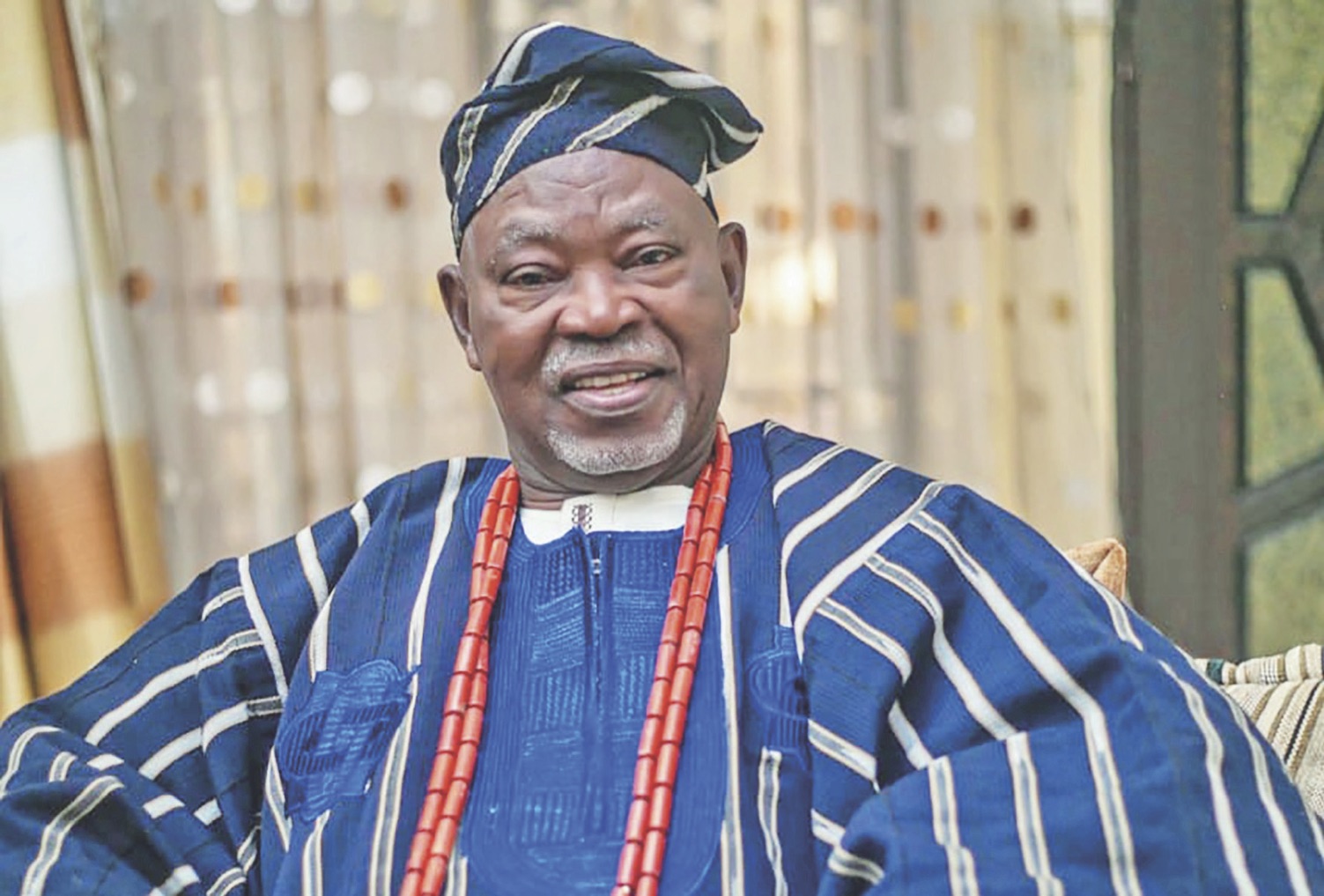
But to Senator Ayoade Adeseun, a chieftain of the All Progressives Congress (APC) in Oyo State, the neglect of technical education is no longer a policy gap; it is a national emergency.
In this interview, the former local government chairman and ex-member of House of Representatives, warns that a country that produces graduates without practical skills cannot industrialise, reduce unemployment or compete globally.
Drawing from his legislative experience and role in establishing a federal polytechnic in Oyo State, Adeseun argues that unless Nigeria urgently prioritises technical and vocational training, its economic future will remain dangerously fragile.
How can Nigeria leverage its demographic dividend to catalyse a tech-driven economic transformation?
One of the things that I think we’ve been missing in the Nigerian economic space is people with technical skills.
It seems to me that in this land, for a long time, we had Ghanaians doing carpentry, building construction, and all sorts of things that are technically orientated. But after a while, they just disappeared. The minute the Ghanaian economy started to improve, they left. Here, we don’t seem to follow people who have a technical bias. And we’re not talking about trade schools.
We’re not talking about technical colleges. We’re talking about the higher level of personnel formation that can now turn around and help reorient our society.
When you go to a regular tertiary institution, people in those days used to think that after you’ve completed your university education, the next thing is they will give you a car, a house, and all that.
Those things are gone. Our system should now be reoriented towards creating individuals who can actually create opportunities, create jobs, manage those jobs. And then the world is becoming a technological world.
If we don’t have people who are brought in to train in those kinds of technologically-orientated institutions, naturally, we’re lagging behind the rest of the world.
I must say that technical education is not just about learning how to operate machines or acquire manual skills. It is about building a productive workforce, promoting self-reliance, reducing poverty and driving sustainable economic growth.
For decades, Nigeria has placed excessive emphasis on paper qualifications, while paying insufficient attention to skill acquisition.
The result is a growing army of graduates without employable skills, alongside industries struggling to find competent technicians, artisans and middle-level manpower.
Is the need to promote technical education, what motivated you to champion the establishment of the Federal Polytechnic Ayede?
During my first time in the House of Representatives, I belonged to the House Committee on Education. And I was privy to a study that was carried out by the federal government through the Federal Ministry of Education to ascertain the status of educational institutions throughout the country. And in that report, it said where institutions were located.
In some states, there were two or three federal institutions. In Oyo State, there was only one, which is the University of Ibadan (UI). In fact, the University of Ibadan was the very first university in Nigeria. It was the arm of the University College of London.
In 1948, it was established. And I said, ah, as prominent as the University of Ibadan had become, to say that we don’t have any other federal educational institution in Oyo State is scandalous. We now said, wherever there was a federal institution that belongs to the federal government that’s conventional, which is a regular university, it should then have another one that’s technically oriented.
So, I started thinking, if there will be the possibility of a technical educational tertiary institution in Oyo State, then I had a duty to do what I could to attract that institution to my community.
The work of a legislator, principally the first one is to legislate, to make laws for the good governance of society. The second one is to represent your community, is to bring good things for them, to be their defender, and to help improve their lot.
The third one is oversight; that is, to ensure that good, better entities are serving the communities as well as they should.
So, that part of my obligation to improve the lot of my people was my focus in trying to bring that institution.
What I did was, I got to work. I didn’t finish it the first time. It dovetailed into the second term. In the second term, I took the bull by the horn, secured that institution for my community, decided what community, what village, what town it was going to be located at, and when it was to be established.
What I am looking at is for our people to be educated in the right disciplines, especially in areas relevant to both international and national development. I wanted to use that to change the mindset in Ogbomosoland.
Fortunately, we fought that battle when I was in the National Assembly, and it was very tough. But I read something in the last two months where the current Minister of Education announced that polytechnics will now begin to award degrees. That means the dichotomy will be phased out. They will only adjust the curriculum to align with the new direction.
If you are technologically oriented, you should go to a technological institution. If you are inclined toward reading and theoretical work, then you can go to a conventional university. But things are changing now.
Once polytechnics begin to award degrees, the issue of placing HND holders on a different classification from university graduates will stop. You will see more students going to technologically oriented institutions because that is where you acquire practical skills.
Before you even graduate, you already have skills you can use to fend for yourself and your family, even before taking up government appointments.
You can see what is happening globally. The Chinese are coming to Nigeria in large numbers to establish industries and factories. Many of the foreigners we see — Chinese, Indians, Germans, are technologists.
Most of them are not engineers in the administrative sense; they are hands-on creators and builders.
If we orient our people in that direction, the future of Nigeria will be remarkable. That is part of what we are trying to achieve.
So, it is a welcome development that the HND dichotomy will be scrapped. OND will continue as a foundational qualification, while polytechnics award degrees. I love that idea.
After that, graduates can still proceed to universities for MBAs or master’s degrees. The curriculum would have been structured to accommodate such progression.
Now, talking about my motivation for Ayede Polytechnic, once I secured the approval, I came home looking for land to site the institution. From day one, I made up my mind that it would not be located inside the town.
With my academic background in Urban and Regional Planning, I wanted it situated in a rural setting to decongest the city and drive development outward. So, I began searching for a suitable location.
Fortunately, during one of my earlier campaigns, I visited Ayede village. Unknown to me, the Oba of the village was someone I already knew. He was my former secondary school Physics teacher, Mr. Adewuyi, who had become the Alayede of Ayede.
He recognised me immediately and called me by name because he liked me as a student, and I liked him too as a teacher, though Physics was my weakest subject.
Ironically, Physics was the only subject where I had a P7, despite finishing with Division One overall. I had misread a compulsory question during the exam. I left the hall early, confident I had done well, only to later realise I had answered the question wrongly. It was my fault, not the teacher’s. So, it never diminished my respect or affection for him.
Years later, I met him again now as a king in that small village. He told me, “Don’t campaign here. Anybody who likes me in this area will vote for you. Just go.”
So, I didn’t campaign there or give anyone money. On election day, they voted massively for me, almost exhausting the voters’ register.
I went back to thank him and said, “By the special grace of God, I will surprise you, sir.” I didn’t even know how I would do it then. The first thing I later did was build a community hall in the village for him.
When the opportunity for the institution came, I went to the late Soun of Ogbomoso a man of pleasant memory, deeply committed to his people and very approachable.
I said, “Kabiyesi, I am bringing a federal institution, but it will not be in town. I want to site it in Ayede.”
He asked why, and I explained that concentrating everything in the city centre would create congestion like Lagos.
He said, “God will bless you.”
Other News
I returned to Ayede and told the king, “Kabiyesi, I have brought the big project I promised you. Do you have land?”
He said, “Of course. How many acres?” I said, “About 100 acres.”
He immediately instructed one of his chiefs to show us the land. I visited with some of our people, including Senator Buhari and others. We identified the site, conducted surveys, and completed documentation.
I took everything back to Abuja, secured federal approval, and got budgetary allocation about half a billion naira around 2010/2011.
We later held a stakeholders’ meeting in Ogbomoso. The late Soun was represented by senior chiefs, led by Aare Ago. Governor Adebayo Alao-Akala was also present. We deliberated extensively on the project.
As my tenure was ending and construction had not started, I appealed to the monarch and stakeholders to ensure continuity.
That was how the Ayede Polytechnic project was sustained.
At a point when I was no longer in office, there were attempts by a minister from Oyo State to relocate the institution, but that move was resisted.
Today, the institution is doing very well. They have graduated two sets of students already.
We are preparing for another convocation ceremony scheduled for Wednesday, March 11, with Dr. Zacch Adedeji (Executive Chairman, Nigeria Revenue Service) as the keynote speaker.
The whole world can now see that this is an APC achievement and I remain the brain behind it and the principal facilitator.
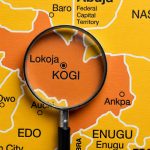
In respect of the recent bandit attack on Oloka village office of the National Park Service, what security measures can prevent future attacks?
The attack was a very serious one. It ought not to have happened. We also have many of our sons in the military – the Air Force, the Navy, and the Army in particular. We remember Brigadier-General Adekunle, of pleasant memory. We remembered Colonel Adeniyan, who passed on not long ago. We remember Ibrahim Taiwo.
Even now, we have an array of our boys at various levels in the armed forces.. Even if we don’t have a full battalion, we need a military base.
Ibadan is not too far from Ogbomoso. Oke-Ogun has a battalion in Shaki. Between Shaki and here is about a three-hour drive. If something happens here, before anybody comes from Shaki or Ibadan, all hell would have broken loose.
So, it is important that we have some kind of military outpost. Even if it is not a full base, we need a combat presence here.
Interestingly, in the Navy the man who hoisted Nigeria’s flag at independence is from here. The second indigenous head of the Nigerian Air Force, Shittu Alamu, is from here. The man who helped rescue Nigeria from the claws of the Biafran war, Benjamin Adekunle (the Black Scorpion), is also from here.
Even, if for no other reason, for the fact that we have produced such an array of military officers, we ought to have at least a small military base here.
There is an educational command around in illorin but they are educational not combatant. We need a combat formation, and that is an assignment some of us are hoping to take on in the next few years.
We also have officers like General Oladayo Popoola, a well-respected, well-loved officer, and a former military governor. They should look at us and consider this request.
So, going back to your question, it is necessary. We are very close to the borders. People migrate across, and there is no telling where they will show up tomorrow. So, we need to be prepared. We need to be ready.
Bandits killed many people at Ikoyi ile, in Oloka village. Many lives were lost. They are now sending a battalion of troops there, but that is after the fact — an afterthought.
We can already see the indications, because of the porous borders, that this could escalate. They should give us something here.
That would be my appeal to the Federal Government to please send a small military unit to this area. We have the land to accommodate them.
How can internal democracy within political parties be strengthened?
People focus on the general elections. But the real issue starts before then. If internal party democracy is compromised, what you see at the general election is only a reflection of that compromise.
Party primaries, constitutionally meant to reflect the will of delegates, have increasingly become exercises in control rather than contests of popularity.
Sometimes political parties can be oppressive. Party structures can be oppressive. They can keep out those who are really well-meaning, who want to do good for the people, and just encourage some layabouts to emerge through the rigmarole in the system.
The implication is stark because the battlefield is not between parties, but it is within them. When structures are manipulated at the primary level, you are no longer testing popularity. You are testing who controls the machinery.
When I tried to contest the governorship congress in 2019, we had congresses statewide. At the end of congresses, I had 22 local governments in my favour. A lot of our leaders had eight local governments. Yet another one had three local governments in his favour.
By his account, the numbers were clear. But what followed raised fundamental questions about internal democracy.
The Electoral Act states that the list of the delegates for the primaries must be released a week before primaries. But that party did not release the delegate list until the night before the primaries. No, not even the night. We first saw the delegate list at the venue of the primary.
It had been horribly manipulated. They coded it, submitted names of people who had no hand in it, who did not partake in the congress at all.
Therefore, they had a predetermined outcome, and that was what they did.
The same people that wanted me, that gave me 22 local governments out of 33, gave another group eight, gave another one three, were the ones that were induced to abandon me at the primaries because somebody bought up the leadership of the party.
When outcomes are settled before votes are counted, confidence collapses.
Are you still embittered about the outcome of the 2019 governorship primaries?
I am not embittered. That’s part of life. You win some, you lose some. If you lose because the people reject you, that is democracy. But if you lose because the process was altered, that is different.
People begin to ask themselves: what is the value of participating if the list can be altered?
What roles can independent candidacy play towards ensuring healthy democracy in Nigeria?
I am one of those who sincerely believe in independent candidates. I truly have advocated that over and over and over.
Some say Nigeria has not matured enough for that. I don’t believe it. I believe that independent candidacy will serve as a structural check against party excesses.
If I had had the opportunity of having been an independent candidate, I would have just gone out, indicated my interest in that contest, and I would have gone against whoever was picked by other parties.
The mere existence of that option will force parties to clean up internally.
When people have alternatives outside rigid party structures, power brokers are compelled to respect the process. Independent candidacy is probably one of the surest ways for sanitising the political space in Nigeria.