Follow Us on Google
FG concurs, plots plans to lift 50m indigents out of penury
From Okwe Obi, Abuja
The World Bank has identified a lack of coordination as a major factor hindering efforts to tackle multidimensional poverty in Nigeria.
Its Nigeria Country Director, Lire Ersado, disclosed this yesterday at the launch of the One Humanitarian–One Poverty Response System (OHOPRS) in Abuja.
He noted that instead of reinforcing one another, government officials sometimes clash because of the parallel systems being operated.
He said, “I have come to realise why a lot of efforts that go into poverty reduction are not having the kind of impact we would like to see.
“The first reason is lack of coordination in my view. We are not well coordinated in the humanitarian development nexus. We run a parallel system in silos in terms of identifying the needy, in terms of targeting them, in terms of benefit design, in principle monitoring.
“We are not talking to each other as much as we should. As a result, our efficiency, our impact is not the level it should be.
“Instead of reinforcing each other, you will see some clash because we are running parallel systems that are not talking to each other.”
Ersado said that the system the minister is putting together would help in reducing poverty.
According to him, Nigeria has one of the most sophisticated social protection systems, with one of the largest social registries in the world. He added that it is the largest in Africa, comprising over 90 million households.
He further stated that about 40 per cent of Nigerian families are in the social registries, noting that Nigeria also has one of the most advanced digital delivery systems.
Other News
“Most of the major flagship cash transfer or other social safety programmes are externally financed.
“We don’t want Nigeria to be in this very inefficient equilibrium. We want Nigeria to lead Africa, to have a national flagship social protection programme, which would connect both the humanitarian needs as well as the development needs of this country.
“So adaptive social protection system, which is anchored through maybe a strong cash transfer programme or any other program, but it has a large social registry, very well elaborated digital payment system with a highly advanced national identity system, which we can pinpoint the beneficiary,” he added.
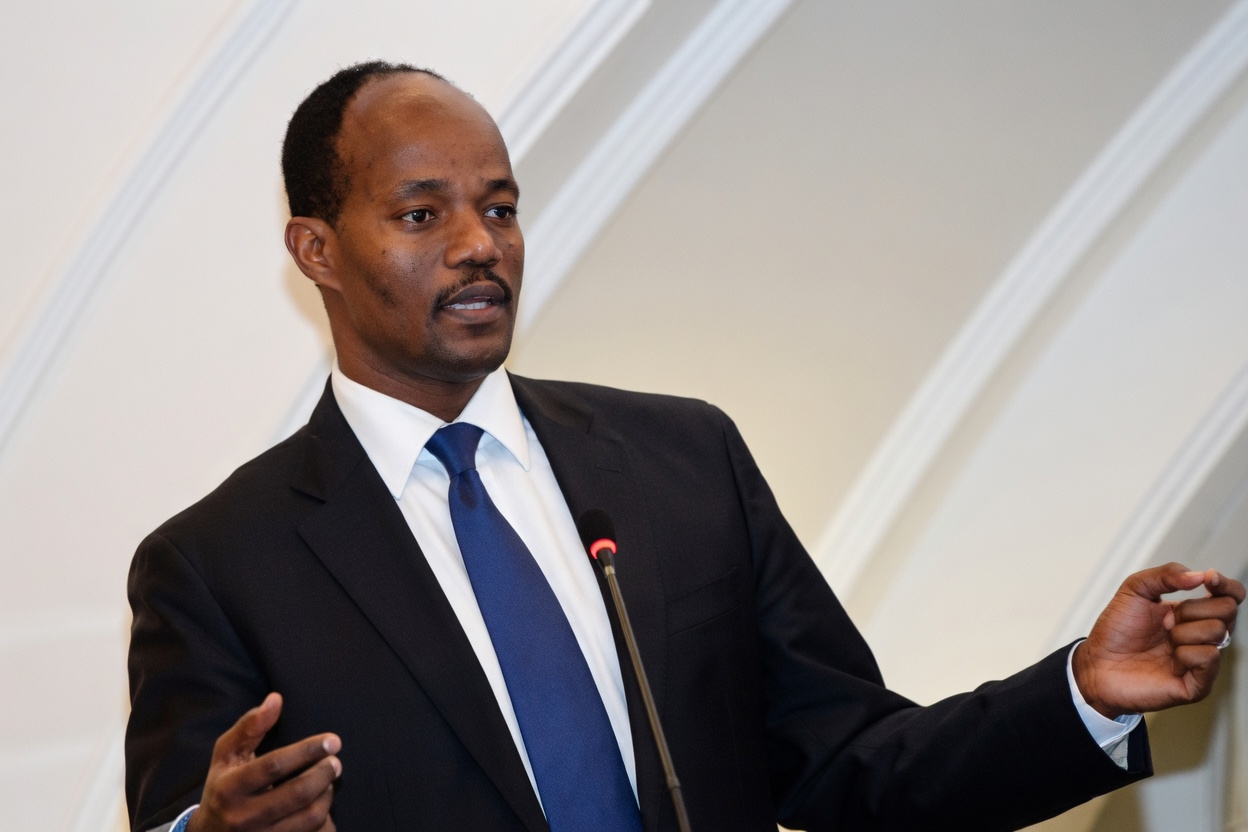
The Minister of Humanitarian Affairs and Poverty Reduction, Bernard Doro, on his part, concurred with the challenges listed by the World Bank, but noted that Nigeria was working to address them.
To stem the tide, he unveiled the One Humanitarian–One Poverty Response System (OHOPRS) to address poverty by lifting 50 million Nigerians out of poverty.
He described the initiative as a transformative national framework designed to move millions of Nigerians from poverty to prosperity.
Doro revealed that more than 63 per cent of Nigerians live in multidimensional poverty, stating that the country’s challenge lies in weak coordination and inefficiencies.
“We have been managing poverty, not ending it. It is time for a paradigm shift,” he declared.
The minister noted that fragmented data systems, duplication of programmes, and poor coordination among ministries, departments, agencies, and development partners have long undermined poverty reduction efforts.
He also explained that the new framework would integrate humanitarian aid, social protection, and long-term development into a single coordinated platform, ensuring all stakeholders operate within one national structure.
The minister warned that rising economic pressures, climate-related challenges, and shrinking global aid make it imperative for Nigeria to adopt a more efficient and unified response.