Follow Us on Google
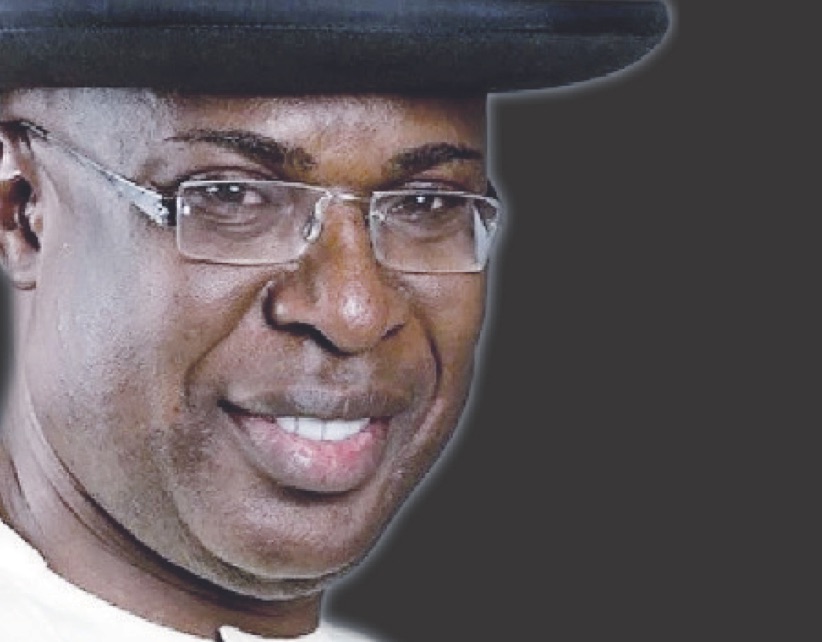
•Buhari has fulfilled his promise on Boko Haram
Immediate past Minister of State for Petroleum, Chief Timipre Sylva has declared that there is a lot of hypocrisy from Nigerians on the vexed issue of fuel subsidy removal. According to him fuel subsidy is no longer sustainable but vested interests in the country are manipulating the common man to stall its removal.
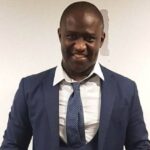
Sylva, one of the closest ministers to President Muhammadu Buhari during his stint as minister, in an interview with FEMI FOLARANMI, said the present administration has fulfilled its promise on tackling Boko Haram, stressing that the administration has contributed to infrastructure development in the country.
On the forthcoming governorship election in the state, Sylva who is the candidate of the All-Progressive Congress (APC) expressed optimism in the ability of the Independent National Electoral Commission (INEC) to conduct a free, fair and credible election.
Would you say you left the Ministry of Petroleum better than you met it?
Yes, I would say I left it better than I met it. There were a lot of things left hanging for a while which we were able to achieve. First and foremost, one of the things we were able to achieve was the Train Seven project. That project has been in planning for a long time and we could not make progress. I got in there and was very instrumental in achieving Final Investment Decision (FID) on Train Seven in 2020, barely a year into my Ministerial duty. And since then, you would agree with me that the Train Seven is underway.
Secondly, I was able to steer the country towards a direction which I believe was the best direction. Before now the oil industry has been about oil and less about gas, yet gas was a cleaner fuel and had a big potential to move this country forward. So, I was able to emphasize gas and took the country on the path of gas development.
And also, when the world was talking about energy transition, transitioning from oil to renewable fuels, I was also part of the vanguard in the world to declare gas as a transitional fuel. Because we felt in Africa, not just Nigeria, we could not jump on the energy transition train just like that. Already the West was far on the road to energy transition than us. So, the only way we can be on that train is to declare gas as a transition fuel. I was also able to achieve that along with others.
And then of course, the famous Petroleum Industry Bill (PIB) which was passed into law. That Bill had defied many administrations but I was able to achieve this and other numerous achievements we were able to record. Definitely I left the Ministry of Petroleum not just better but much better than I met it.
Some Nigerians feel that the outgoing administration is leaving the economy in a bad shape?
Frankly, I would not go into discussing the state of the economy because I am not really that competent. But I know that the outgoing administration achieved a lot. We must focus sometimes on the achievements rather than the negative side. This administration, more than most administrations, contributed immensely to infrastructural development in Nigeria. The President Muhammadu Buhari administration achieved a lot of infrastructural development in Nigeria. There were lots of infrastructure left uncompleted which was completed by the Buhari administration. Nearest to us is the 2nd River Niger Bridge, I don’t know of any other administration that would have completed that project other than the President Buhari administration. Here in Bayelsa there is the road from Yenagoa to Otuoke funded by SUKUK. And across Nigeria, this administration achieved a lot. In the areas of security, I would also say this administration has achieved quite a bit from where we took off. You will agree that Boko Haram is history. We are talking about banditry but we are not talking about Boko Haram anymore.
As of the time we came in, the discussion was about Boko Haram and the promise the administration made was about tackling Boko Haram and this administration succeeded in tackling Boko Haram. So, we should not focus only on one aspect of the picture. If we take the totality of the picture, I believe that President Buhari’s administration has recorded a lot of foundational achievements.
Why I say foundational is we are talking about the economy; we must build on a foundation. For instance, if you don’t have security, you can’t talk about the economy. So, we have achieved a lot of foundational projects and we believe that the new administration will take -off from where President Buhari stopped. I know that the government of President Bola Tinubu, like I prefer to call him already, would be able to effectively build on the foundation laid by President Buhari and Nigeria would be better for it.
The burning issue of fuel subsidy is again in the news and as the immediate past Minister of State for Petroleum, do you think the time is ripe for the removal of fuel subsidy?
Frankly at the core of this discussion is hypocrisy. I can say that without fear. Nigerians all know that fuel subsidy is not sustainable. We all agree to the point. We see all the numbers and we clearly agree it is not sustainable. I always ask this question. Why I think it is hypocritical, you have removed the subsidy on kerosene, which is the closest to the common man. So is it because the common man cannot speak? We remove subsidy from kerosene which is what the common man used to cook and use regularly on a daily basis. We have removed subsidy on diesel which is also a close fuel to the common man because everybody has a small generator. Now the problem in Nigeria is to remove fuel subsidy of petrol. Petrol as far as I am concerned is the fuel of the elite because most of the big cars being driven use petrol more. The discussion has been how we are going to remove fuel subsidy on petrol. It is very necessary to remove it but I don’t know about the timing. But economically speaking, it is very necessary to remove it. Who are the people benefitting from the subsidy? We all know about the fraud surrounding the fuel subsidy. At a time in this country, we were discussing subsidy thieves. People were taken to court and some people were convicted. We all know that subsidy is surrounded by too many things that are not explainable. Subsidy is gulping trillions on a yearly basis and you can imagine how much funds you would free up to be deployed into infrastructural development. But certain vested interests want us to keep subsidy and of course they are using the common man to front for them and fight against removal of fuel subsidy. I think that at one time or the other we will have to remove it. Everybody is getting there. Even Saudi Arabia, Kuwait and other rich oil producing countries, they are all removing subsidy because it is not sustainable even in their countries.
Unfortunately, we are the only country talking about the removal of subsidies and arguing. I don’t know what we are gaining by not removing fuel subsidies on a personal level. Some are very happy to encourage people to oppose subsidy removal because they are benefitting. So, this country needs to take out fuel subsidy. I don’t know about timing. That is a policy direction that should be taken but unfortunately it has eluded us. In fact, in 2020, we removed the fuel subsidy but it crept back again. As Minister then I said now that fuel prices were low because of the COVID-19, there was a glut and crash of crude oil prices, we felt now is the time to remove the subsidy because then the common man would be able to buy less than the subsidy price. We took down the price and people clapped. We said we should ride the waves that as prices go up people can adjust. We told them if the price goes up, the price they buy would also go up. But unfortunately, when the price went up, they called for our heads and we had to return the subsidy. I believe this country needs that policy direction. The President- elect is very aware of that. As an astute accountant he knows about it.
You talked about development of gas and we know that the Niger Delta is well endowed with gas. So can the gas being flared be harnessed?
As a country I think we have done well bringing down the flares. But a lot of that was done through injection. This means a lot of the gas is re-injected back into the well and is not really brought to value. The Niger Delta is very well endowed with gas and there is so much to do. The Federal Government now has a gas flare commercialisation programme and we have flared down more than 90 per cent. So what we are now trying to do is to bring down the remaining gas flare through the gas flare commercialisation programme. This is a programme that allocates gas flares to investors who are able to harness the gas and commercialise it.
Gas is a very versatile fuel and commodity. There is a lot you can do with gas. You can turn gas to fertilizer. The basic raw material for fertilizer is gas. If you ask me how we are going to convert gas to use as a state, I can tell you that we can commercialise it into fertilizer. And fertilizer, as you know, would enable the agricultural sector which can create all the jobs we require as a state. Gas can also be converted into Methanol. Methanol is actually the basic raw material for the production of a lot of chemicals. Even the Pharmaceutical companies require Methanol. Gas is a raw material for the production of petrol chemicals which is used in production of household items. And then you can convert gas to power. That is known by everybody. So, if we really focus on the production of gas, we can become a very prosperous state and nation.
Unfortunately, before now gas was treated as a nuisance. So, if they were trying to explore for oil and encounter gas, they would cap it because it was a nuisance to them. And this is the basis for the industrialisation of our economy if we really want to expand and diversify the economy. In gas we have the basic raw material for the diversification of our economy.
Taking a post-mortem review of the last general elections, how confident are you that INEC will conduct a credible governorship election in Bayelsa?
Well, I can say yes. But you see when I begin to see improvements and pathways, then I will believe. If you remember, the Presidential and National Assembly elections started very late in Bayelsa. It began around 2 to 3 pm. In my ward it started very late. But the House of Assembly elections held two weeks after, they had improved. This was a situation we were grappling with. With the introduction of BVAS, this was the first time it was used widely. We understood that a lot of new things were happening and there could be some mistakes. INEC is trying very hard to correct those mistakes and you can see the progress being made. I believe it would be able to conduct a credible election in November. I am aware they collated all the problems and they are working on them. I have every belief that INEC is going to conduct a free election in November.
What is your issue with the former Minister of State for Agriculture and Rural Development, Senator Heineken Lokpobiri?
I don’t know of any difference between me and Senator Lokpobiri. What happened was that Lokpobiri wanted to be governor in 2019. He contested the primaries with Chief David Lyon at that time. You know ambition is very difficult to manage and I didn’t support him on that occasion. I supported David Lyon. So, I think that was what introduced the difference between me and him. He probably felt I should have supported him. But that time I thought David Lyon was a better candidate. I felt the governorship was just leaving Bayelsa West after eight years and Heineken Lokpobiri, also from Bayelsa West taking over from Dickson would not be right. So, I felt that I should rather go to the central since I was also not running. But you know when you make these decisions, some people take exceptions to it. So, he probably took exception. But we are still friends, we still talk. There is nothing personal between us. That was the reason at that time. It was not about incompetency. He would have got the job done just like any other party member. He is a credible member of our party. But at that time, I felt it was not right for somebody from the West to take over from someone from the West.
There is a lacuna between the government and the people. How can this be addressed?
When you talk about the gap between the government and the people. you have touched a sore point. For me here is at the core of our problem in Nigeria – the breakdown of trust between government and the people. It did not happen today. Over the years, people don’t trust the government. Whatever you are doing in government, from the very beginning, they don’t even trust you even when you really do mean well.
I believe that the solution is communication which we are doing. Communication and more communication. Let us look at the pathways that would lead to the people. If people want to see you on social media, we go to social media, if it is radio, you go to the radio. If it is television, you talk to them on TV. But we must try over and over again to communicate. We need to bring back this trust so that at least the people would know that the government is working for them. It is a big issue in Nigeria. Few of my friends agonise over it all the time. You are doing so much work and everybody thinks you are not doing anything.