Follow Us on Google

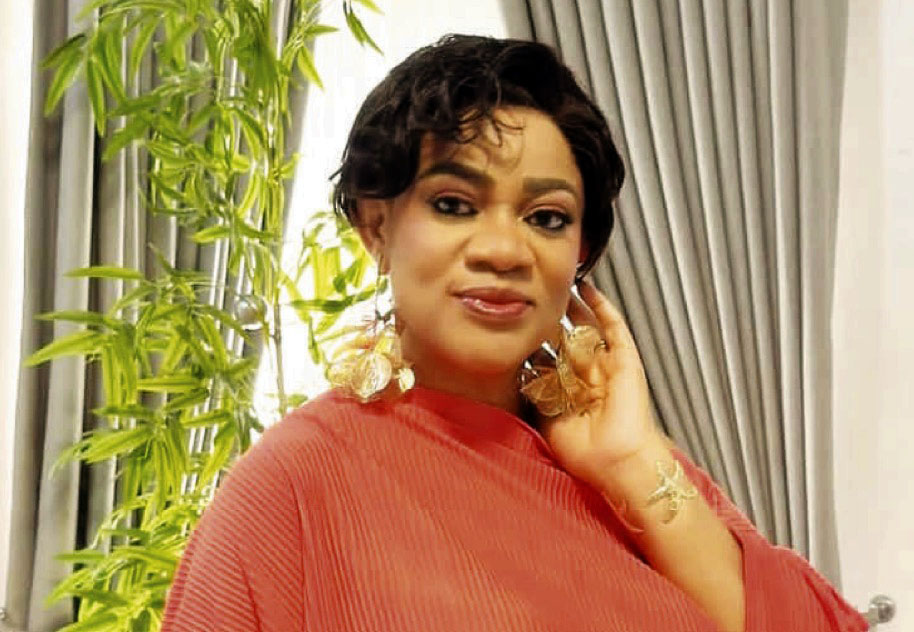
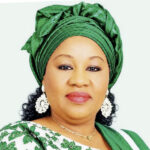
Nollywood actress and filmmaker Uchenna Nnanna-Maduka is passionate about preserving the Igbo language and culture through film. From her award-winning movie Nneka to her latest production, Agbu Omenana, she continues to tell stories that challenge societal norms, promote family values and amplify the voices of women and children.
In this interview with Saturday Sun, the mother of two reflects on her filmmaking journey, parenting, the challenges of balancing multiple roles and her mission to keep Igbo stories alive for generations to come. Enjoy!
You have built a career as an actress and producer while actively promoting Igbo culture through your films. What inspired this dedication to stories rooted in your local identity?
What inspired me is that, like play like play, the Igbo language is gradually fading away, and nobody is telling our story. So I said ‘No, not in my time.’ We should not allow foreigners to tell our stories. It’s our right.
Reflecting on your journey in Nollywood, what would you say has been the most defining moment of your career so far?
The day I won the AMVCA Best Indigenous Movie for ‘NNEKA’ in 2022, when I climbed that stage. It was a dream-come-true moment for me because when I picked up that script, I said, ‘I’m going to use this script to put my name on the map of Nollywood,’ and God honoured my word. I did that movie, and it gave me the AMVCA I was waiting for.
You have acted in and produced numerous films. Which of your projects holds the deepest personal significance for you, and why?
I connect with all my movies because I bring the stories, and I permit the writers to write. Should I talk about the one that won the AMVCA, Nneka , or the recent one, The Agbu Omena Ana ‘ and Kasarachi ‘? The Agbu Omena Ana is about tradition. When the first daughter doesn’t get married, the younger ones cannot get married. It still happens today in so many Igbo families. I advocate for Women and children, and I’m a big fan of family unity and love, so it pains my heart when a family has to bewail. Kasarachi has a special place in my heart; all my movies are very relatable, and I connect with them so much. There’s one coming, ‘IJE NWA – The Journey of Childbirth’ that one go shock everybody. I want to pass a message through my movies; I can’t do a movie without passing a message across or teaching people something very deep.
As a producer, how do you balance commercial considerations with your desire to preserve and promote Nigerian culture through film?
Everybody that knows me knows I don’t commercialise anything I do. That’s why I’ve been shouting that I came late to YouTube. Each time I do it, I don’t want to do it small or do something that’s not meaningful. I don’t cut corners in my production. That’s why it took me years to start eventually. But I thank God that today we’re here and there’s no going back; we’ve come to stay.
What inspired your latest movie, Agbu Omenana ?
A whole lot of things: so many families, men and women who are going through trauma, and people don’t know. I advocate for Children and Women, both boys and girls. So when the inspiration came and we wrote it, at some point everyone was angry. Ada doesn’t want to get married without finding out why. Why is she refusing to get married or be entangled with any man? It was the childhood trauma she had, seeing the father maltreat the mother. Imagine if we were in Oyibo land; they’d send her to a therapist, but here in Nigeria, imagine what the sisters were doing to her; they humiliated her. They even thought she was a lesbian, but at the end of the day, it was a childhood trauma that was messing with her brain.
You often advocate for the rights and welfare of women and children. Was there a personal experience or social issue that motivated you to become an advocate?
I’ll call it social issues because I’m being who God created me to be. I’m the one who doesn’t want to see anybody in pain; I’m the person who wishes everybody well, who wants every growing child and woman to be comfortable. I love seeing people happy. When people are unhappy, they are going through a lot; I can’t just see them and leave. I can cry and feel pity for a total stranger, or take it upon myself to make sure you’re okay. I can’t just see and watch while things go wrong.
What are some of the biggest parenting mistakes Nigerian parents make today, and how can they improve?
Some of us want to raise our children the way our parents raised us, which is totally wrong. Our parents raised us, so we don’t have a say; whatever they say stands. It’s a very big mistake. It doesn’t give children a sense of belonging.
Things will be happening; your child will be dying inside. They can’t open up to you because you’ve shut them up. I’m appealing to every parent: give your child a voice; allow them to talk and have a say, but with respect. By the time you teach respect, something will be going wrong; your child will come and tell you in a very respectful manner. One day I said something wrong; my children said, ‘What you’re saying is not true, and you taught us not to lie; why are you lying?’ Let your children be outspoken, so when something goes wrong, they’ll tell you. My children can say, ‘Mummy, please, can you help me get water?’ I will get up and do it for them. But at that time, can you dare to tell your parents such? Another mistake Nigerian parents make is when someone tells you something about your child; instead of calling your child and going to the inner room and speaking with your child, you’ll start beating your child in front of those people, humiliating your child in public. No matter what is happening, do not humiliate your child in public; take that child inside, seat him down and talk to them.
You are an actress, producer, entrepreneur, digital creator, wife, and dedicated mother. How do you manage these diverse roles without losing focus?
If I tell you it is easy, I’m lying. Only God has been by my side. Most of the time, my head goes full; you won’t even know what to do. But God, the Holy Spirit, the Mother Mary: They always come through for me. Sometimes I ask myself, what have I done to deserve all these things that you just listed? I have no idea. I wake up in the morning, I say a short prayer, and I tell God, “I am out; take care of today and he’ll always come through for me. It has not been easy, but I’ve been walking through it with Jesus and Mother Mary holding me side by side
Several celebrities have advised that women approaching their late 30s or 40s should consider pregnancy and motherhood, with or without a partner. What is your view on this?
I can’t tell a 30 or 40-year-old person how to live their lives, because if you look at it as a Christian that I am, I’d have said it is wrong. But then again, who am I to tell you? If you feel you want to have a child, it’s up to you. I can’t tell you what to do because if I do, you will not listen.
Women in Nollywood often face pressure to stay relevant as they age. Have you experienced this, and how have you navigated it?
No, I’ve never faced pressure to stay relevant because I know I’m not relevant on social media or in Nollywood; it doesn’t mean I’m not relevant in my home, my business, or in my children’s lives. If Nollywood isn’t working at the moment because I’m a mother, I am giving my time. I am also building my empire; I’m not pressured at all. I call the shots on how I want to go about anything that comes my way.
If you could change three aspects of the Nigerian entertainment industry today, what would they be?
Changing the aspect of being a single executive producer, running the company all by yourself. But it still boils down to the country’s system, because when a system is bad, it affects every sector, and the entertainment industry is no different. Look at our cinema today; our cinema isn’t what it should be. If I had the opportunity, I’d change the cinema and how it’s run. But these are all individual businesses, so you can’t tell people how to run them; they’ve invested so much. I went to a cinema to watch a movie, and I was the only person there at that moment, and the cinema had to turn on the lights and AC, and I watched the movie all by myself. They are losing money in this economy where we don’t have fuel.
What can audiences expect from you in the next phase of your career, and what legacy would you like to leave behind?
Expect a big breakthrough from me, coming through Uchenna Nnanna TV on YouTube for premium Igbo movies. At this stage of my career, we’ve come to stay, make an impact, and bring back the Igbo language that’s fading away. I’m leaving a legacy behind so that the Igbo language will not die during my time. That’s why I took it upon myself, through Uche Nnanna TV on YouTube, to showcase only premium Igbo movies. We are trying to bring back that family bond where you sit and watch movies with your children, not when you sit, you’re scared of watching movies with them, maybe because of the kind of movies out there now. I must bring that family bond back. During my time, I will preserve the Igbo language and culture.