Follow Us on Google
• I’m one of few athletes in the world who never got involved in crime
By Joe Apu and Paul Nwokocha Jr.
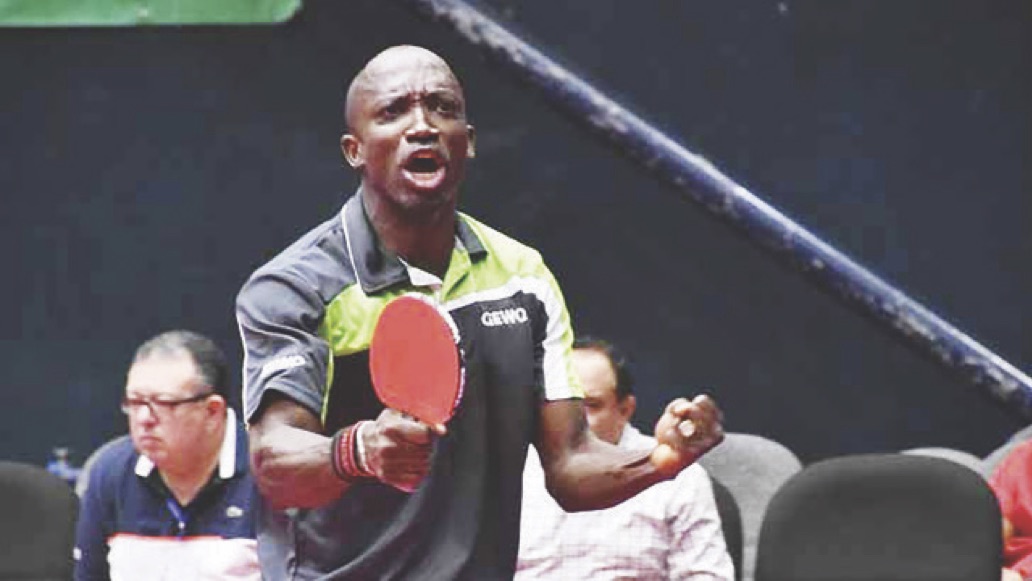
The name Atanda Musa resonates everywhere whenever it’s mentioned. This is so because Mansa Musa, as he is fondly called by his admirers, ruled the table tennis world like no other during his playing days.
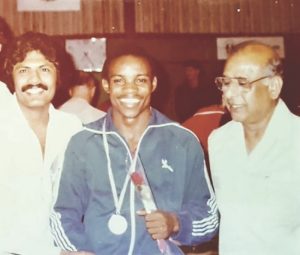
Recently, Musa was in Nigeria for his annual youth championship programme. At the Lagos Country Club, Ikeja, he spoke with Sunday Sun on various issues.
Enjoy the interview.
Tell us a bit about your growing up days
I grew up in Lagos. I went to St. Gregory’s College, Obalende and I started playing table tennis when I was 17. Since then I’ve been playing table tennis and I ended up being a very good table tennis player. I was an ex-African and Commonwealth champion. I also participated in a lot of tournaments in Europe. So, I decided to come back home to give back to the community. That’s the reason I’m sponsoring a tournament for the children. To show my sign of appreciation that I love table tennis and I grew up from table tennis. You know, all is about table tennis.
Before table tennis came into your life, what did you dream of becoming?
Yeah, to be honest, my dad was a boxer. I was a soccer player. When I do play soccer, I get injured all the time. So my dad told me to go and play table tennis. It’s a game that you can play at any age. You never get injured. So I was proud of that and I’m happy for the decision that my dad took on my behalf..
Was there any role model in your family or community that you looked up to while you were growing up?
I looked up to represent the country, to become a champion. And things worked well the way I prayed to God. I am so happy about that.
What was the first spark that led you towards table tennis?
My first championship was the Western State Sports Festival in 1977. So, since then, I’ve played as a junior player, as an intermediate player, and as a senior player until I got into to the limelight. I became the African champion in 1982 in Bombay. I participated in a lot of world championships. I was at the Seoul Olympics in 1988. I was in Barcelona in 1992. I did a lot as far as table tennis is concerned.
That was one thing that inspired me to come back home and give back to the community, to take care of the young generation. We do this just for them to go back to school in September. They can be able to have some cash and some school supplies.
Looking back, do you think your passing through table tennis was destined or a matter of circumstance?
Yes, it’s a matter of circumstance and I really worked for it. Dedication, self-discipline is key and I did a lot in my life that I am I’m proud of myself that I never involved myself in any illegal business. This was in the 70s and 80s and I’m proud of my parents that, you know, made me to be a disciplined person.
And it shows on me that I’m one of the guys that work for J.P. Morgan Chase in New York. It’s the biggest bank in America and I work in the headquarters. So it’s part of discipline for you to work in such a bank like that. You understand? So I’m proud of my parents, although they are late now, but I’m still proud of them.
What are some of your greatest passions or hobbies?
I’m an easygoing guy. I’m a member of Ikoyi Club, which I’m proud of. I’m so proud of that because it’s not easy to be a member of Ikoyi Club. Due to my achievement, self-discipline, they put everything together like a package before they accept me. So I’m proud of that. So that’s where I normally go when I’m in the country.
If you hadn’t become a professional table tennis player, which career do you think you would have pursued?
To become a professional table tennis player, you have to devote time. And to become a professional player, that means you have to take it as a job. Like you have to practise like six, eight hours every day. So that’s the only way you can become a professional player.
But now I’m doing everything, playing table tennis is just for the fitness of the body.
Given the kind of job you do now, has it affected your lifestyle compared to back then?
I’m improving in my lifestyle. In health, financially and morally. The only thing I know about myself is that I’m a self-disciplined person. If you are a self-disciplined person, you will live longer.
What is a normal day like for you?
What I do is that when I’m in the country, as I told you, I only go to two places like Ikoyi Club and Country Club to meet with some of my colleagues who have retired.
And I do go to Rowe Park just to say hi to my old colleagues that we worked together with the Lagos State Sports Council during the time of my playing.
Other News
So, a lot of things about me are something that I keep to myself. I don’t have Instagram. I don’t do Facebook. I don’t go to TikTok. I live my life quietly.
Did you marry anyone within the Table Tennis fold?
No, during the time I was playing, I was so serious to become a champion. I was so disciplined that, because when you are number one, in every tournament, everybody wants to get you out of the game. So, I was so disciplined, I didn’t even have time then for women.
But when I started getting towards the end of my life, then I started having time with family.
How has your family supported you throughout your career?
Oh, they did a good job. They supported me. I have four daughters, two in the U.S., two in London. They have been very supportive.
Are any of your children playing in the school?
No, this is a new generation. The new generation is always about social media, computer, and all the stuff. Life is sports, especially table tennis. They are not interested in sports not to talk of table tennis. All they talk about is education, computer programming and stuff like that. So I let them do whatever they want. That’s why they are okay with that.
What value do you try to instil in your children?
All my children are highly educated and they are working. So I let them live the life they want. But I just try to give them some advice. Anything you do, you have to be mindful of the consequences. I accept two things in life. You have to learn how to endure and how to ignore for you to live longer. Don’t let anything frustrate you. They accept my advice and they are doing well.
How do you feel when you look back at your legacy both in Nigeria and across Africa?
I’m so happy about my legacy because my legacy is a legacy that I maintain. That’s the reason the Ikoyi Club accepted me to be a member. They looked at my past records. I am among the few athletes that never got involved in any criminal activity all over the world and it’s a thing of pride. So, these are the things that I’m trying to explain to my children. You have to be careful what you do, because if you come back, because in America, I believe they say, what goes around comes around. So, I’m at the Country Club. I’ve been coming to this club since 1985, because I am disciplined. That’s why they accept me. That’s the reason they accept me to organise my tournament here. So, these are very important in life.
What is one personal moment in your life that you cherish the most?
When I became the Commonwealth champion in 1982 in Bombay, I was so happy because I was the first Nigerian to win the Commonwealth title.
African people have been winning, but Commonwealth champion, I was the first person in Nigeria to win the Commonwealth championship.
My own social life is that I do play table tennis all the time. And if I don’t play table tennis, I think something will happen to me. Because why? It’s like a drug to me. I have to be in shape. So that’s the reason I love table tennis so much.
How do you rate the development of table tennis in Nigeria?
It’s getting much better now. People are trying to come up. I am trying to encourage the younger generation to sponsor them, to give them school supply, to give them cash so they can be able to give them playing kits, you know. I’m trying to give back. That’s the only thing I can do to make sure that those kids are happy and they can look towards me, that they too want to become autonomous. How do you become autonomous? You need all equipment you can lay your hands on. So, I supply them free. And I give them some cash in the tournament. This tournament cost me a lot of money, but that’s fine with me. I’m happy to do it.
Across Africa, is the continent progressing in this sport?
Africa is progressing, to be honest. Egypt is progressing. Ghana is progressing. Most African countries are progressing.
What do you think needs to be done to improve table tennis in Nigeria?
It’s just to get more sponsors to organise tournaments. The chairman should go and look for sponsors. Table tennis is not too expensive to be sponsored. During my time, we had Cadbury, we had Coca-Cola, we had Lever Brothers. Sadly, I learnt some of these companies are no more in Nigeria. So sponsorship is just what we need for more tournaments to thrive and bring out more players. I can assure you that when this done, we will return to our glory days.
Are you currently involved in any coaching, mentoring and development?
No. They wanted to appoint me as a national coach but I told them that I have a job that I’m doing in the US. I work with the JP Morgan. I’ve been there for 20 years. I’ve been there since 2005 up to now. I’m on vacation now. So I cannot be working in America at the same time working in Nigeria. I’m not a selfish person.
I’m a person that thinks about other people so I volunteered not to accept the appointment and that they should give it to someone else. The little I can do when I’m here I will do it, not to come and take a job from them.
If you have message to pass on to younger athletes, what would it be?
The first thing I would tell them is to have education first so you can be able to express yourself. That’s one. Number two is self-discipline and three, they have to learn how to endure, how to ignore. Because to be a champion, it’s not easy. When you get to be a champion, how do you maintain it? So there’s a lot of things you have to put into consideration. It’s like a package.