Follow Us on Google
By Moses Akaigwe
Many drivers have experienced it: rainfall after a dry spell, making roads deceptively slick with a mixture of water and oil residue. Before you approach a familiar curve, you gently apply the brakes. The response is not what you expected, however.
The steering feels disconnected, and you are no longer moving in the intended direction. In that split second, most drivers do exactly the wrong thing: brake harder and grip the steering wheel tighter, but these reactions often worsen the situation.
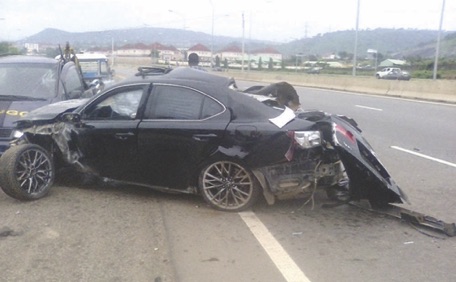
Road safety experts says sharp bends (leading to loss of control) are a high contributor to accidents. Furthermore, 22.2 percent of motor vehicle fatalities are linked to poor road conditions, such as potholes or low lighting, directly causing loss of steering or braking control. Furthermore, drivers encountered these conditions often – light rain, frost, or even gravel on tar.
The CEO of MasterDrive, Eugene Herbert, says that the challenge is that theoretically knowing what to do is not enough. “Instead in a split second, one needs to override deeply ingrained survival instincts in a high-stress moment. This gap between understanding and physical response is where many accidents occur.
“Thus, how does an organisation ensure employees do not only understand what happens when a vehicle loses traction but knows what to do and puts this into action in the height of the moment? This can only be achieved with experience.”
Other News
An employee needs to feel it, to experience that unsettling moment when their steering does not match where the vehicle is going. “Only then, can you train employees to override panic and respond effectively,” says Herbert.
The skidmonster
Rather than learning these critical skills during a real emergency on a busy road, drivers should ideally experience a controlled skid. “Yet, experiencing an unexpected loss of control in a 0mƙcontrolled environment is not something easily come by.
“This where collision avoidance training using Skidmonster technology is invaluable for drivers of all skill levels. Drivers have an opportunity to learn to recognise early warning signs – slight lightness in the steering, subtle changes in how the vehicle responds – before a minor slide becomes a serious incident.”
Experiencing a loss of control in such an environment teaches drivers about both prevention and correction. “In the Skidmonster vehicle, specialised rear wheels allow the instructor to suddenly lock the rear tyres. This lets the driver first feel the initial stage where traction is not quite right.
“Following which, they then need to practice the correct response. It builds muscle memory for the correct response, so when that real-world moment arrives, their trained reaction takes over instead of panic,” says Herbert.
While we all hope to never face a true loss-of-control situation, being prepared for it transforms not just how we handle emergencies, but how we approach driving every day—with greater awareness, respect for conditions, and the knowledge that we have the skills to respond when it matters most.