Follow Us on Google
By Doris Obinna
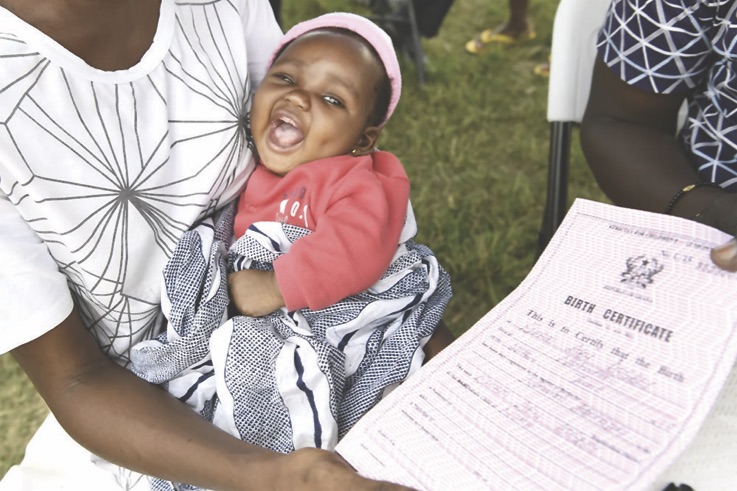
Birth registration is more than paperwork; it is a child’s first line of protection and the foundation of legal identity. Without it, millions of children are denied access to essential services such as healthcare, education, and social welfare. They become invisible to the state, excluded from opportunities and protection that every child deserves.
According to the United Nations Children’s Fund (UNICEF), birth registration, which is the official recording of a child’s birth by the state, is a vital process that creates a permanent and legal record of a person’s existence and identity.
It marks the formal acknowledgment of a child by the government and provides them with a legal identity, ensuring recognition as a person before the law. Through this process, details such as the child’s birth, location, and parentage are officially documented, and a birth certificate is issued as proof of registration.
In recognition of this urgent need, UNICEF and the Lagos State Government have renewed their partnership to strengthen birth registration systems across the state. The collaboration was announced at the Lagos State Multi-Sectoral Stakeholders’ dialogue on Birth Registration, where stakeholders resolved to accelerate efforts to ensure that every child counts.
The dialogue, themed “Every Child Counts: Accelerating Birth Registration in Lagos State,” aimed to register 545,000 newborns in Lagos before the end of 2025, a crucial step toward achieving universal birth registration.
Speaking, UNICEF Chief, Lagos Field Office, Celine Lafoucriere, emphasised that a child’s right to identity begins with being registered at birth. She noted that while Lagos has achieved a 94 per cent birth registration rate among children under five (one of the highest in Nigeria), the goal remains to reach every child, especially those in hard-to-reach communities and informal settlements. “Lagos State has made real progress. But the work is far from done. Our goal is to leave no child beh§ind,” she said.
Also, in September 2025, the National Population Commission (NPC), with UNICEF’s support, began distributing more than 16 million birth certificates nationwide, with Lagos receiving the largest share of over six million.
The gesture, UNICEF disclosed, reflects both the scale of the state’s achievement and the confidence in its capacity to deliver. UNICEF’s renewed focus is on registering children under one year of age, a shift from previous national campaigns that covered millions of under-fives. “This year, we’re concentrating on newborns because we should have far fewer unregistered under-fives now. The goal is to make birth registration second nature for every parent,” Lafoucriere explained.
The cost of invisibility, she however warned, is grave and far-reaching. According to her, unregistered children are excluded from national statistics, making them invisible in development planning and budget allocation. Without a legal identity, they cannot access government programmes or exercise their rights. “When you have a census or population survey, unregistered children do not exist. They are missing from budgets and social protection plans. Without legal identity, they can’t benefit from government programmes,” she said.
Beyond access to services, Lafoucriere pointed out that lack of registration has legal implications. “When you are a successor or heir but you don’t have legal identity, you simply don’t exist in the eyes of the law. That can open the door to abuse.”
Crucially, the global lens underscores that birth registration is not only a local or national matter, but a universal challenge and necessity.
According to the World Health Organization (WHO), it is estimated that 36 million babies born each year are not registered. In the African Region it further disclosed, only about 44 per cent of births are registered, contrasting starkly with higher-income regions where registration typically exceeds 90 per cent.
WHO explains that a well-functioning civil registration and vital statistics (CRVS) system “provides timely, reliable and actionable data on births and deaths” enabling governments to plan services, allocate resources, and monitor public health programmes.
Securing every child’s identity
This global context reinforces why Lagos’ effort is so important. It is not merely about giving certificates, it is about securing every child’s identity and embedding them in the systems of care and opportunity.
With all training completed across Lagos’ 20 Local Government Areas (LGAs) and registration supplies including tablets distributed, Lafoucriere expressed confidence in the state’s readiness. “The foundation is in place. I can safely say that Lagos is ready,” she declared.
UNICEF’s broader national plan targets the registration of 3.69 million children under age one across 15 priority states in 2025, with Lagos leading the effort. To sustain progress, Lafoucriere called for greater collaboration among government ministries, traditional leaders, and civil society.
She urged the Ministry of Health to integrate birth registration into immunisation and maternal-health services; the education authorities to make birth certificates a requirement for school enrolment; and the media to carry messages that resonate in informal settlements, rural zones and low-income communities.
She also revealed plans to train traditional birth attendants (TBAs) to register babies born outside hospitals, especially in riverine and remote areas. “The media must amplify messages that resonate across our diverse communities,” she added.
Importance of accurate data
Federal Commissioner, NPC in Lagos, Olayinka Oladunjoye, also underscored the importance of accurate birth-registration data in development planning. “Without registration, there is no identity. And without identity, we can’t plan for them.”
She explained that this data helps governments determine the number of schools, hospitals, and social infrastructure needed. “If you know the number of children born in a place like Mushin, you can plan how many schools or health centres to build. That is why this is so important.”
Also, Welfare Officer for the Child Protection Network and Project Coordinator for Yanuora Children’s Care Foundation, Olajumoke Otitoloju, added that despite progress, several challenges persist.
She highlighted that lack of awareness among parents and caregivers remains one of the biggest obstacles. “We don’t have enough campaigns or awareness for parents on the importance of birth registration. Because of this, many do not see why it matters.”
She also raised concerns over unofficial personnel who exploit the system. “Although birth registration is free, some individuals charge parents or issue fake certificates, discouraging genuine registration. This must be addressed.”
Otitoloju recommended practical measures to improve compliance: setting up birth-registration desks in primary schools so that when a child is admitted without a birth certificate, the parent is guided to register immediately; and urging faith-based organisations to require proof of registration during naming ceremonies.
“If churches and mosques request birth certificates before naming a child, it will help families understand its importance. It’s not just about giving a name it’s about giving an identity,” she affirmed.
Intensifying efforts to register every newborn
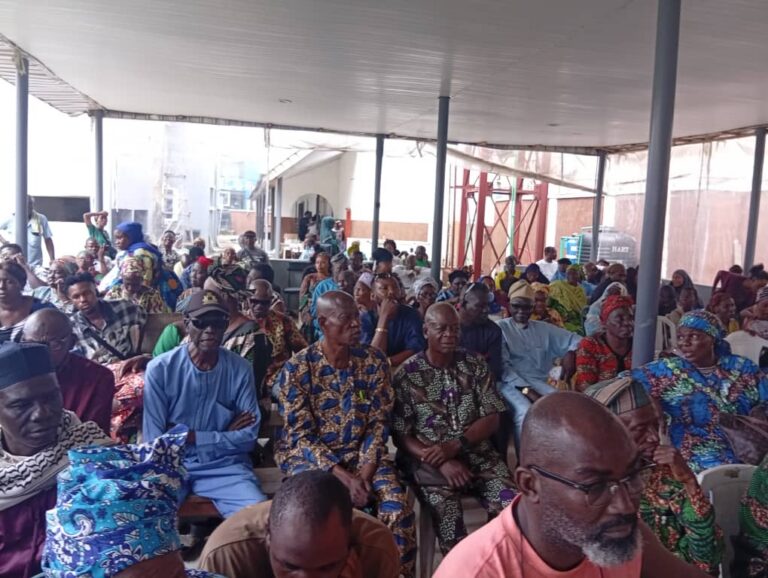
The dialogue, which brought together officials from key ministries of health, education, youth and social development, local government councils, traditional and religious leaders, civil society and the media was the commitment to co-create a Lagos State Birth Registration Action Plan designed to raise awareness, integrate registration into the health and education systems and deliver measurable progress by the end of 2025.
UNICEF and the Lagos State Government added that it is going to intensify efforts to register every newborn. “Birth registration is not a bureaucratic exercise, it is a fundamental human right and the gateway to every child’s potential. It is entwined with global development goals.”
Also, WHO and partners declared that when a child’s birth isn’t counted, that child is at risk of being left behind lost to the very systems meant to protect and uplift. “And for every child in Lagos whose name is captured, an opportunity is unlocked; for every child who remains unregistered, an opportunity risks being extinguished,” Lafoucriere added.
Why birth registration
According to UNICEF, this simple yet powerful act has far-reaching implications for both individuals and societies; for children, birth registration guarantees their right to a name and nationality, helping to prevent statelessness.
“It provides legal proof of age, protecting them from child labor, child marriage, and recruitment into armed forces. Moreover, it opens doors to essential services such as healthcare, education, and justice, forming the foundation for a child’s full participation in society.
“For governments, birth registration serves as a cornerstone for effective planning and governance. It enables accurate population data collection, allowing authorities to allocate resources efficiently and design social services that meet citizens’ needs. Reliable birth data also help in monitoring the health and nutritional status of children, supporting informed policymaking and targeted interventions.
“Beyond its administrative value, birth registration is a crucial safeguard for children’s protection and safety. A legal identity reduces the risk of exploitation, trafficking, and violence, while ensuring that children who come into conflict with the law are treated in accordance with their rights. In essence, birth registration is more than a bureaucratic procedure; it is a fundamental human right that forms the basis for dignity, protection, and equal opportunity throughout a person’s life.”