Follow Us on Google
By Dotun Oyelami
In Bangui, bronze statues of Russian mercenary leaders loom over the streets like monuments to a new colonial era. President Faustin-Archange Touadéra cannot walk through his own capital without a phalanx of foreign soldiers. Even his enemies acknowledge this grim reality. “Without the protection of Wagner, he could not be President at this time,” says Aboubakar Siddick, spokesperson for the rebel groups plotting to overthrow him. What’s happening in the Central African Republic (CAR) isn’t an isolated story, it’s the blueprint for a geopolitical transformation sweeping across Africa.
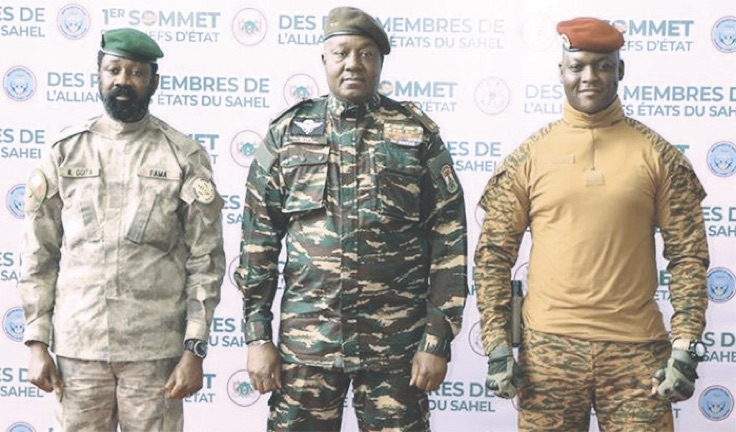
It’s a scene repeated across Africa, where military takeovers have become alarmingly routine. Since 2020, at least nine successful coups have rocked the continent, with military strongmen seizing power in Mali, Burkina Faso, Niger, Guinea, Chad, Sudan and Gabon. The most recent came in October 2025, when Madagascar’s elite CAPSAT military unit joined youth-led protests against President Andry Rajoelina and installed Colonel Michael Randrianirina as the new leader. Analysts now warn that what began in the Sahel region has become a continental problem.
Russia has emerged as the clearest winner in this upheaval. From the Atlantic coast to the Red Sea, Moscow’s Wagner mercenaries, now rebranded as Africa Corps under the Russian defense ministry, have positioned themselves as the security partner of choice for embattled juntas. The playbook is remarkably consistent: a coup occurs, anti-Western sentiment surges, French or American troops depart, and Russian military instructors arrive.
But this isn’t charity work. The Kremlin extracts payment in gold, diamonds and strategic influence. Companies linked to the late Wagner leader Yevgeny Prigozhin control mining operations across the Central African Republic, with one gold mine alone valued at over $1 billion. The World Gold Council estimates Wagner has earned $2.5 billion from illicit gold dealings across Africa since Russia’s invasion of Ukraine began, a crucial revenue stream for Moscow’s war machine amid Western sanctions.
“The Russians are providing this support in exchange for either full control or a percentage of control from their mineral resources,” explains Irina Filatova, a Russian historian specializing in Africa. “That is what Russia needs: It needs funding, and it needs influence. It helps its war in Ukraine.”
The human cost of Russia’s expansion remains largely hidden from view. Human Rights Watch has documented Wagner forces summarily executing, torturing and beating civilians in multiple countries since 2019. In Mali, the mercenaries have suffered some of their worst losses fighting insurgents, yet their presence continues to expand.
While Russia provides the guns, China builds the infrastructure. Beijing has quietly maintained its position as Africa’s top trading partner for 15 years running, financing tens of billions in development projects across the continent. The division of labour serves both powers well: Russia handles regime security while China focuses on economic dominance through its Belt and Road initiative.
Western powers, meanwhile, watch their influence crumble. Ivory Coast and Chad recently joined Mali, Burkina Faso, and Niger in demanding the withdrawal of French and other Western forces from their territories. French President Emmanuel Macron’s complaints about African “ingratitude” reveal the frustration in Paris and Washington as decades of partnership dissolve overnight.
The pattern extends beyond successful coups. In Nigeria, Africa’s most populous nation, authorities arrested more than 30 military officers in late 2025 over an alleged plot to overthrow President Bola Tinubu. Though the military denied coup allegations, calling it mere “indiscipline,” President Tinubu immediately replaced his entire defense leadership, a dramatic shake-up that suggested deeper concerns about military loyalty. If a coup succeeded in Nigeria, with its population of over 200 million and vast oil resources, the geopolitical implications would dwarf anything seen so far in the Sahel.
For Africa’s 1.4 billion people, the question isn’t simply who benefits from coups, but what kind of future these shifting alliances are building. Military juntas partnering with Moscow show no signs of returning to democratic rule despite their initial promises. In Mali, the junta dissolved all political parties to tighten its grip. In Burkina Faso, Captain Ibrahim Traoré extended his transition period by five years and declared himself eligible to run for President. In Gabon, General Brice Oligui Nguema rewrote the constitution, packed the courts with loyalists, and won a disputed election with 90 percent of the vote.
Madagascar’s recent upheaval offers a sobering preview of what’s to come. What began as youth-led protests over water and electricity shortages transformed into a military takeover within weeks. Now, protesters who initially welcomed the military’s intervention are discovering that the same soldiers who helped topple an unpopular President have no intention of sharing power. Colonel Randrianirina announced an 18-to-24-month transition period and appointed a prime minister without consulting the protest movement that made his rise possible.
“African post-coup governments are staying in power longer, which in turn emboldens coup plotters elsewhere who see a more permissive environment,” warns John Joseph Chin, a political scientist at Carnegie Mellon University who studies coups. “So, even if there are limits to Africa’s ‘coup contagion,’ Madagascar likely won’t be the last domino to fall.”
As coups continue reshaping Africa’s political map, the real losers aren’t the Western powers watching their influence fade. They’re the ordinary Africans who traded one form of autocracy for another, discovering too late that military rule offers no solutions to the corruption, poverty and insecurity that sparked their revolutions in the first place. The continent has lived through this story before. Only the external powers competing over its resources have changed their names.
•Oyelami writes from Lagos