Follow Us on Google
By Damiete Braide
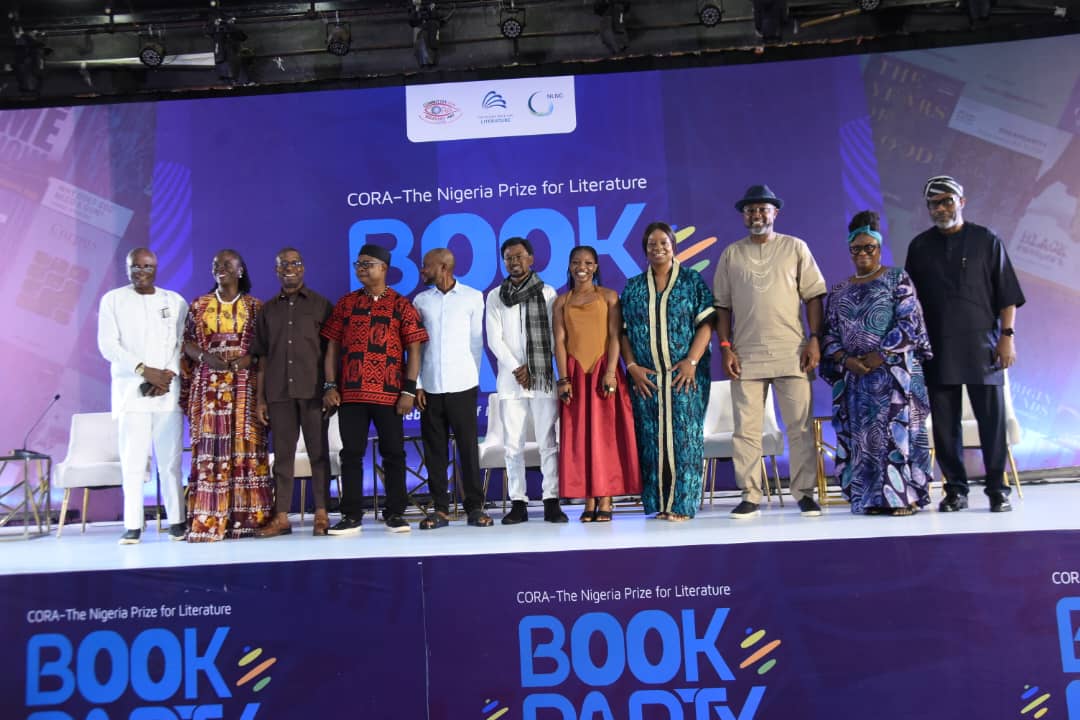
Books, poetry and spirited conversations took centre stage in Lagos as writers, readers, students and literary enthusiasts gathered for the 2026 Nigeria Prize for Literature Book Party, an annual celebration that transformed an afternoon into a vibrant festival of ideas, creativity and storytelling.
Organised by Nigeria LNG Limited (NLNG) in partnership with the Committee for Relevant Art (CORA), the event once again demonstrated why it has become one of the most anticipated fixtures on Nigeria’s literary calendar. More than simply unveiling the longlist for this year’s Nigeria Prize for Literature, the gathering created an opportunity for readers to engage directly with the poets whose works have captured the attention of the prize judges.
The atmosphere was one of excitement as the eleven longlisted poets, critics, publishers, students and lovers of literature exchanged ideas about poetry, culture, history and the future of Nigerian writing. The programme featured speeches, poetry readings by students and an engaging panel discussion in which the authors revealed the inspirations behind their shortlisted collections.
Opening the event, the General Manager, External Relations and Sustainable Development at NLNG, Dr. Sophia Horsfall, described the Book Party as far more than an announcement ceremony. According to her, it is a celebration of imagination and the enduring ability of literature to shape national conversations.
She noted that the partnership between NLNG and CORA has continued to provide a platform where discussions about books move beyond the judges’ table and become part of the wider literary community.
Horsfall observed that this year’s focus on poetry was especially fitting because poetry possesses a unique ability to compress complex truths into memorable language while giving expression to experiences that might otherwise remain unheard.
She paid tribute to previous winners of the poetry category, recalling literary giants such as Ezenwa Ohaeto, Gabriel Okara, Tade Ipadeola, Ikeogu Oke and Romeo Oriogun, whose award-winning collections have enriched Nigerian literature and inspired younger generations of writers.
According to her, the 2026 edition attracted an impressive 223 entries from poets across the country and beyond, reflecting the growing confidence writers continue to place in the prestigious prize.
From those submissions, eleven collections emerged on the longlist after rigorous assessment by the judging panel.
She congratulated the longlisted writers and reminded guests that the journey was still unfolding. The eleven books, she said, would eventually be reduced to a shortlist of three before the eventual winner is announced on October 9.
Encouraging the audience to explore the nominated books, Horsfall described every title on the longlist as worthy of reading. She also delivered an inspiring message to aspiring writers in attendance, urging them not to abandon their dreams.
Every celebrated author, she said, once faced the same uncertainty of beginning with nothing more than an idea and a blank page. Persistence, she stressed, remains one of the greatest qualities a writer can possess. She reminded the audience that the winner of the previous edition had been a first-time author, proof that fresh voices can rise to literary prominence.
CORA Secretary-General Toyin Akinosho welcomed guests, longlisted authors and members of the literary community, thanking NLNG for sustaining one of Nigeria’s most prestigious literary partnerships.
Reflecting on the journey of the initiative, he noted that while the Nigeria Prize for Literature has reached its twenty-first year, the CORA-NLNG Book Party has grown into a sixteen-year tradition since its debut at the Goethe-Institut in 2010.
Akinosho praised NLNG for investing part of its corporate success in promoting reading culture and supporting Nigerian literature, describing the company’s commitment as a remarkable contribution to the country’s intellectual development.
He also looked ahead to the next edition, expressing optimism that the 2027 Book Party would be hosted at the National Theatre in Lagos as part of efforts to encourage greater cultural use of the iconic facility.
Other News
The literary advocate further invited the longlisted poets to participate in this year’s Lagos Book and Art Festival (LABAF), scheduled for November 16 to 22 at Freedom Park, Lagos.
With the theme, The Workover Starts Now, the festival, he explained, would focus on the idea of repair, healing and national renewal. He assured the authors that they would participate in book readings and discussions during and after the festival, giving readers additional opportunities to interact with their work.
One of the major attractions of the afternoon was the panel discussion moderated by Juliet Nnaji, where each poet shared the personal stories behind the collections that earned them places on the prestigious longlist.
For Tares Oburumu, whose collection Floral’s Love revisits the story of Flora Shaw, the inspiration came from reflecting on the woman who gave Nigeria its name. He spoke passionately about revisiting history through poetry, exploring the emotional dimensions of Flora Shaw’s relationship with Lord Lugard and imagining how affection, identity and history intersect in shaping the nation’s story.
Ogaga Ifowodo explained that Why Does God Need a Gun emerged from painful reflections on religious extremism and violence committed in the name of faith. He questioned the contradiction of believers assuming responsibility for defending an all-powerful God while innocent children continue to suffer kidnappings and persecution. The courage of the Chibok girls who refused to renounce their faith became one of the emotional foundations of his collection.
Veteran poet Tanure Ojaide described Adult Love as an exploration of memory, environmental consciousness and humanity. Looking back on his childhood in the Niger Delta, he recalled a simpler era when rivers provided food and communities lived in closer harmony with nature. Those experiences, he said, continue to shape his reflections on politics, society and the values required to build a more compassionate nation.
Saddiq Dzukogi revealed that Bakandamiya was born from a desire to present a richer understanding of Northern Nigeria beyond stereotypes. Rather than responding angrily to misconceptions about the region, he chose poetry as a means of reclaiming history, celebrating Hausa cultural traditions and affirming shared humanity.
For Theresa Lola, Ceremony for the Nameless began as a deeply personal inquiry into the significance of names within Nigerian culture. As the writing progressed, the collection evolved into a broader meditation on identity, destiny, language, politics and cultural heritage, while celebrating the musical richness embedded in Nigerian traditions.
Migration scholar Paul Akpomuje drew from his academic research and personal experiences abroad to write Black Passport. The collection chronicles everyday moments in the life of a migrant while exploring belonging, displacement and identity through poetry.
Ayo Oyeku traced the inspiration for Corpus: Animistic Verses to his fascination with animistic poetry after reading Wole Soyinka many years ago. Building on Yoruba cosmology and extensive research into Ifa traditions, he sought to demonstrate how mythology, spirituality and everyday existence remain interconnected.
Ajibola Tolase explained that 2000 Blacks asks difficult questions about colonialism, racism and identity. Having lived both in Nigeria and North America, he found himself confronting the lingering effects of colonial history and systemic discrimination, themes that became central to his poetry.
For Rasaq Malik Gbolahan, The Origin of Wounds examines the scars left by history, from the civil war to insurgency, kidnappings and social unrest. He reflected on how societies cannot heal without first acknowledging their collective pain and emphasised the need to protect vulnerable children whose lives are often disrupted by conflict.
James Ugwu Eze described Unbind Me Now as a poetic call to national awakening. He argued that Nigeria has reached a critical point where silence is no longer an option. Literature, especially poetry, he maintained, should provoke difficult conversations, challenge injustice and inspire citizens to demand accountability from leaders and institutions.
The discussion drew enthusiastic applause as each author revealed not only the stories behind their books but also the convictions that continue to fuel contemporary Nigerian poetry.
Students added colour to the occasion by performing selected poems from the longlisted collections, bringing the written words to life through expressive readings that delighted both the writers and the audience.
As conversations continued long after the formal programme ended, one message stood above all others: poetry remains one of Nigeria’s most powerful mirrors. It preserves memory, questions authority, celebrates culture and gives voice to hope.
With the announcement of the shortlist expected in the coming weeks and the eventual winner to be crowned in October, the Book Party served as a reminder that the Nigeria Prize for Literature is more than a competition. It is an enduring celebration of creativity and a testament to the enduring power of Nigerian writers to tell stories that challenge, inspire and unite generations.