Follow Us on Google

Across the world, democracy thrives on balance. The constant tension between governing and being governed, between leading and being held accountable. Nigeria’s political journey continues to evolve, and many citizens are watching closely, reflecting on whether that balance is being maintained.
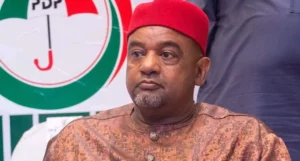
From time to time, concerns arise about the strength of opposition politics in the country. These concerns are not new. Years ago, the People’s Democratic Party (PDP) once appeared unshakable and even spoke confidently about ruling for 60 years. Then, in 2015, Nigerians witnessed a major political shift when the All Progressives Congress (APC) won the national elections, marking what many celebrated as a victory for democracy and political competition.
Now, about a decade later, the pendulum appears to be swinging again. Several elected officials from various political parties are crossing over to the ruling party. While political realignment is part of any democracy, the pattern and direction of these shifts raise important questions about balance in governance and the health of democratic institutions.
To be clear, changing political allegiance is not unique to Nigeria nor is it inherently wrong. Around the world, party switching happens for a variety of reasons: ideological differences, personal convictions, or even disagreements over leadership style. In Canada, for example, notable politicians such as Lucien Bouchard, Belinda Stronach, and David Emerson have all crossed party lines, sometimes even joining rival cabinets. Defections, therefore, can sometimes signal healthy debate and shifting political ideas.
However, democracy depends on more than just political flexibility — it depends on equilibrium. When movement in the political space begins to flow predominantly in one direction, it risks creating an imbalance. A democracy without a credible opposition may seem efficient in the short term, but over time it becomes less accountable, less innovative, and less responsive to citizens’ needs.
Opposition parties, though often criticized for being too vocal or combative, play a crucial role in the democratic ecosystem. Their job is to question policies, challenge decisions, and give citizens an alternative perspective. That scrutiny, uncomfortable as it may be for those in power, strengthens democracy. It ensures that policies are better thought out, that facts are verified, and that leaders remain responsive to the people they serve.
When a government knows it is being watched by a capable opposition, discipline tends to rise across all levels. Ministers study their briefs more carefully; decisions are debated more rigorously; and mistakes are corrected faster. In contrast, when dissenting voices grow faint, complacency can quietly set in.
The risk of a dominant one-party environment is that it replaces healthy competition with quiet conformity. Dissent begins to be viewed as disloyalty, and over time, political diversity fades. History shows that once power becomes overly concentrated, it can erode institutions and reduce public trust.
This is why conversations about opposition should not be seen as criticism of any one party, but as a reminder to all — ruling and opposition alike — of the collective responsibility to safeguard democracy. True democracy does not fear disagreement; it depends on it. Constructive tension keeps systems honest and leaders accountable.
Ultimately, opposition is not just about politicians trading words in parliament. It is about citizens having choices. It ensures that every Nigerian, regardless of their political leaning, continues to have a voice in how the nation is governed.
As Nigerians at home and abroad, our focus should be on strengthening institutions that allow for credible alternatives and meaningful debate. Political maturity means respecting those who hold different views and recognizing that disagreement, when handled constructively, drives national progress.
In the end, democracy flourishes not when everyone agrees, but when differing voices coexist respectfully. Each playing its part in shaping a better society.
Because when opposition grows silent, democracy doesn’t collapse overnight. It simply begins to fade. And when that happens, it is the people, not the politicians, who feel the loss most deeply.
• Owodunni is City Councillor in Kitchener, Ontario, Canada