Follow Us on Google


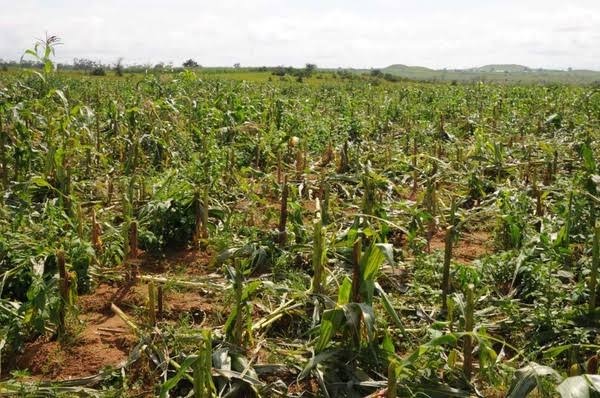
Nigeria’s agricultural sector faces a huge wheat production deficit, producing only about 420,000 tonnes annually against an estimated consumption of six million metric tonnes. The shortfall has left the country heavily dependent on imports to meet domestic demand.
The scale of the deficit was highlighted in 2024 when the Ukrainian government, despite its ongoing war with Russia, donated 25,000 tonnes of wheat grain to Nigeria as part of efforts to ease hunger and address food shortages.
The donation was done through the World Food Programme (WFP) to support 1.3 million vulnerable Nigerians grappling with the aftermath of conflicts in the North East and North West regions.
The official handover took place in Abuja, with David Stevenson, the WFP’s country director, expressing gratitude for the timely assistance.
Stevenson said the wheat from Ukraine came at a better time, adding that the vulnerable populations have been grappling with soaring food prices, hindering their access to essential staples over the past three months.
However, the donation is likened to a drop in the ocean as Nigeria is yet to have wheat sufficiency even with the country’s two million to 3.5 million hectares of land with potential for irrigated wheat production.
The deficit is also straining bakers and confectioners. Added to challenges around multiple taxation, environmental levy, noise pollution levy among others. The National President of Masters Bakers Association, Jude Okafor, complained that most bakers find it difficult to keep up with the market demands because of the production cost. He added that the members are yet to get interventions from the government to remain in business.
Okafor said: “We are finding it difficult to stay in business because of multiple taxation and importation. And you know that bread, cakes and biscuits are staples in Nigeria.
“We need wheat to produce most of our consumption. But when our production cost outweighs the benefits, then there is a problem.”
The Special Assistant to the President on Industry, Trade and Investment, John Nwajumogu, acknowledged the importance of wheat saying that behind every loaf is an economy: the farmer, the miller, the baker, the transporter and the family. Strengthening the wheat value chain means strengthening every link between them.
Nwajumogu added that when given affordable finance, steady power and good inputs, the sector could grow into a business employing dozens.
“And the biggest winners will be our young people, and our women, who already run so many of our bakeries, food stalls and distribution networks.
“Every tonne of wheat we grow and process at home keeps the value, the wages and the skills right here in Nigeria.
“First, coordination: trade, agriculture, industry and finance at one table, speaking with one voice on wheat.
“Second, capital: we will work with our development finance institutions so that the money reaches farmers and small businesses on terms that work for them.
“Third, cost: we will keep pressing on energy, storage and logistics, because every naira taken out of the chain is a naira saved on the family table.
“And fourth, results: we will track wheat output, the price of a standard loaf and the jobs created, and we will report back to you.
“Bread has always told us whether a society is working. Our task is to make sure that, in Nigeria, the bread on every family’s table is affordable, and grown, milled and baked by Nigerians,” he added.
Minister of State for Industry, John Owan Enoh, acknowledged the potency of the country’s mills but wondered why Nigeria lagged behind.
Other News
Enoh said: “Our mills, among the most capable on the continent, run at roughly half of what they can produce. Our farmers in the northern belt can grow wheat, yet too little of it reaches the mill gate at the quality, the volume and the price the mill requires.”
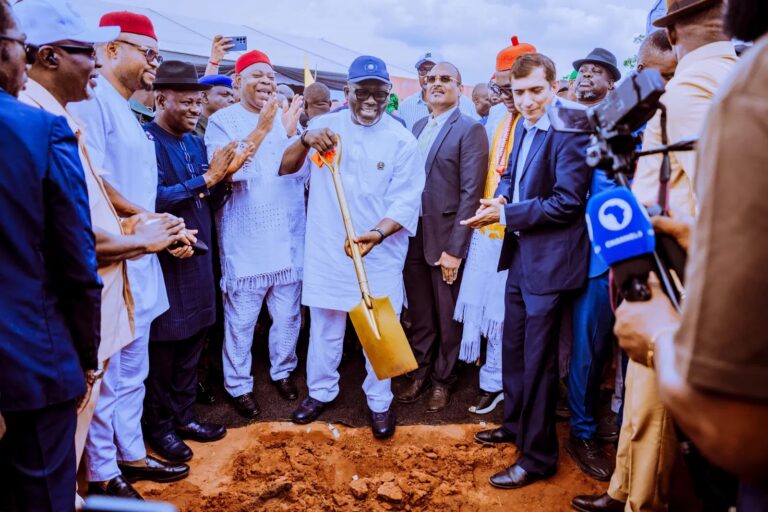
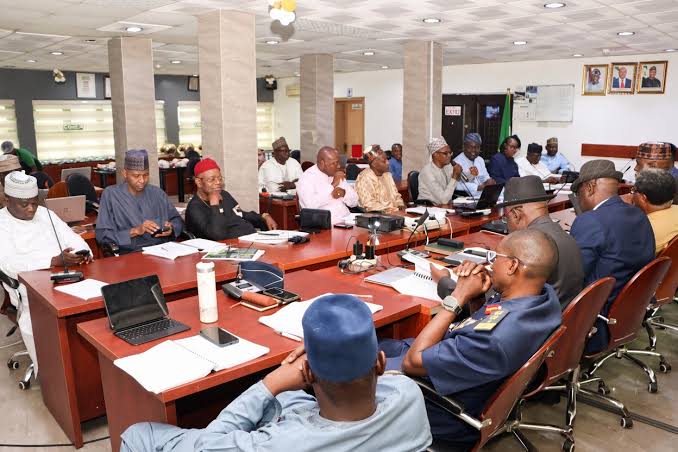
The minister added that all hands must be on deck, adding that with the unveiling of the
Project WHEAT-NESS, the challenges would be addressed.
According to him, the initiative is not a subsidy, a single instrument aimed at a single point of pain, but a whole-chain programme, working across five segments together: upstream supply, industrial processing, downstream enterprise, the consumer market, and the finance and policy environment that holds them all in place.
“At its heart is one conviction, and I ask you to carry it out of this hall today.
Competitiveness and affordability are not rivals. They are one outcome, seen from two ends of the same chain.
“For too long, we have spoken as though a nation must choose: protect the industry, or protect the consumer. Strengthen the producer, or relieve the household. I reject that choice, and so does this programme. An industry that becomes more efficient at every stage is a stronger industry. And a stronger, more efficient industry produces a fairer price for the Nigerian family.
He explained that the miller who sources good grain closer to home, the baker who finances a better oven, the distributor who moves product at lower cost: each of them becomes more competitive, and each of them, in turn, takes a little weight off the household budget,” he added.
The minister added that the project is not to replace any existing initiatives, but to boost it for food production.
“We are not here to replace anyone’s effort. We are here to join them up.The work ahead: our part and yours. I have been in public life long enough to know that launches are easy and delivery is hard. Nigeria has heard many fine speeches.
“What Nigeria deserves now is a
programme that is still keeping its word five years from today. So let me tell you how we intend to work.
“First, evidence before intervention. No priority will go before the Steering Committee unless it
rests on a defensible reading of costs, capacity and constraints. We will not guess at this industry’s problems. We will measure them, with you.
“Second, partnership by design. This programme will be built with the millers, the manufacturers, the bakers, the financiers, the associations and the public institutions who carry this chain, not around them.
“The Programme Delivery Unit exists to convene you, to align you, and to help you
do together what none of you can do alone. Third, accountability in the open. Clear owners. Clear timelines. Measurable results, reported to the Steering Committee. If this programme is working, you will see it. If it is not, you will be
entitled to say so, and we will be obliged to answer,” he said.