Follow Us on Google
- Says 2.1m beneficiaries captured
From Okwe Obi, Abuja
The World Food Programme (WFP) has pledged to commit $2.5 billion to address food insecurity in the country.
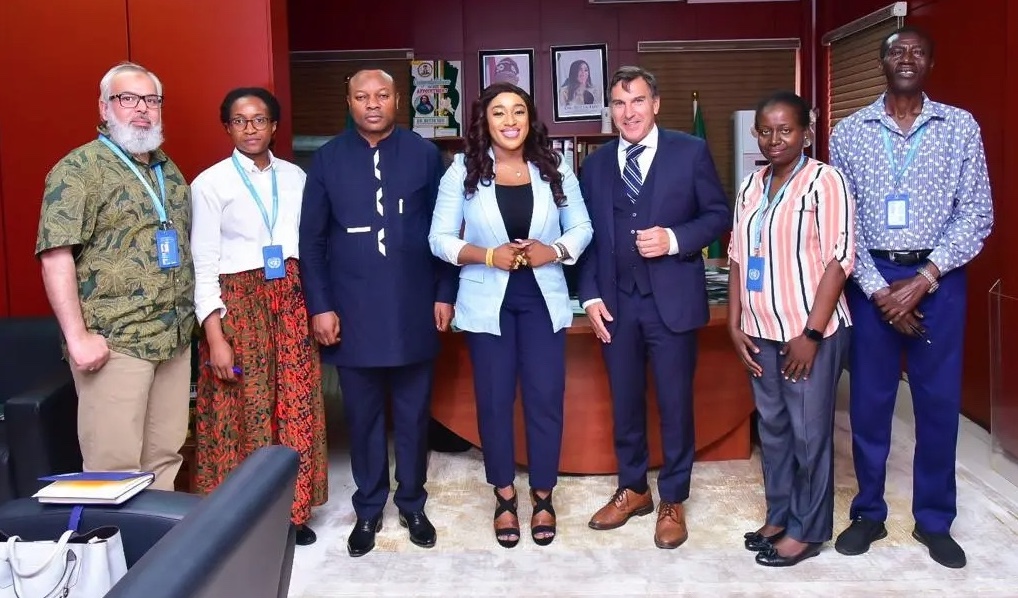
WFP Country Director David Stevenson disclosed this yesterday when he led a team of the United Nations (UN) agency to visit the Minister for Humanitarian Affairs and Poverty Alleviation, Dr Betta Edu, in Abuja.
Stevenson noted that 2.1 million Nigerians have already been captured as beneficiaries of the programme.
He said WFP would support the Nigerian government’s intervention efforts including the food security agenda and the Zero Hunger Programme among others.
According to him, the organization was excited by the robust drive of President Ahmed Bola Tinubu’s government to eradicate poverty and reduce humanitarian crises in Nigeria and the new energy which the Monoater Dr Betta Edu is bringing into the space. They hope to accomplish a lot together.
Stevenson described Dr Edu’s appointment as Minister as well-deserved, noting that she has immediately hit the ground running with her humanitarian and poverty response Programmes which he is committed to giving full support.
“I’ve been very impressed in such a short time to hear about the Minister’s leadership, putting together the strategy for the Ministry.
“We talked about zero hunger, we talked about the humanitarian hubs in every local government area in the country, we talked about the world food programs, the potential to support those hubs through buying food locally and also assisting in the cash transfer and food. These are very impressive.
“Let me announce here that the World Food Programme is committed to spending $2.5Billion To Fight Hunger in Nigeria in the next five years”, the WFP boss said.
Responding, Dr Edu commended the WFP Country Director for the visit and the kind comments about her.
She informed Stevenson that there were over 133 million people in Nigeria affected by multidimensional poverty, stressing that WFP’s intervention of $2.5Billion for five years “will go a long way to address some of the biggest challenges the country is facing, which is hunger”
According to the Minister, “Zero Hunger” is one of the projects her Ministry has initiated as part of poverty and humanitarian response efforts, and appealed to the WFP to key into it by working with the Ministry to achieve results.
Edu explained that Homegrown School Feeding is one aspect of the Zero Hunger Project, as the Ministry will be working on different nutritional programs that will target both pregnant women, children under five, school feeding, feeding of persons who are affected by humanitarian crises, aged and the persons of concern, “including refugees that have found themselves within our space”
“We have over 80,000 persons as refugees presently, in Nigeria. In the state I come from alone, there are over 40,000 refugees and these are just those who are registered.
“Part of the innovation which we are bringing on board is what we call humanitarian hub because we want to create 774 of these humanitarian hubs in each local government across Nigeria,” she added.