Follow Us on Google

From Uche Usim, Bangkok
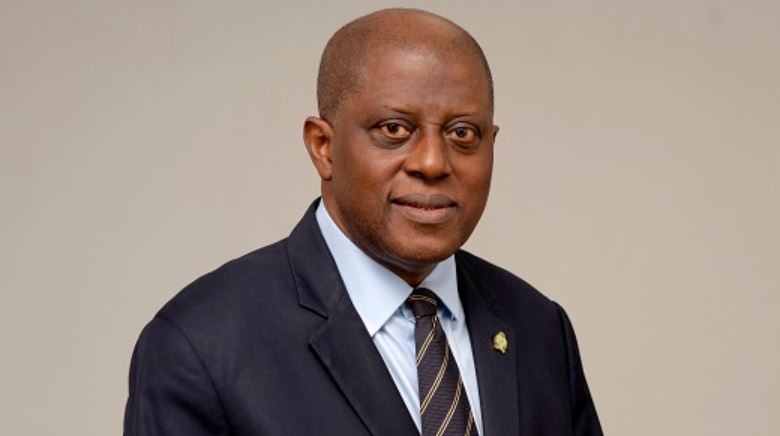
From the Central Bank of Nigeria Governor, Olayemi Cardoso, comes assurances that the federal government will not reverse its economic reforms despite the pressures they may attract, saying they are yielding the desired fruits.
He said policy consistency remains crucial to sustaining investor confidence and consolidating the country’s economic recovery.
Cardoso, who spoke after the 2026 Annual Meetings of the International Monetary Fund (IMF) and World Bank in Bangkok, Thailand, said the decline in inflation to 14.63 per cent in September and the rise in external reserves above $55 billion showed that Nigeria was making progress towards economic stability.
He also disclosed that banks had raised about N4.75 trillion through the recapitalisation exercise, with between 72 and 73 per cent coming from domestic investors, a development he said reflected growing confidence in the Nigerian financial system.
The CBN governor, however, stressed that the gains must be protected through consistent policies, credible institutions and effective coordination between monetary and fiscal authorities.
He spoke on the prospects for further monetary easing, the outstanding recapitalisation issues involving some banks, efforts to attract long-term capital from Asia, financial cooperation with China and the opportunities and risks artificial intelligence presents for Nigeria’s economy.
You have repeatedly said Nigeria must stay the course on economic reforms. What assurances can you give investors that the government will not reverse these policies under pressure?
I honestly think the answer is simpler than it might appear: we must stay the course. The question has come up repeatedly during our engagements. Investors want to know whether we will remain committed to our policies and reforms.
That is where the answer lies. In difficult circumstances, governments can come under pressure to abandon their policies. When that happens, all the hard work already undertaken can be undermined.
But we are not about to do that. We have come a long way and demonstrated that the reforms can work. Stability is returning to our economy, and we must build on that progress. The last thing we intend to do is undermine the difficult reforms we have implemented. We will stay the course.
Nigeria’s headline inflation fell to 14.63 per cent in September, while external reserves have risen above $55 billion. What are your major takeaways from the IMF/World Bank Annual Meetings, and how sustainable is Nigeria’s economic recovery?
These meetings come at an important moment for Nigeria. Our economic indicators are showing encouraging improvements following a period of significant policy adjustments.
Headline inflation declined to 14.63 per cent in September 2026, a development we welcomed during our stay here, from approximately 34.8 per cent at the end of 2024.
External reserves have risen above $55 billion, their highest level in 18 years, while formal remittance inflows are approaching $1 billion monthly.
Our banking sector has mobilised substantial fresh capital through the recapitalisation exercise, with just over 70 per cent raised from domestic investors. This strong domestic participation is an important vote of confidence in the resilience and long-term prospects of Nigeria’s banking system.
International assessments are also recognising the progress being made, including Fitch’s recent revision of Nigeria’s sovereign outlook from stable to positive. These are important gains, and I want to acknowledge the patience and resilience of the Nigerian people through a difficult period of adjustment.
Our responsibility now is to consolidate this progress and translate it into greater investment, productivity and sustainable economic growth.
The CBN recently reduced the monetary policy rate from 26.5 per cent to 23 per cent. What informed that decision, and what will determine the direction of monetary policy going forward?
At the IMF seminar titled How Central Banks Decide: Committee Decision-Making and Communication in an Era of Uncertainty, moderated by Mr Dan Katz, I discussed the CBN’s experience in strengthening monetary policy decision-making, transparency and communication.
Our September decision to reset the monetary policy rate from 26.5 per cent to 23 per cent provided a practical example of the importance of credible institutions and clear policy communication.
Looking ahead, our focus at the Central Bank remains firmly on price stability, maintaining monetary discipline and safeguarding the stability of the financial system.
We will continue to pursue a data-dependent and well-communicated monetary policy, with single-digit inflation remaining a medium-term objective.
At the meetings, there was considerable interest in Nigeria’s monetary policy committee structure, particularly its external membership. How do you ensure independent decision-making and prevent groupthink?
Beyond whether members are internal or external, the most important consideration is their character and independence of mind. We look for independent-minded individuals to serve on the MPC because this helps prevent groupthink, which can easily lead to poor decisions.
One particularly important question was how we ensure that external MPC members have access to information equal to, if not greater than, that available to internal members. We have assigned internal resource persons to each MPC member to provide the necessary support and information.
We also regularly organise strategy sessions with MPC members. At present, we have a group undertaking study tours to other jurisdictions to examine how monetary policy committees operate in different environments.
We are doing everything possible to ensure that we get the best out of the committee. Investor confidence had deteriorated, and the country was in a very difficult position. We, therefore, had to ensure that the committee brought together people with diverse skills, experience and independent perspectives.
What other lessons did you take away from the meetings, particularly regarding global economic uncertainty and the role of the private sector?
Generally, I would identify three or four important takeaways. First, despite global fragmentation and the enormous headwinds experienced over the past year, the global economy has weathered the challenges.
However, considerable uncertainty and fragility remain. We cannot afford to rest on our oars. Given the series of shocks the world has experienced over time, even a relatively small shock in one part of the global economy could have major repercussions elsewhere.
Second, the private sector is critical. Governments must create an enabling environment that allows businesses to invest, thrive and create jobs.
Third, collaboration is essential. There has never been a greater need for collaboration across national boundaries, geographical regions, institutions, governments and the private sector than there is today.
The fourth point relates to the positive reception Nigeria has received during these meetings. You would be surprised by how closely people monitor developments in different economies.
More specifically, I believe there is a growing appreciation of the fact that Nigeria has passed through very difficult times and has managed to emerge in a stronger position. That was evident in some of the examples discussed during the meetings, including our monetary policy reset.
The Nigeria Investors Forum presented several investment opportunities through its Investment Deal Room. What is needed to sustain investor confidence and turn this interest into long-term capital inflows?
Other News
The answer begins with stability. When stability returns and foreign exchange becomes less of a constraint, it becomes easier to develop financial products and investment structures that support long-term financing.
At one point, the premium between the official exchange rate and the parallel-market rate was approximately 60 per cent. Today, it has fallen to about 3 to 4 per cent.
These are the kinds of developments that encourage investment and make it easier to structure financial products around a more stable currency and economy.
As custodians of monetary stability, we have a responsibility to maintain that stability. Development finance institutions, on the other hand, have a responsibility to channel resources into development.
The prospects for mobilising long-term naira-denominated capital have increased significantly as a result of the stability we have achieved in the markets. The risks previously associated with exchange-rate volatility and sharp currency depreciation have receded considerably.
We, therefore, expect development finance institutions to play a greater role in mobilising and deploying long-term capital.
How can African central banks and development finance institutions work together to mobilise the funding needed for infrastructure, industry and other productive sectors?
There must be a clear division of responsibilities. The CBN’s responsibility is to ensure monetary and price stability, not just in the short term but also over the long term, while bringing inflation down and maintaining a stable macroeconomic environment.
Development institutions, including the Africa Finance Corporation, the Bank of Industry and the Development Bank of Nigeria, have their own mandates to finance development. With the improved stability we are witnessing, it should become easier for these institutions to mobilise resources and support productive activities.
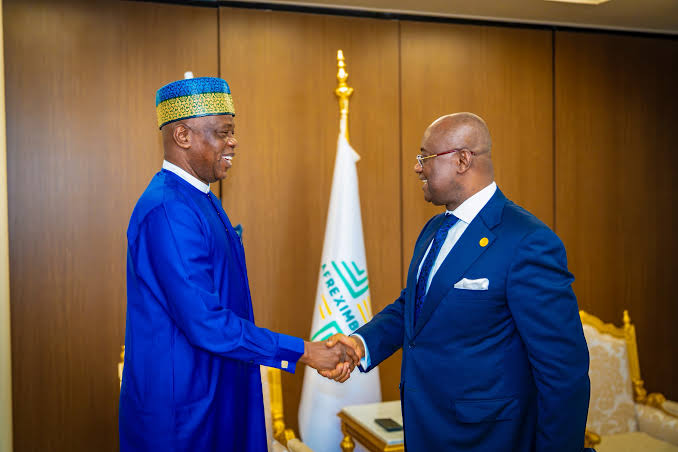
I am pleased that, with this appointment, we will be able to work more closely with the AFC. The institution has demonstrated over time that it can mobilise resources not only in Nigeria but across Africa. We will work with it to advance this objective further.
The recapitalisation exercise has raised substantial capital, but some banks are yet to resolve outstanding issues. What is the current position, and how long will the CBN wait for these matters to be settled?
On the issue of the banks, the matter is still a work in progress. As you rightly pointed out, we are dealing with certain legal and possibly regulatory hurdles that must be crossed.
However, I am confident that things are moving in the right direction. A lot is happening that is obviously not for public consumption, but developments are moving in a very positive direction.
I would also say that customers doing business with these banks should continue to do so. You have nothing to worry about; just continue your business with them. The banking system is strong and resilient.
You are also right that a handful of banks remain outstanding. But the majority of banks have raised substantial capital. N4.75 trillion is not a small amount of money. Of that amount, approximately 72 to 73 per cent came from domestic resource mobilisation.
That is a big deal. It reflects the fact that Nigerians, unlike in the past when they might have been inclined to move their money abroad, are now showing confidence in their domestic markets. That is something we want to protect.
We have to work hand in hand with the Nigerian Exchange Group and FMDQ Group to ensure that the gains we have achieved are consolidated.
The same applies to the Dangote initial public offering. Why is there so much interest from across the African continent? It is the same reason: the stability that has been brought to the market has increased investor confidence.
Your engagements in Singapore and Bangkok, as well as your planned visit to Beijing, signal a stronger financial push towards Asia. What is driving this strategy, and what do you hope to achieve from your meeting with the Governor of the People’s Bank of China?
We are interested in seeing how we can deepen collaboration between institutions, including Chinese banks, the Central Bank of Nigeria, commercial banks and other institutions, particularly in the payments system.
China has a very robust payments system, and we are exploring whether there are lessons we can learn from it. In particular, there is considerable interest in peer reviews between the People’s Bank of China and the Central Bank of Nigeria.
When we travel to China, the relevant teams will roll up their sleeves and examine the details to determine what makes sense and what does not. We want to avoid a situation in which these engagements become merely a talk shop. I can confidently say that, just as we are interested in making this work, the leadership of the Chinese banks is also interested.
Finally, bear in mind that, despite the considerable liquidity available in China, there has not been much investment in Nigerian financial instruments over time. This could be an opportunity to change that trajectory and generate greater interest from Asian markets in Nigerian instruments and African instruments generally.
Artificial intelligence is increasingly being seen as a major driver of productivity and economic growth. What opportunities does it present for Nigeria, and what risks should policymakers be concerned about?
On artificial intelligence and the opportunities it presents, I want to make an important distinction. The impact of AI on the developing world is different from its impact on emerging markets and advanced economies.
The situation is different for developing countries. For us, this is a defining moment. It could determine whether we achieve convergence with advanced economies or fall further behind. This is not just about differences between households or businesses within emerging markets. It is also about the widening or narrowing of the gap between advanced and developing economies.
Artificial intelligence presents an opportunity to close that gap, provided we get it right. I believe the first step is to develop a clear strategy. From the research I have undertaken, I have found that many African economies have yet to develop comprehensive strategies for dealing with this challenge. The risk is that the opportunity will remain available, but if we are not careful, it could pass us by.
At the Central Bank, we decided some time ago that the best approach was to start from the top. We brought the CBN Board together with AI specialists for an extensive discussion on the subject.
We believe the initiative must be driven by the Board and management. It should be a top-down process rather than simply a bottom-up initiative.
For that to happen, those at the top must understand the opportunities and risks. There are significant cybersecurity risks associated with AI. There are also other risks that could destabilise an economy, complicate monetary policy and create challenges for financial institutions.
AI could improve productivity in several areas, including pharmaceutical production and the operations of small and medium-sized enterprises. Businesses have much to gain by adapting and adopting these technologies.
There is a great deal of potential, but the appropriate safeguards must be put in place. Collaboration must also be part of the discussion. We need globally aligned standards to the extent possible, so that one part of the world does not move in a direction that is fundamentally incompatible with developments elsewhere.
There is a lot of work to do in the AI space when we get back to ensure that we get the best out of it.
Finally, how can policymakers balance the expectations of investors with the economic needs of ordinary Nigerians, especially amid the cost-of-living pressures?
I think one common thread that cannot be wished away when dealing with markets is transparency. So far, we have come a long way in being as transparent as possible, and this is one of the things that gives investors confidence, whether in Indonesia, Nigeria or anywhere else.
That transparency index is something we must always watch. These market exits do not just happen without reason.