Follow Us on Google
•UNHCR to provide 500 housing units for IDPs relocation in Benue
From Okwe Obi, Abuja and Scholastica Hir, Makurdi
The Federal Government has revealed that Nigeria currently has 6.7 million Internally Displaced Persons (IDPs), 142 refugees and asylum seekers and 24,000 documented returnees from Cameroon, Libya and others.
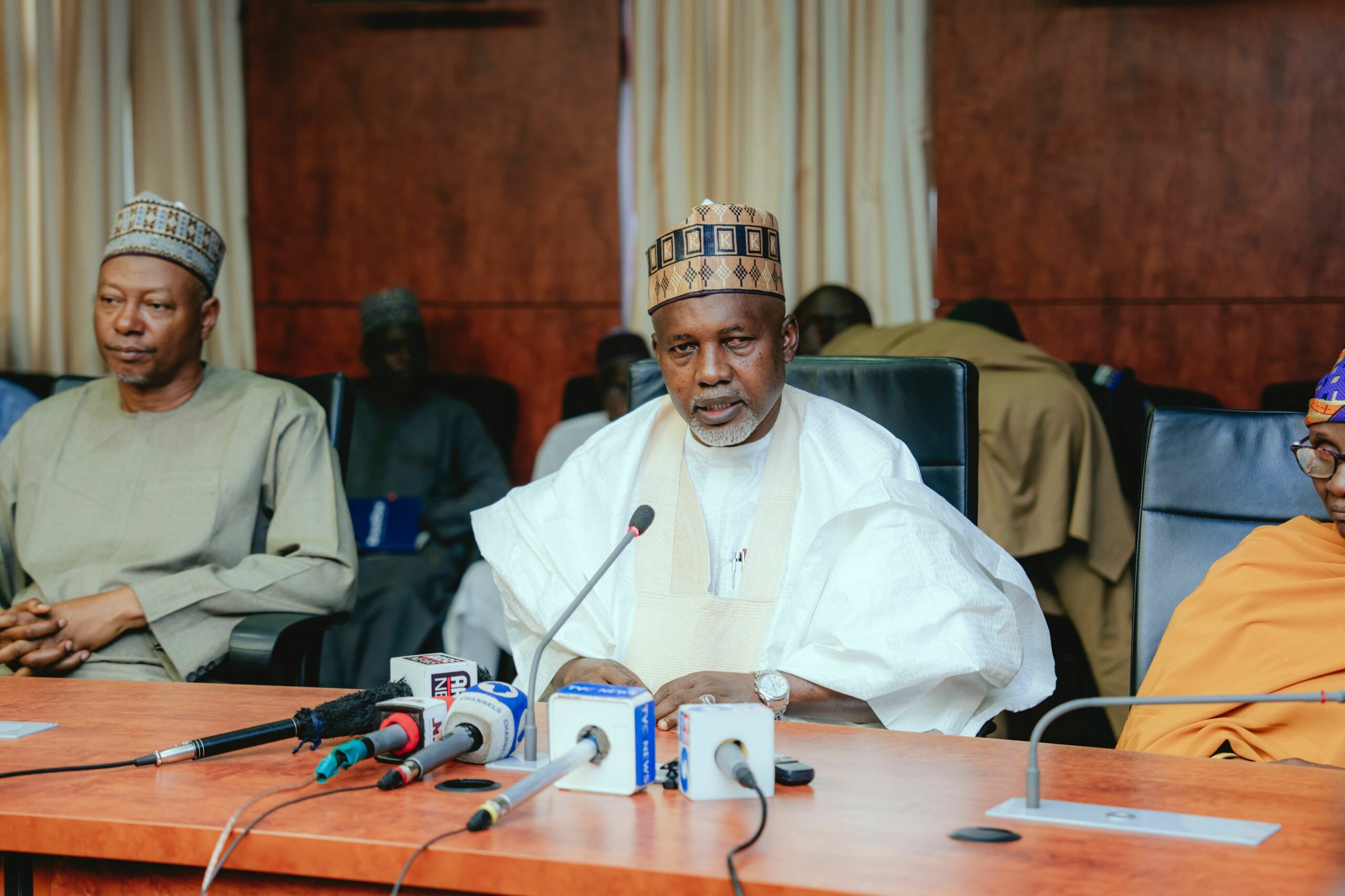
Minister of State, Ministry of Humanitarian Affairs and Poverty Reduction, Tanko Sununu, disclosed this at the 72th session of the Executive Committee (EXCOM) meeting of the High Commissioner’s Programme, at Palais de Nation, Geneva, Switzerland, yesterday.
Sununu, who was represented by the Permanent Secretary, Yakubu Kofarmata noted that the displacement figures were driven by insurgency, conflicts largely perpetrated by non-state armed actors and natural disasters.
This is as the United Nations High Commissioner for Refugees (UNHCR) has announced its plans to construct 500 housing units to support the relocation of IDPs in Yelewata and other communities in Benue State.
According to Sununu, the international community, like the Office of the United Nations High Commissioner for Refugees, has become overstretched both financially and in human resource capacity.
He decried that the strain was further compounded by the redirection of global donor support to other priority areas, leaving vulnerable populations increasingly dependent on host states and host communities confronted with numerous challenges.
He commended Nigeria for the efforts in harbouring displaced persons.
“As of September 2025, Nigeria hosts over 142,000 refugees and asylum seekers; has received over 24,000 documented returnees and spontaneous returns and has a population of over 6.7 million internally displaced persons country wide.
“All these displaced populations continue to be protected by a robust existing national legal framework that affords them different protections and procedures to fully enjoy their rights.
“The NCFRMI Act of 2022, remains fully functional and steered by the National Commission for Refugees, Migrants and Internally Displaced Persons (NCFRMI) the Kampala Convention is on the verge of domestication, now solely pending the President’s assent.
“Additionally, several Nigerian states have already developed State Action Plans in line with the UN Secretary General’s Action Agenda on displacement, to provide structured responses to internal displacement situations.”
He reaffirmed Nigeria’s commitment to the protection and assistance of refugees, asylum seekers, migrants, and Internally Displaced Persons (IDPs), Statelessness in line with international obligations and national priorities.
He called on the international community, UNHCR, and humanitarian partners to strengthen collective action to enhance partnerships that promote shared responsibility and ensure timely, people-centred responses.
Also, to invest in digital innovation to develop secure and inclusive platforms that safeguard data while empowering refugees with direct access to their information.
More so, to build national and local capacities to sustain high-quality asylum systems and improve durable solutions, to encourage responsibility-sharing to ease the disproportionate burden on frontline host countries.
Other News
“Advancing Durable Solutions that foster education, livelihoods, and social cohesion, enabling displaced populations to contribute meaningfully to host societies.
“Enhancing active engagement of private sector actors and the strengthened participation of development partners in advancing sustainable humanitarian solutions and related interventions,” he added.
UNHCR) disclosed plans to construct 500 housing units to support the relocation of IDPs in Yelewata and other communities in Benue State during a high-level multisectoral coordination meeting in Makurdi, convened by the Bureau for International Cooperation and Development (BICD), in partnership with Christian Aid and Ohonyeta Care Givers (OCG).
The meeting brought together stakeholders representing government ministries, United Nations agencies, civil society organizations, and international development partners—including the Red Cross, World Health Organization (WHO), UNHCR, and several national and international NGOs.
Representing UNHCR during the meeting, Mrs. Beatrice Shonke said the projects would commence as soon as suitable land is made available to the agency.
According to her, a pilot initiative called IDP farms benefiting 15 households, has been established in Tyomu community, Makurdi LGA with the IDPs supported to build their homes while also working on the farms in the host community.
She said the organisation also carried out a health and education assessment in Naka, Tartyo and Yelewata communities to ascertain the conditions of their schools and Primary Healthcare centers to enable the agency know how to intervene especially in Tartyo where all school and health facilities were gone following the attacks.
She further expressed the willingness of UNHCR and its partners to continue to intervene in the state until IDPs are supported to go back home and stand on their feet.
Welcoming participants, Director General of BICD, Leo-Angelo Viashima, reaffirmed the government’s commitment to building a coordinated, transparent, and sustainable system that aligns with global development principles.
He commended the leadership of Governor Hyacinth Alia, for providing a conducive environment for partnerships and for his strategic vision to move Benue State from humanitarian dependence toward long-term development.
“We are here not just to celebrate milestones, but to strengthen the systems that make them possible. True progress comes when government, partners, and communities work as one, identifying challenges honestly and forging inclusive, data-driven solutions that endure.”
Viashima reiterated the need to adopt and operationalize the National Social Register to ensure transparency, eliminate duplication, and improve data-driven targeting of beneficiaries.
He called on all actors to deepen collaboration and focus on durable solutions that can transition Benue from emergency response to sustainable development insisting that “Our collective success will be measured not by the number of projects we implement, but by the systems we leave behind. Sustainability must be our goal.”
Several organisations shared updates on their ongoing initiatives across Benue State. While Sight Savers gave a detailed account of its blindness prevention work in Guma and Katsina-Ala LGAs, SOAR Initiative outlined GBV prevention activities in IDP camps.
While the World Health Organisation (WHO) presented its continued technical support to the Ministry of Health, including capacity-building for health workers and observances of global health days, other partners including Christian Aid, Tearfund, First Step, FJDP, and Terre des Hommes (TDH) also presented progress reports on programs spanning health, education, and livelihoods in displaced and host communities.
Representing the Ministry of Humanitarian Affairs, Mr. Jeremiah Terdoo Ityokoso applauded the BICD for its leadership in training IDP camp officials and institutionalizing best practices. He emphasized the importance of aligning all interventions with the newly launched Benue State IDP Policy to promote coherence and efficiency.