Follow Us on Google
By Bimbola Oyesola
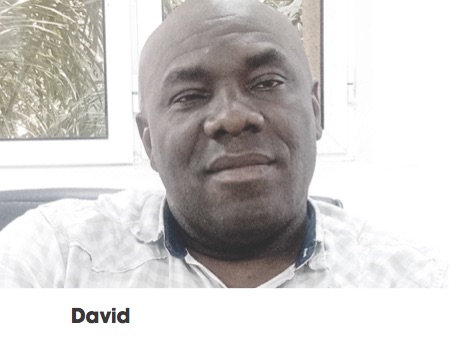
The just concluded International Labour Conference (ILC) in Geneva, Switzerland, was an eye-opener for the president of the Chemical and Non-Metallic Product Senior Staff Association (CANMPSSAN), Segun David, not only in terms of the work of the conference but the knowledge base the conference provides in terms of symbiotic relationship among the tripartite partners.
The labour leader came to the understanding that government, labour and employers cannot achieve anything in isolation, but must worker together to advance the nation’s economy.
David also shared the views of the International Labour Organization on apprenticeship and stated that it was the way to go to reduce unemployment in the country in terms of unfair labour practices. This is even as he warned that organised labour would no longer condone casualisation of its members under any pretext by employers of labour.
David spoke also on subsidy removal, forex harmonisation, global cost of living crisis and other issues of national interest.
Excerpts:
Cost of living crisis and global
impact
Firstly, the global economic meltdown affects everybody around the world. It is not peculiar to the United Kingdom. To make matters worse, the war between Russia and Ukraine has really affected a lot of people, especially those in the Eastern bloc of Europe.
A lot of people in the UK, knowing that these students on work permits usually work to make ends meet and the increase in cost of living has really affected them. I was checking their statistics there recently, their inflation is over 2 percent and It’s been projected at 2.5 per cent, which is really very high by UK standard and there’s no increase or growth in wages.
The wages really dropped by about 5.9 per cent or so compared to cost of living. So, bringing things or sending money back home to their parents has become really difficult. And don’t forget that most Africans that go to foreign lands are breadwinners that take care of their family back home. Cost of accommodation has soared, even the cost of education has really gone up, especially for foreign students or foreign nationals.
We have seen some cases where a lot of these students are relying on their helpless family to even sponsor them over there. So, it’s really affecting everybody all over there, particularly Africans. As I said earlier, this is primarily due to the war between Russia and Ukraine.
Russia-Ukraine war
Don’t forget that the cost of energy has gone up and it virtually affects everything, including cost of food. Most of the grains are coming in from Russia and Ukraine. Currently, we have a very little percentage coming into the other parts of Europe. Also some neighbouring countries have taken sides either with Ukraine or with Russia, and this will make them to try to sanction Russia or otherwise. This is affecting the entire globe.
Impact on Nigerians
It is heavy whichever way you look at it, especially in Nigeria.
You know, Nigerians are people that also want to adjust each time there is a crisis. You will notice that there are more people with tendencies to run away now than we had before.
A lot of people are saying instead of me sending the money home, which I don’t have, why don’t I make way for you to come. So, a lot of people are running in and a lot of people are complaining and that’s why you see that there is more noise back home concerning the cost of living, and the economy. Not to mention that even back home, two things are getting harder. You see the recent price hike happening.
Some are dropping out of schools because they are responsible for sending money back home to bankroll their siblings’ school fees or to also bankroll their parents and thus can no longer meet up with the obligation.
ILO impact as labour leader
I was in a couple of committees. One of them was the Standard Committee for Apprenticeship, which was really a very sensitive area, especially back home with the trend of casualization, outsourcing and the rest.
The government has signed some agreement with Industrial Training Fund (ITF) in order to train people. Which falls in the category of apprenticeship. Now we are looking at ways to harness this and make it better like it’s done in other climes and other countries that they have their own system and it’s working well.
We joined forces with us some other people especially some employers and also the Director General (DG) of NECA was one of the attendees where we spoke generally on this to see how we can fine tune what we have in Nigeria.
Already, ITF is doing a lot in collaboration with some companies to make this work properly. We can actually use this to reduce unemployment rather than having people just graduate and they have nothing to do. We can get them into some scheme in collaboration with the government and some of these employers.
This also produces manpower while giving the beneficiaries some form of opportunity to be trained because there are some companies already which are into it that even send these apprentices abroad for more exposure. This can be imbibed and we can use this opportunity to call on other companies to begin emulate.
This will expand our technological base. This will also create jobs opportunity for people. And this will bring exposure to our populace and the workers at large.
Take-home from ILC
Well, my take home is that Nigeria needs to be more involved. We realized generally most of us that came from Nigeria did not present a common front, we are not as organized or united as other countries that came for this programme.
Other countries were in various committees already organized from their own country and alongside their government. But for us, it was like there was no leader of the Nigerian delegation, virtually everybody came in on their own including labour, and employers. That’s something that’s on the negative side that.
Though we are already discussing with the DG of NECA that henceforth, we would plan ahead and decide where we are going to be, what front are we going to take and we would come as a team not as individuals.
On the positive side, we were able to have a lot of cases. Nigerians were being defended especially on child labour. We also had cases where we were able to see that it is not only in Nigeria that we have cases of labour being pushed aside. We have been able to take example from other countries and see how best we can do well.
In all, it has been a very positive experience where we learnt a lot of things including how we can organize ourselves and above all, I had the discussion with the ILO director for Research and Training, Prof Naren and I informed him that my union, Chemical and Non-Metallic wants to have a training, which he gave us some ways to go about it and by next year, he is going to invite my union and my team for a training on leadership and labour issue.
It has further exposed the Chemical and Non-Metallic Products Senior Staff Association of Nigeria (CANMPSSAN) and has put us in the very fore front of labour matters because a lot of people in ILO commended the union and expressed interest in partnering with us.
Industrial relations
Majorly, it is that government, Labour and Employers cannot achieve anything in isolation, we all need each other. If you look at it very well, the tripartite partners can really make things work. If we are able to come together and look at the different projections we have gotten from ILO, we would be able to put Nigeria again in a very right perspective in terms of workers and the economy.
There’s no need for us to keep fighting and trading blames, we all need to come together; Government, employers and unions if we must really succeed.
Subsidy, palliatives and how labour should have handled it: recommendations
Do not forget that it is a new administration and, no matter what you think, they have their challenges and they will as a matter of fact struggle with some of the situations in the country, which have been there before they came in. I am not holding brief for them, but I think they were struggling and needed to have their foot on the ground and really come out with what they promised their supporters during the campaign.
As a labour leader, I’m not too surprised that they came up this way because the economy is in a battered shape and they needed to do something to be able to deliver their campaign promises. Having said that, if you look at this issue of subsidy, we took our position given the situation of the country with the state of the economy.
Subsidy falls on two divide, there are lots of people benefiting from it and other people that are not benefiting and vice versa.
And so, if they really want to get things done then they need to find a way to put the economy in a slide to run properly. I guess that is why they reached that decision.
They are thinking in the right direction in terms of if we must remove this subsidy, then we must start thinking of palliatives. But the big question is, “Would these palliatives suffice for the populace, would it be managed properly, and would the target audience be reached?”. You just need to give the people the benefit of doubt to see how you would assist them as Labour to make things work.
We need to assist them because it is very clear that a lot of things are not working well. Why we are stuck in this way is because they are new government and we cannot just judge them without giving them the opportunity to do anything.
New forex, sustainability and manufacturing sector
The sustenance is the availability of this forex in banks. If it is available, it is going to come down and it is going to be stable. Now that there is only one exchange rate window, there would be no need to hoard the forex and this would make it more available for everyone that needs access to it.
I would say, well, the government is thinking in the right direction. It means they’ve been listening to Labour now. They know that if you operate a single exchange rate, there would be no artificial scarcity. With benefit of doubt, we would watch them and see how this plays out and take necessary stance as things go on.
Agenda for the new government so that the manufacturing sector including the chemical can survive
Asides the Forex which they are already looking at, they need to address the issue of tax. There is a lot of apprehension that taxes are going to go up and cost of importation and the rest would also sour. The government should also not forget that Nigeria manufacturers in particular imports virtually every of their raw materials. Hence, they need to look at what would happen to import duties, the operations of customs and the issue of port congestion among others.
If they address these issues, they would see that the cost of commodities would go down and it would also trickle down on to the workers.
Manufacturers cutting cost through casualization
This is one of the reasons why I picked interest in the Standard Committee for Apprenticeship because rather than casualizing people, why not put them into this program.
As casuals, you just use them as unskilled labour teaching them nothing, but when you put them through this apprenticeship program, a lot of them would start learning and make use of the knowledge they have acquired.
Casualization is something that the ILO frowns at and we are going to take a definite stance on this and I strongly feel that the present administration is a supporter of decent work based on their antecedents. That is one of the strong points I have always championed, supporting decent work. We would not fold our hands and allow casualization to thrive. We are working on these to ensure that most sectors stop this.