Follow Us on Google
By Adesuwa Tsan
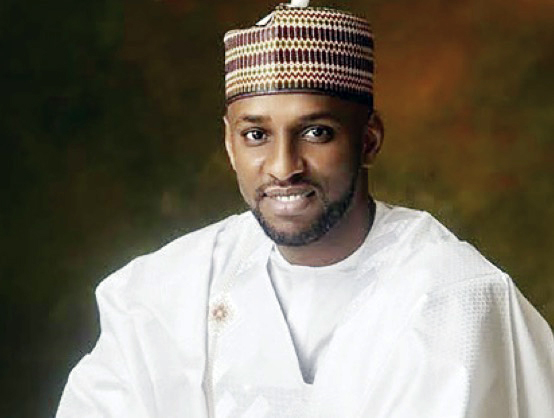
Abdulrahman Bashir Haske, a 35-year old business mogul with investments in agriculture and oil and gas, is a gubernatorial aspirant in Adamawa State on the platform of the All Progressives Congress (APC). In this interview with selected journalists, he speaks on national issues, including state police and the need to develop human resources for wealth creation in the northern part of Nigeria.
You are a young man under 40, and you want to be governor of Adamawa State. What and what prepared you for this huge task?
I would say it’s not the first time it’s happening in Nigeria. So, maybe in Adamawa we would say this is the first time, but in Nigeria it has happened—in Jigawa, with Saminu Turaki. Even during the democratic dispensation in states like Jigawa, Donald Duke in Cross River; he was under 40. I think the ’99 set of governors, almost five were under 40, and they all did extremely well.
So, for me, one of the difficult or one of the things I don’t always like to hear is people judging me because of my age. I would rather be judged by my CV or my past experiences or what I have built or what I have done in life—my achievements, my success stories. I have done a lot. So, it’s better for you to say, “Why are you doing this?” rather than “Are you not too young to do it?” I would say I am better prepared than most of the people that are older. I have more experience coming from the private sector in terms of resource management, in terms of discipline, in terms of corporate governance. So, that is more important for a state like Adamawa, which is mainly, I would say, a “government state”. So, that experience—that vast experience that I would bring in from the private sector—would actually drive the state to a bigger growth, to its full potential.
You said you intend to revive the agricultural sector in Adamawa. You said you have done it before. What makes you think that it’s going to be easy?
If you have done something in the past, it’s actually very easy for you to actually repeat it on a larger scale. It’s more like you have built to a certain stage and you want to expand or you want to build bigger. Let me just use an example for you today: Dangote built a 650,000-barrel-per-day refinery. When he started building, it was a single train. It has never been done in the world. Everybody was challenging him: “Why are you doing this, especially in a country like Nigeria?” But he saw the potential. He understood his strategy and he saw the potential of what this refinery could do to a developing nation like Africa, and he understood the advantage of having the markets here. Today, Dangote is thinking of doubling the capacity of that refinery at even less than one year of operations. So, it shows that sometimes we should talk more about strategy or what we should offer or what is the plan, rather than saying, “Can you really do this? Is it really possible?”
I know when it comes to governance, Adamawa State has a population of over five million right now. So, it requires people to actually scrutinise and actually understand your plan. It’s one thing to say you want to just be in a public office, but what do you have to offer? That is why all these issues of my blueprint—which will be publicised since the declaration is done—we will make that document public. We have built a plan which we have researched over the past six months. We have gone as low as the small communities that you cannot even imagine across the 226 wards. So, for us, what is the need of somebody in Koma? What is the challenge they are having? How do we solve that problem? It’s not just about “I want to be governor” or “I want to warm the seat.”
Sometimes I don’t like to even sit on this—right now, I feel as if the seat is on fire because I am more of an active person. I love to be in the field, I love to move around because I am a farmer. So, the most important thing for me is: what are you ready to present to the people of Adamawa State as a solution or as a plan for your administration?
What are you doing to ensure the party conducts a credible, free, and fair election so that even if you lose, you know that this is what God wants, not what human beings manipulated?
If I would answer it this way: you may be the best candidate at the right time, and you may be the best candidate at the wrong time. The party brought a very good candidate, which is Aishatu Dahiru Binani, in 2023. She is a grassroots mobiliser, she is a core politician, and she is very aggressive when it comes to mobilisation. But because it was a wrong time for her, having to challenge the sitting governor, it was a difficult task for her to achieve. I know if it was Binani on the platform of APC in 2027, it’s a done deal for her.
But today, it is Abdulrahman Bashir Haske—a young man very passionate about his state and ready to serve with a plan. So this could be a divine intervention to say, “It is your time to do this.” I would never say my party can manipulate me out because I have been an active and loyal party member since we started this journey in August 2024. We have been very loyal, promoting the party and our principal, President Bola Ahmed Tinubu.
Fortunately for us, our governor moved into our party; it shows the party is stronger now. It would have been more challenging if the Governor was still on the opposite side. Right now, there might be rumours here and there—it is Adamawa, and we understand there are a lot of power brokers here. I am not saying I could not be the “anointed” candidate, but I can be the people’s choice. There is power when the people unite. When the people say it is you they want, then there is no way any manipulation can come into play.
The party has not mentioned anything about anointing anyone, and we have a process. Consensus is a discussion; it’s a negotiation. The party usually considers who can first win the general election for us, who is a sellable candidate, and who is a good mobiliser. It is beyond just saying “we want to anoint Abdulrahman.” I can even plead with the party to say, “Let’s anoint this young man; let’s make the job easy for us.” The young man has followership; the young people love him. They feel I am an inspiration to them because I get approached on the road by angry young men saying, “We heard you’ve withdrawn from the race,” and I say, “No, we are still in the race, we are still consulting.”
As a young man, at what point did you decide you want to go for this office, and what are the things that informed this decision?
I am a young man just by age, but in terms of experience and things I’ve achieved in life and the roles I’ve played, you will find a 60-year-old that does not have the experience I have—and I’ll proudly say it. I have played in different sectors: oil and gas, technology, logistics, agriculture. I am a person that breaks barriers. I love challenges; I don’t like doing things that are not challenging. It’s too boring. You won’t find me discussing how to sell eggs; you’ll find me discussing how to build a poultry farm for one million birds because I love to do things big.
I am from a very humble background. My father passed on very early in my life, and I was raised by a single mother. I’ve seen life from different perspectives and it has moulded me to say that sometimes you need challenges to bring out the best in you. So for me, I wouldn’t say I’m looking at the Adamawa State governorship as “easy.” It’s a very big challenge, but I take it upon me. I’ve been dedicated and consistent since August 2024. My messaging has been the same. I just kept increasing the volume. The noise was very small when I started, but today the speakers are almost breaking because a lot of people never believed I was actually serious. Along the line, it’s clearer that this young man is not here to waste time or gain popularity, but is really serious about service.
I got to a point where I was done with the private sector. I felt I had done enough, and it’s time to come to the public sector and serve my people more. So, in 2024, I said, “Let me jump ship and move to the public sector.”
Other News
Currently, the North East is a hotspot for security issues. What’s your view on state policing? Do you think that is a solution?
I am still researching on actually how they want to run the state policing. I am not personally in full alignment—not because I don’t support the policy, but because I don’t really understand it well. Sometimes we have very good policies in Nigeria but implementation is always our problem. We might be in a hurry to say “let’s do state policing,” but how do we plan to implement it? I am still consulting. I have not sat down to actually read through the bill to understand how they want to do this, so for me, I will stay neutral for now.
You have openly aligned with President Tinubu’s economic policies. I’d like to know, if elected, how do you intend to support his policies while cushioning the effect of the hardship on the people?
For me, one of the most important things is wealth creation. One of the biggest challenges we have in Northern Nigeria is poverty. In a state like Adamawa, we depend heavily on the government. There is so little government can do in terms of social amenities and infrastructure if we don’t look at how people create wealth. A hungry child cannot go to school hungry. Sometimes it’s better for him to stay home and help his parents by going to the farm or fetching water.
Adamawa has some of the best potential; we are large producers of crops. What are we doing to create value out of these crops? We have so much post-harvest loss. Why is a state like Lagos building a food bank and you have to transport food from the North to store it there? Why is a state like Adamawa not thinking of building the biggest food reserves in Nigeria? We have the landmass and the experience. If we create wealth, then we will have a sustainable society. That over-dependence on the centre—you take it out. Look at states in the South-West doing very well like Lagos and Ogun. People say “Asiwaju magic” because he created ways to create wealth. When people create wealth, then definitely we can do better as a people.
You spoke about accountable and inclusive governance. What plans do you have in place to ensure that even with pressures, you keep to your words?
Accountability is the most important item on the agenda. Sometimes you ask: the person you are voting into office, where is he coming from? What is his background? A lot of these people do not understand accountability because they’ve been in government most of their lives; they have never been independent or generated wealth. I have created wealth, managed resources, and managed successful businesses.
I understand accountability because I’m coming from the private sector. In business, you understand that 1 Naira plus 1 Naira is supposed to be 2 Naira; it can never be 11 Naira. In production, you have to watch your numbers carefully almost every morning to know where you are starting from. If you don’t do that, there’s no point coming into the office.
I am not coming into government to make wealth—Alhamdulillah, I’m okay. It’s about giving back to the community. You look at the pedigree of the leader you are electing. I know people have doubts about voting young men into office. You are right; sometimes a young man gets crazy when he sees money or gets “power drunk.” I have friends in authority who don’t pick calls or say “we are busy” as soon as they get into office. I am not like that, but you are an investigative journalist—you should do research and confirm.
How do you intend to secure the ticket of the APC in Adamawa State? The governor has said the person who will succeed him must be a grassroots politician. Do you fit that description? And who is going to be your biggest challenger?
You journalists have a way of putting somebody in the hot seat. I think I am ten steps ahead of my contenders. In terms of grassroots mobilisation, I happen to be number one. It might be because I fall between the generations and they feel there is “their own” in the race now.
Was anybody ever born a governor? No. You just take up the seat. You need a good team, a policy document, and a strategy. When people say “he’s not a technocrat” or “he’s not been in an office,” those are mere excuses. Abraham Lincoln contested from councillor until he got to the presidency. Donald Trump was a businessman and became President. So, all this idea of “he’s not a technocrat” or “he’s just a journalist”—if you’re not a good journalist, would you find yourself interviewing the elite? I am a businessman; we decided to come back and serve our state.
What if the party decides on a consensus mode and then picks someone else?
My question here would be: first, what is the alternative? Being young today doesn’t disqualify me if I meet the requirements of the Electoral Act. Consensus is an engagement; it’s a business negotiation. It is not a military rule. People don’t really understand how politics is being done or the kind of person President Bola Ahmed Tinubu is. For him, the most important thing is: what is your popularity as a politician?
You cannot just come with “paper weight” and say you must be the governor. If I am being assessed—and there are other parties in the race—there must be a proper assessment. It’s not about giving me the ticket. Let’s take myself as the example because I am still considered the winner of the consensus, just to make the race easier for the party. But consensus is a negotiation, it’s not “tomorrow we are giving this one the ticket.”
There is also an unspoken rule that maybe the ticket has already been zoned to Central Adamawa. What would you say to that?
Maybe I have fallen in that category, I don’t know. I happen to be the only candidate that comes from “all the zones” in one way or the other. I introduced myself once as being from Adamawa Local Government, and it became an issue because people said “this boy doesn’t even know which local government he is from.” But I was born here in the Central, grew up here, went to school here, and my paternal parents are from the Southern zone. I am more like a “cocktail” of Adamawa entirely. Sometimes I don’t even think in a country like Nigeria we should be talking about zones; it shows you how backward our democracy is.