Follow Us on Google

From Noah Ebije, Kaduna
The National Union of Textile, Garment and Tailoring Workers of Nigeria (NUTGTWN) has called for stronger political commitment and effective implementation of policies aimed at revitalising Nigeria’s struggling textile and garment industry.
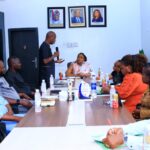
Speaking yesterday at a one-day strategic engagement on the revitalisation of Nigeria’s textile and garment industry at the Adams Oshiomhole Textile Labour House in Kaduna, NUTGTWN President, Peters Godonu, said the sector’s decline was not due to lack of policies but the failure to implement them effectively.
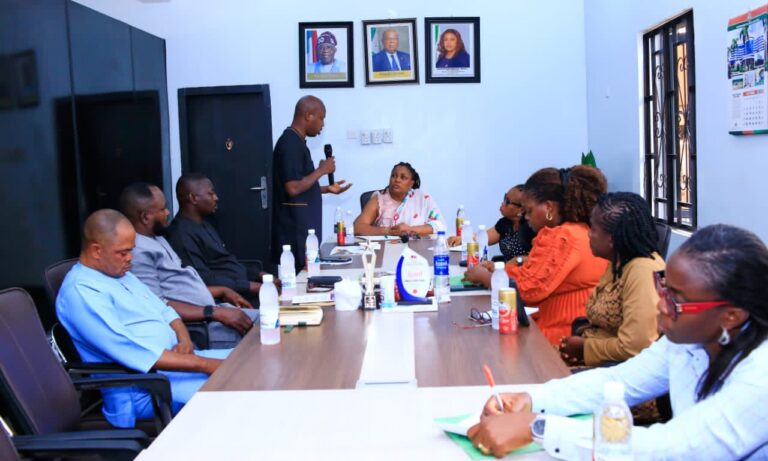
The event, organised by the union, in collaboration with Friedrich Ebert Stiftung, brought together labour leaders, employers, government representatives and other stakeholders to discuss trade union perspectives, policy options and actionable strategies for reviving the Cotton, Textile and Garment (CTG) sector.
Godonu described the textile industry as a once vibrant and labour-intensive sector that created massive employment opportunities and contributed significantly to Nigeria’s industrial growth and economic development.
He commended the Friedrich Ebert Stiftung for its continued support toward sustainable industrialisation, decent work and social justice in Nigeria, while also praising textile employers for remaining resilient despite the harsh operating environment.
The labour leader identified smuggling as one of the biggest threats to the survival of local industries, noting that the influx of textile materials and garments from China and other Asian countries had weakened local manufacturing and reduced the competitiveness of Nigerian products.
According to him, Nigeria’s textile exports dropped by 55.5 percent to N16.55 billion in 2025 from N36.98 billion in 2024, while textile imports increased by 46.11 percent to N1.061 trillion during the same period.
“This situation has contributed immensely to factory closures, job losses and declining investments in the sector,” he said.
He also criticised the poor implementation of government’s policies designed to promote patronage of locally made products, including Executive Order 003 and the current administration’s ‘Nigeria First’ policy.
He expressed concern over the slow pace of activities under the Cotton, Textile and Garment Development Board, despite the introduction of new industrial policy frameworks and initiatives affecting the sector.
Referring to the recent launch of the CTG Value Chain Activation Milestone in Abuja by the Federal Ministry of Industry, Trade and Investment, the NUTGTWN president said there was still little evidence of industrial stability, factory revival, fresh investments or large-scale job creation.
“We cannot continue to celebrate motions without movement.”
He said the strategic engagement was convened to enable stakeholders exchange ideas and develop practical recommendations that would ensure effective implementation of existing industrial policies and programmes.
The union leader also used the occasion to mark African Liberation Day, observed annually on May 25 to commemorate the founding of the Organisation of African Unity in 1963.
He lamented that despite decades of independence, many African countries still faced poverty, unemployment, deindustrialisation and economic dependence.
“Africa cannot attain genuine liberation without economic independence, industrial development and decent jobs for its people.”
He further condemned recurring xenophobic attacks in South Africa and called on African labour movements to defend the values of solidarity, workers’ unity and peaceful coexistence across the continent.
Earlier in his welcome address, the General Secretary of the Union, Ali Baba said that textile workers would vote in 2027 for political leaders that have the revival of the textile industry at heart.
Baba said the union’s resolve to vote committed leaders was because the struggle for the revitalisation of Nigeria’s textile and garment industry was part of the broader struggle for nation’s industrial emancipation and economic sovereignty.