Follow Us on Google
From Taiwo Oluwadare, Ibadan
A presidential aspirant on the platform of the Peoples Democratic Party (PDP), Dr. Gbenga Hashim, has urged opposition parties to unite in order to safeguard Nigeria’s democracy.
He spoke as he intensified cross-party consultations aimed at forging a broad-based coalition to counter what he described as a gradual drift towards a one-party state in Nigeria.
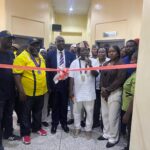
Hashim recently hosted leaders of the Accord Party (AP) led by its National Chairman, Maxwell Mgbudem in Ibadan. Other members of the delegation included the party’s National Secretary, Adebukola Abiola Ajaja; National Treasurer, Salaudeen Abdulazeez Oyeniyi and Organising Secretary, Ibe ThankGod.
During the meeting, he stressed the urgency for oppositions’ unity, noting that collaboration among political actors was essential to preserve democratic pluralism and institutional balance.
The engagement follows Hashim’s recent appearance on Channels Television, where he raised concerns about what he termed a creeping move toward a one-party system allegedly driven by the ruling All Progressives Congress (APC) under President Bola Tinubu.
He argued that opposition parties are increasingly constrained by internal divisions and external pressures that undermine their capacity to organise and function effectively.
He also criticised the Independent National Electoral Commission (INEC), accusing it of imposing what he described as an unconstitutional electoral timetable. He referenced provisions of the Electoral Act, particularly Section 29(1), which stipulates that political parties must submit their list of candidates no later than 120 days before an election.
Other News
According to him, the law implies that parties should have until August or September to conclude their primaries. He, however, criticised INEC’s directive requiring primaries to end by May, arguing that it effectively shortens the timeline by several months and places undue pressure on the opposition parties already grappling with internal disputes and litigation.
While acknowledging INEC’s recent adjustments to deadlines for submission of party registers, he maintained that the fundamental concern regarding the compressed timetable remains unresolved.
The latest meeting is part of a broader engagement strategy. Earlier in the year, he held talks with Omoyele Sowore, presidential candidate and national chairman of the African Action Congress (AAC), in what observers view as a sustained push toward opposition alignment.
Sowore described him as a mentor during their days at the University of Lagos, noting that his early exposure to student activism under Hashim helped to shape his political consciousness.
Across the engagements, Hashim reiterated that Nigeria’s democracy must be safeguarded through cooperation among political stakeholders committed to accountability, equity and a competitive multi-party system. He warned against any attempt to concentrate political power in a manner that could undermine democratic choice.
Political analysts say the series of consultations signal a renewed effort to deepen ideological politics and strengthen coalition-building among opposition figures, amid concerns over political consolidation and a shrinking democratic space.
The consultations are expected to continue in the coming months as stakeholders explore pathways for broader cooperation ahead of future elections.