Follow Us on Google
…Says Kaduna has highest maternal mortality rate
From Emmanuel Adeyemi, Lokoja
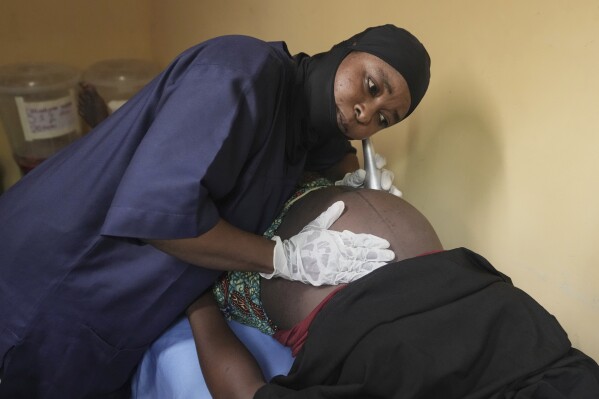
Don and Chief Librarian of Federal University Lokoja, Prof. Sarah Dauda Yani has called for collaborative efforts from all tiers of government to end high rate of pregnancy-related deaths in Nigeria.
She identified cultural beliefs, ignorance, lack of adequate and prompt antenatal information to pregnant women as some of the key factors responsible for high pregnancy-related deaths in Nigeria.
Prof. Sarah Yani made this disclosure Wednesday while delivering the 31th Inaugural Lecture of the university entitled, ‘’Helping expectant mothers make sense of antenatal information and drift out of the claws of death.”
She said pregnancy-related deaths constitute one of the major causes of high mortality and morbidity in women in Nigeria. She said Nigeria is second to India in the ranking of countries with high pregnancy mortality globally.
Similarly, Yani said Northern Nigeria has the highest maternal mortality rate in the country with Kaduna State having 1025 deaths per 100,000 live births, stressing that this calls for concerted and deliberate efforts to reverse the trend.
Her words: ‘This is often not because there is no hospital or one nearby or a specialist is absent, but most of the time, it is because an expectant mother is ignorant of what should be ordinary information on signs and times of the state that help pregnant mothers contextualize practices that can lessen pregnancy-related burdens. Ignorance of such kinds of information can cause avoidable death of expectant mothers.
“Antenatal information dissemination is to promote healthcare-related goals and simplify four intersections I consider necessary for helping the country to intentionally eradicate fatalism associated with mortality and morbidity.
“The intersections of information dissemination and non-clinical interference include: bridging gaps, ensuring access to antenatal information, filling gaps caused by culture, and filling trust-related gaps and filling systemic gaps.
“Summarily, lack of access to antenatal information is responsible for most antenatal information gaps. It is responsible for the marginalization of expectant mothers. If the path to overcome barriers, such as language barriers, illiteracy, and ignorance were eradicated, then the gaps can be resolved or bridged.
“Information should be broken into small packages in line with the types of information pregnant women receive and disseminated appropriately so that pregnant women are not overwhelmed and confused. Providing this information in diverse languages understood by pregnant women is imperative.
‘For pregnant women to perceive and make sense of antenatal information, there is the need to find areas of intersection, between their cultural beliefs and the information they receive.
“ In order to improve the use of antenatal information by expectant mothers, family members, especially their mothers, mothers-in-law and religious institutions should be encouraged to engage and educate expectant mothers of the benefits of antenatal information during pregnancy.
She strongly advised that husbands should be encouraged to attend antenatal clinics with their spouses to facilitate the actualization of the social context, identity, retrospection, extracted cues and plausibility over accuracy construct of the sense-making theory.
In his welcome address, the Vice chancenllor of the university, Prof. Olayemi Akinwumi said the choice of the 31st inaugural lecture’s topic was both significant and relevant saying maternal and child health remain critical concerns not only in Nigeria but across the globe.