Follow Us on Google
…Says PHC Refinery reopening waste of resources
…Urges Nigerians to thank God for Dangote Refinery
…Reopen PHC Refinery or face legal action, PETROAN threatens Ojulari
By Adewale Sanyaolu
After decades of humongous operational losses and failed turnarounds, the Nigeria National Petroleum Company (NNPC) Limited, yesterday, finally admitted that it lacks the operational capacity to profitably run modern refineries.
To turn the corner, the national oil company is seeking foreign operators with equity stakes to operate the facilities.
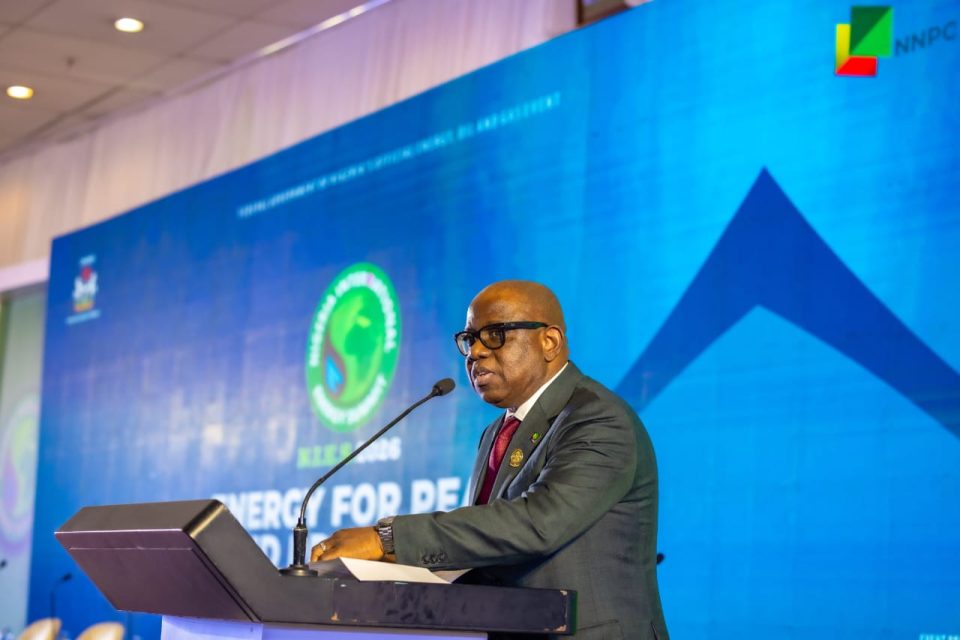
Speaking at a fireside chat with the topic: “Securing Nigeria’s Energy Future” at the ongoing Nigerian International Energy Summit 2026 in Abuja, the Group Chief Executive Officer of NNPC Limited, Mr. Bayo Ojulari, said the decision to halt refinery operations was driven by hard commercial realities, not politics.
He noted that the reopening of the Port Harcourt Refinery and Petrochemical Company was a huge waste of resources, as running such outfits efficiently demands sufficient funding, capable Engineering, Procurement and Construction (EPC) partners, solid operations and maintenance expertise, being requirements the NNPC currently lacks.
“When we assessed the refineries, it was clear they were destroying value. Every barrel processed was running at a loss”, he said.
According to him, refinery utilisation hovered between 40 and 50 per cent, while operating costs, crude supply losses and contractor payments continued to rise. The result was a system that converted valuable crude oil into low-value products at a net loss to the country.
“The more we processed, the more money Nigeria lost,” he said.
The NNPC boss identified a long-standing structural flaw in Nigeria’s refinery rehabilitation strategy. While successive governments focused on financing and engineering contracts, they ignored the most critical element, long-term operational excellence.
“To run a refinery successfully, you need financing, a competent EPC contractor and world-class operational capability,” he said. “Nigeria focused on the first two and neglected the third.”
Once construction and rehabilitation contractors were paid and exited, NNPC was left to operate the assets for decades without the systems, skills or culture required to compete in a global refining market with thin margins.
Under intense public pressure to keep the refineries running, NNPC initially attempted to sustain operations. However, the CEO said continuing would have amounted to “pretending while destroying value. Leadership sometimes means stopping the losses,” he said.
The emergence of the privately owned Dangote Refinery, he added, gave NNPC room to take a commercial rather than political decision, as domestic supply was no longer solely dependent on state-owned assets.
“There was a lot of pressure about continuity, but we were not under that pressure. And thank God for Dangote Refinery. Thank God. Whether you love Dangote or hate him, thank God.
“Thank God he is a Nigerian and not someone from another continent. Despite everything, that gave us breathing space because we now have a refinery that is working,” he said.
NNPC has now abandoned the model of running refineries on its own. Instead, it is seeking experienced global refinery operators willing to take equity stakes and run the facilities as commercial businesses.
“We are not looking for contractors or operators-for-hire. “We want partners who will invest their own capital and have skin in the game”, the GCEO noted.
Other News
He added that the NNPC was willing to relinquish significant equity to secure sustainable operations, noting that without operational excellence, refinery losses were inevitable.
“NNPC, in its current structure, cannot run refineries competitively,” he said.
The shift marks a major departure from decades of policy driven by national pride rather than commercial logic. For the first time, Nigeria’s national oil company is stating openly that ownership without capability is not a strategy.
Meanwhile the National Public Relations Officer and spokesperson of the Petroleum Products Retail Outlets Owners Association of Nigeria (PETROAN), Dr. Joseph Obele, has expressed disappointment over comments by Ojulari that the NNPC lacks capacity to operate refineries profitably and as such, the re-operationalisation of the Port Harcourt Refinery and Petrochemical Company is a “waste of resources”
The association threatened to lobby civil society groups and relevant stakeholders to explore legal options to demand the removal of the NNPC GCEO should the Port Harcourt Refinery fail to resume operations on or before March 1, 2026
He warned that considering the huge sums already spent on rehabilitation, continued shutdown could lead to rust, corrosion, abandonment, lack of lubrication, and eventual destruction of installed equipment—rendering the entire revamp effort futile if urgent action is not taken.
Obele, who is also a Lecturer of Energy Marketing at Ignatius Ajuru University of Education, described the statement as troubling, demoralising and deeply disturbing, noting that it raises fundamental questions about institutional responsibility, governance, and the stewardship of public resources.
According to him, over $1.5 billion of public funds were reportedly expended on the rehabilitation of the Port Harcourt Refinery, which was reopened in November 2024 and shut down again in May 2025 due to alleged financial losses.
For the GCEO of NNPC to now dismiss the entire exercise as a waste of resources, without clear attribution of responsibility, performance audits, or accountability measures, is unacceptable to Nigerians.
“If NNPC truly lacks the capacity to run refineries profitably, as admitted by its own GCEO, then Nigerians deserve to know who advised the investment, who supervised the rehabilitation, who certified the restart, and who benefited from the contracts and operations.
“Public institutions cannot casually dismiss a multi-billion-dollar national asset as a mistake without consequences”, Obele said.
The PETROAN spokesperson also faulted the narrative by Ojulari that Nigerians should be “thankful” solely because of the success of the Dangote Refinery. While acknowledging the strategic importance and commendable achievement of the privately owned refinery, he stressed that private investments cannot replace the constitutional and economic obligation of the government to efficiently manage public assets.
“Dangote Refinery is a private investment driven by profit and efficiency. NNPC, on the other hand, holds national assets in trust for Nigerians. One cannot be used as an excuse for the failure of the other,”, he emphasised.
The energy expert further warned that repeated public admissions of incompetence by NNPC leadership risk eroding investor confidence, weakening Nigeria’s energy security framework, and undermining years of policy efforts aimed at domestic refining, price stability, and job creation.
He called on the GCEO of NNPC Limited to understand that his appointment was to solve problems, not to retreat behind the success of a private refinery. He described as most worrisome the assertion that there is no urgency to restart the Port Harcourt Refinery because the Dangote Refinery is currently meeting Nigeria’s petroleum needs.
“Such a statement is annoying, unacceptable, and indicative of leadership that is not solution-centric,” he said.
The PETROAN National PRO reiterated that Nigeria cannot continue to normalise waste, institutional failure, and retrospective justification of poor decisions. He stressed that admitting failure is only meaningful when followed by accountability, reforms, and a clear, credible plan to prevent recurrence.