Follow Us on Google
By Uche Usim
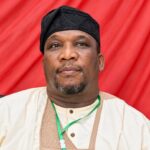
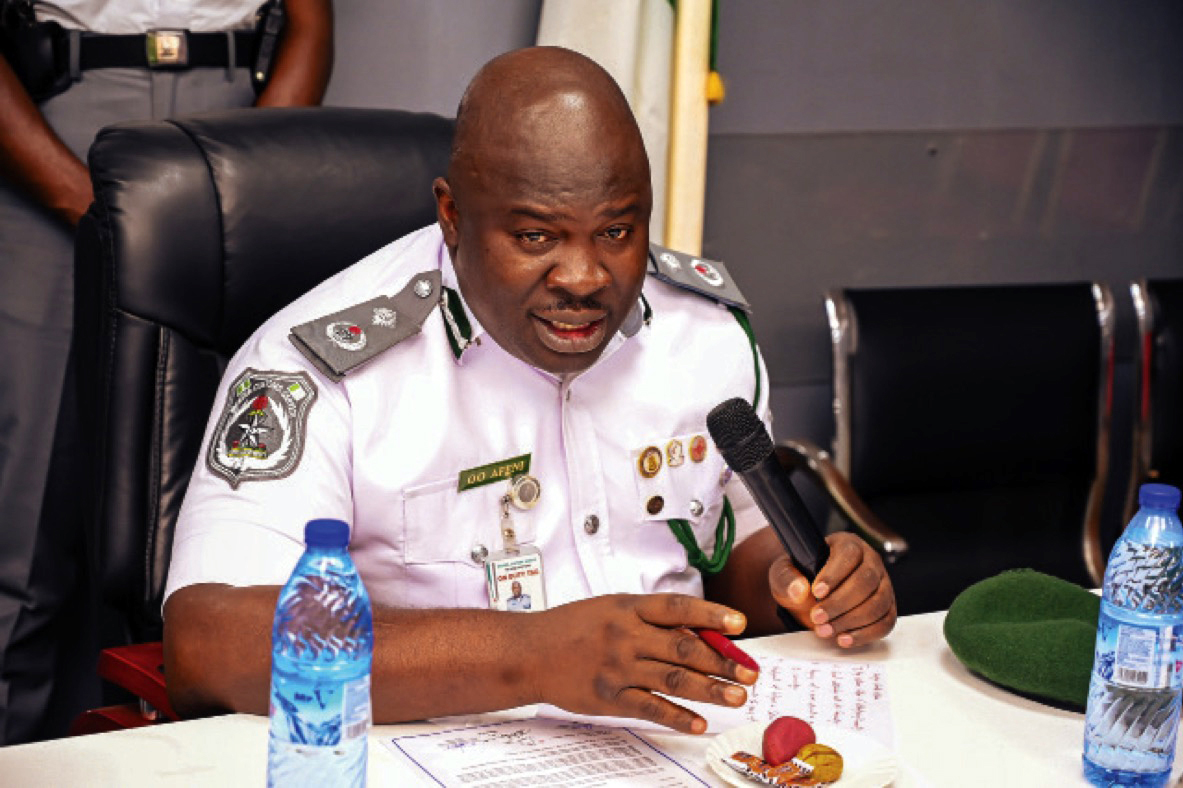
Olukayode Afeni, a Deputy Comptroller of Customs, is the Acting Controller in charge of the Ogun I Command of the Nigeria Customs Service (NCS) at Idiroko, a border town between Nigeria and the Republic of Benin.
He said his command is strongly determined to protect legitimate businesses and government revenue while ensuring that smugglers find it increasingly difficult to operate across the state’s borders.
Afeni speaks about the everyday challenges of combating smuggling, casualty-free seizures, balancing operational exigencies with diplomatic considerations, and the emerging use of geofencing, geospatial tracking and drones in combating trans-border crime and promoting international trade at the frontiers.He also speaks about the Command’s preparedness to confront the likely surge in smuggling activities associated with the Yuletide and ember months.
We observed that since your assumption of office, there has been tremendous improvement in Customs activities, particularly in anti-smuggling operations and trade facilitation. With this harvest of seizures that we see, what is new? What are you doing differently to get these results?
It is just the motivation of the officers and the right leadership provided by the Comptroller-General of Customs, Adewale Adeniyi. The Service has also provided us with all the necessary equipment, and the workforce is motivated. What we are seeing is a result of the right leadership.
We see and report large seizures from your anti-smuggling operations. Do you suffer casualties on the Customs side? If not, how do you do it without casualties?
Initially, when we reported here, there were a few skirmishes. On about two occasions, our officers were attacked. Subsequently, however, we engaged with opinion leaders and traditional rulers and made them understand the need to support the government’s drive to suppress smuggling.We also let them know that our job is being carried out in their interest. That became our strategy for bringing everybody on board.
Have there been any casualties?
No, no casualty. But, you know, in enforcement, officers have been involved in minor accidents and incidents of that nature, some of which were due to confrontations. Even at that, we are not deterred. Our morale for service is renewed every day.
This border is a frontier between Nigeria and the Republic of Benin. What is the level of cooperation you receive from Nigerian and Beninese security forces?
Superb, very superb. The synergy here, not only with the Beninese authorities but also with other relevant stakeholders and government agencies, has been very superb.Ogun State is an example of how government institutions should work and cooperate because we are working towards the same goal, whether for the sub-region or the national government. It is for the betterment of our people, and so we are on the same page.We work together. In fact, we have conducted joint shows of force. We have also carried out joint operations with Benin, so we are always together.
On modernisation, what role has technology played in all of this for you? Or is everything still manual?
No. We have left manual operations behind. The Nigeria Customs Service is the most automated government agency today and we are moving into critical areas of enforcement using geofencing, geospatial technology, deployment of drones and more.For now, we rely mainly on intelligence gathered by the Customs Intelligence Unit and other government agencies. That is why you see that we are a step ahead of these bad guys.These technology-driven feats are part of the deliverables of the Trade Modernisation Project, which is revolutionising the Nigeria Customs Service and improving our productivity, with very tangible results.
We have observed some non-kinetic modes of engagement, such as the use of sports and the sponsorship of entertainment or academic activities. How has this impacted the youths within your area of responsibility?
We believe that the enforcement of government fiscal policy should not be about force alone. Apart from that, we have what we call corporate social responsibility, where we feel we should give back to the society where we operate.For example, we are building a jetty at Ijofin. The Service is also undertaking a comprehensive renovation of a secondary school in another community.The sports you mentioned are a way of bringing the youths away from the unlawful venture of smuggling. It is a way for us to tell them that they can make a living outside smuggling. That is why we are catching them young through CSR and other strategic engagement initiatives to persuade them.I can confirm that this is working.
Does export happen here?
Yes, very seriously.
What do we export through your border?
The commodities are CNG, white talc and crushed thermal coal. Those are the commodities that are exported and the FOB value is in the billions monthly.