Follow Us on Google
By Jude Owuamanam
The N500 million given to 500 families affected by the recent crisis in six local government areas of Barkin Ladi, Bassa, Bokkos, Mangu, Jos East and Jos South is generating controversy that may snowball into another round of conflicts.

There are fears that the controversy over the distribution of the N500 million to 500 families affected by the crisis may lead to a bigger crisis, if not carefully handled.
The fears may not be unfounded, going by what had triggered previous crises on the Plateau. Such mundane and insignificant issues have often acted as triggers to crises in a state largely divided along tribes/religious and indigene-settler lines. For instance, the 1994 Jos riots were instigated by the appointment of a Muslim, Alhaji Mato, as sole administrator of Jos North LGA, which was rejected by indigenous groups. The rejection snowballed into a major ethno-religious crisis in which many people were killed and property worth millions of naira destroyed.
In August 2001, crisis started brewing in Jos over the controversial appointment of the poverty eradication coordinator in Jos North. Jos North had become the theatre of crisis on the Plateau over the disputed ownership of the tin mining city. It came to a head on Friday, September 7, when a young Christian woman tried to cross the road through a congregation of Muslims outside the mosque. She was asked to go back, but she refused. The disagreement degenerated into violence, which engulfed the whole state. For four days, from September 7 to 10, thousands of people were killed while Jos, the capital city lay in ruins.
This time, another crisis may erupt as the Muslim community in Jos is up in arms over the methods employed by the state government in listing the beneficiaries of a N500 million poverty alleviation largesse donated to the persons affected by the recent conflicts in the state.
In April, crisis erupted in Mangu, when a young Fulani boy killed a farmer. The young herder was said to have led his cows into the man’s farm. When the man protested, the herder allegedly hacked him down.
He, thereafter, went to his family to report that he killed a man on his farm. The killer’s family, in a show of sympathy, led a delegation to the family of the deceased to pacify them.
The suspect was then asked to lead them to where he dumped the body. On reaching the spot, the victim’s family could not bear the gory sight. Hell broke loose and they retaliated.
The reprisal led to more killings, which engulfed the whole of Mangu. The attacks subsequently spread to adjoining local government areas of the state.
Since then, many people have been killed and many more dislocated as the clashes spread to more localities.
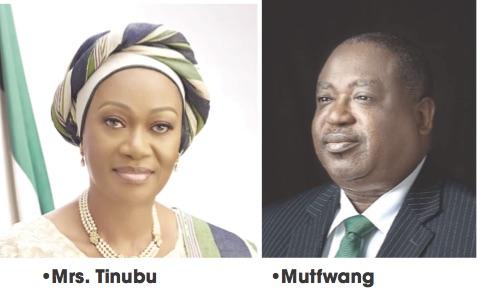
To show sympathy to the victims, the First Lady, Mrs. Oluremi Tinubu, visited Plateau State, where she donated money meant for people who were actually affected by the resurgence of violence in the state.
At a well attended ceremony, the state government had unveiled the beneficiaries of the money to the six local government areas.
In the list obtained by Daily Sun, Mangu got the largest share of the number of beneficiaries, with 170 people, Riyom came second, with 110 beneficiaries, Barkin Ladi, 100, Bassa and Bokkos, with 50 beneficiaries, respectively, while Jos South had 20 names.
However, the Muslim community is shouting blue murder, alleging that no Muslim was included in the list. The Ja’amatu Nasril Islam (JNI), the Miyetti Allah Cattle Breeders Association (MACBAN) and the Gan Allah Fulani Development Association (GAFDAN) are alleging that Muslims who were affected by the crisis were excluded from the list of beneficiaries.
JNI, in a letter to Governor Caleb Mutfwang, dated September 13, lamented that they did not have any input in the compilation of the list of beneficiaries of the largesse.
In the letter, a copy of which was sent to the office of the First Lady and signed by the state secretary of JNI, Dr. Salim Musa Umar, the association said: “We learnt that the First Lady and wife of the President, Senator Remi Tinubu, visited Jos yesterday and was hosted by your humble self.
“That her visit was to sympathize with victims of the recent unfortunate crisis in Mangu, Bokkos, Barkin Ladi, Jos South and Riyom local government areas.
“We note with sadness that the JNI as a critical stakeholder in the peace processes in the state was not invited.
“We also note that the JNI had no input in the list of 500 victims of the crisis despite the fact that we have hundreds of Muslims killed, maimed or displaced as a result of those series of crises.
“This is truly disheartening and gives room for many speculative theories flying around that your government is not carrying everyone along.
“We believe there must be a mix-up or miscommunication somewhere, hence our resolve to write to you hoping to receive clarification and possible amends, where necessary.”
JNI said it was waiting for a response from the governor.
On its own part, MACBAN, in conjunction with GAFDAN, asked Mrs. Tinubu to probe the alleged exclusion of their members from the N500 million largesse.
State chairman of MACBAN, Nuru Abdullahi, wondered why the state government would submit a list of the affected people without even contacting them.
Nuru said they were also at a loss as to why the names of their members who were affected by the crisis were not included in the list of beneficiaries .
In Nuru’s words: “We are surprised with the lopsided nature of the list of 500 families said to be victims of the recent round of crises in six local government areas of Plateau State.
“To our greatest surprise, when the list of the beneficiaries was unveiled by the Plateau State Government, there was no Fulani as a beneficiary. But it didn’t come to us as a surprise because the government has not been carrying us along. Fulani recorded the highest loss in the recent Mangu local government area carnage.”
Nuru said that, from April to July alone, over 350 persons were killed in the crises and 515 persons sustained different degrees of injury, while 115 Fulani villages were destroyed.
He stated that over 15,551 cows were killed with over 23,515 refugees in different camps. He added that a government that intends to ensure peace shouldn’t have behaved this way.
Also, GAFDAN accused Mutfwang of bias. He said: “We are expressing our dismay over the discrimination and lopsidedness portrayed in the distribution of the money given by the First Lady, Oluremi Tinubu, to people affected by the recent crises on the Plateau, more especially in Mangu LGA.
“None of the Fulani made the list of the beneficiaries, even with the wanton loss of lives and properties by our members. We are left to wonder why the Fulani are treated this way and not regarded as human beings. This is a federal government fund but we are excluded. We are calling on the federal government to look into this issue and act accordingly and swiftly.”
Remarkably, investigations conducted by Daily Sun revealed something odd in the distribution of the money. For instance, family members of government functionaries and well-to-do members of the society who were not in any way affected by the crisis were included in the list. Names of officials of youth and sociocultural organizations from the six local governments were added.
A JNI official pointed to one anomaly in which a certain Dauda Piyo, said to be a close relative of the Deputy Governor, Mrs. Josephine Piyo, appeared as no. 89 on the list of beneficiaries from Riyom LGA.
However, the Plateau State Commissioner for Information, Mr. Musa Ashoms, said the inclusion of such names was deliberate, stressing that they were not the official beneficiaries of the money.
According to him, because of the fact that the list was hurriedly put together, some names were inserted as place-holders for the eventual beneficiaries.
Ashoms told our correspondent: “The problem ab initio was that some of them do not have account numbers and we cannot just give the money to anybody. You must put a name that you can trust so that, if the money hits the person’s account, he will give it to the main beneficiary.
“Like the governor said, not all of them in the list are beneficiaries. Like in Irigweland, we put the name of the youth president and the national president of the women’s wing so that she will collect that of the women in that community in trust. It was not as if she’s going to use it. She was not affected.”
Speaking on the supposed relation of the deputy governor, Ashoms said: “The husband of the deputy governor cannot be included in the list. She is the deputy governor already and I don’t see why the name of her husband should be included in the list.
“Some of the names you see on that list are just there because we just have to present five hundred names. The bank drafts have no names in them. Even the IDPs whose names did not appear in the list, we will open account numbers for them in communities next to them.
“If you’re from Barkin Ladi, you can find a bank in Barkin Ladi. If you’re from Riyom, you can come to Bukuru or Barkin Ladi to open an account. So, we use these names for those that do not have bank accounts. It does not take much to open the account. You just need biometrics and a passport photograph.
“On that list, there are two or three pharmacists; they are doing well. The people thought that the money would be given to them that day and they did not have accounts. We need to get these monies to give to the IDPs. He is not an IDP.”
The commissioner said that the protest from the Muslim community was unfounded because the lists were compiled by the leaders in the affected communities. He stated that the lists were not compiled on religious grounds but on the basis of those really affected by the crises.
“It’s the communities that generated names. So, if they are members of that community and they are affected, why not? They will benefit. It is not a Christian/Muslim intervention. It’s an intervention for those affected by the crisis. It’s for 500 people and not everybody will be included in the list.
“It’s not a JNI or CAN thing because even the chairman of CAN called me. People that are affected are in droves, So, 500 is insignificant. Like I said, all we need is an atmosphere of peace for people to go and search for their daily means of survival. If you can go to your farms, get your food, it is better than somebody giving you any form of palliative.”
Last week, the state government kicked off the distribution of the largesse, raising more concerns from the Muslim community that despite their protestations their fears had not been assuaged. The issue is further widening the gulf in the relationship between the Mutfwang-led government and the Muslim community, who had accused him of emasculating them since the last administration exited power.
JNI secretary, Dr. Salim Musa Umar, at a press briefing, lamented that the PDP government had shown that it had nothing to do with the Muslim community in Plateau. He said that the government kept mute on their letter of September 13 on the lopsided compilation of the list of 500 families classified as victims of the crisis in Riyom, Barkin-Ladi, Bokkos, Mangu, Jos South and Bassa LGAs: “We have been monitoring the posture of the state government in the way it is carrying its activities as if Muslims do not exist in the state. It is a known fact that Muslims are found in all the 17 local government areas of the state and our percentage is so high that it will be injustice and lack of fairness to run a government without considering us.
“We note with sadness that the state governor didn’t deem it fit to give a single Muslim the position of a special adviser, in negation to the established tradition of giving that position to a minimum of three Muslims, commensurate with our heavy presence in more than five local government areas of the state.
“The same government looked away from us in depriving us the minimum post of Deputy Chief of Staff, which usually gives the Muslims in the state a seeming sense of belonging.
“The position of Deputy Speaker of the Plateau State House of Assembly usually reserved for Muslims in the state under the past dispensations has been taken away from us as well despite the fact that we have Muslim members in the Assembly.
“We will not hesitate to review all engagements with this government, should this discriminatory tendency continue. We are citizens deserving all rights and privileges as provided in the Constitution.
“No society thrives and prospers on injustice and treatment of some citizens as second class. We ask for quick amends and we will not rest until justice is given to Muslims in the state proportionate to our numerical strength.”