Follow Us on Google
• highlights health as central to well-being, productivity, progress of any nation
From Juliana Taiwo-Obalonye, Abuja
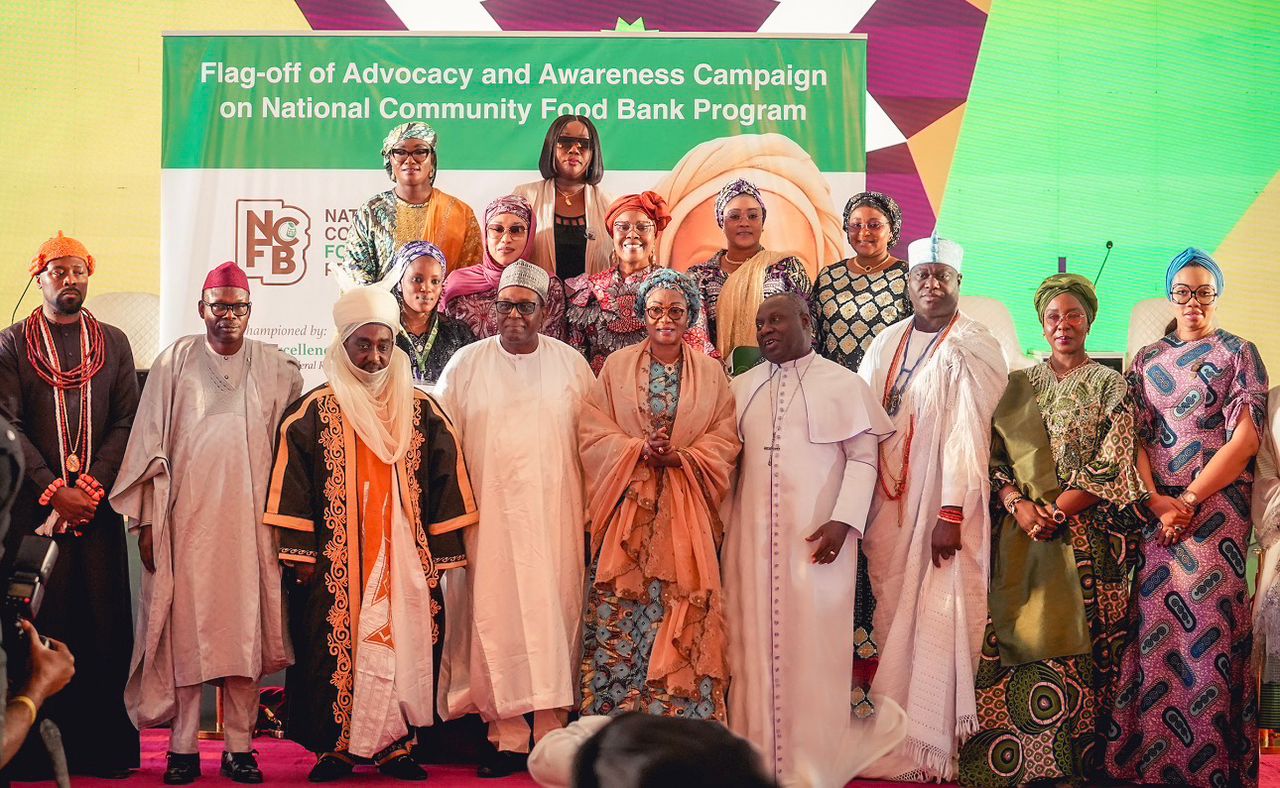
First Lady of Nigeria, Oluremi Tinubu, on Tuesday flagged off the Advocacy and Awareness Campaign for the National Community Food Bank Programme at the National Traditional and Religious Leaders Summit on Health 2026, held at the State House Conference Center, Abuja.
Addressing traditional rulers and religious leaders, Mrs. Tinubu highlighted health as “central to the well-being, productivity and progress of any nation,” noting that President Bola Tinubu has made it “an essential pillar” of the Renewed Hope Agenda.
She announced her office’s collaboration with the Federal Ministry of Health and Social Welfare, the National Primary Health Care Development Agency, Bank of Industry, Bank of Agriculture, and other partners to launch the programme in April 2026. The initiative, she explained targets child malnutrition by establishing food banks near Primary Health Centres nationwide.
“Caregivers will receive counselling and be given food vouchers that they can redeem for nutritious locally grown foods at food banks that will be established close to the health centers,” the First Lady explained. Eligible families with children under six will be identified and registered through the centres, with funding from a Trust Fund overseen by “credible Nigerians” and supported by private sector partners and philanthropists.
The First Lady appealed directly to the leaders: “We will be needing a lot of support from you, our revered traditional and religious leaders, to raise awareness and sensitize households to ensure no eligible family is left behind.”
She commended Coordinating Minister of Health Ali Pate, saying, “for all the great work that you have been doing to improve healthcare delivery to our people.” Mrs. Tinubu also congratulated the National Health Fellows, health volunteers embarking on the campaign.
“Together, we will build healthier and stronger generations of Nigerian children,” she concluded, wishing participants journey mercies.
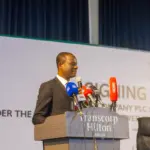
Earlier, Coordinating Minister of Health and Social Welfare, Pate, highlighted Nigeria’s health sector strides while calling on traditional and religious leaders to champion accountability and community action.
He emphasised President Tinubu’s vision for a “prosperous, people-oriented and peaceful nation,” noting health as key to national unity. “If we can heal our divides using the instrumentality of something that affects all of us, health… we can heal our wounds, we can unite our country, and we can inspire ourselves to greatness,” he said.
He detailed progress over 30 months, including taming wild polio in the North, maternal mortality campaigns, measles and rubella immunization reaching tens of millions, high HPV vaccine coverage, 80,000 frontline workers retrained, one National Health Fellow per local government, revitalized primary health centres, and fixed cancer centres in Katsina, Lagos, and Sokoto.
On nutrition, Pate flagged stunting affecting nearly 40% of children, often starting in the womb. “Her Excellency has prompted us to launch this food bank for dealing with this issue of acute malnutrition as well as the chronic malnutrition,” he stated.
Other News
The summit features a signed compact on health and nutrition, inauguration of the second National Health Fellows cohort, and a new MOU with the US for up to $2 billion over five years—10% earmarked transparently for faith-based providers. “Malaria doesn’t respect or prefer one religion over the other… the mosquito bites in the mosque and it bites in the church,” Pate noted.
Pate positioned leaders as feedback conduits: “To the extent that what we are doing is correct, to do more. To the extent that there are areas that we can improve, we are creating a platform so that you can be able to give us those feedback.”
He announced the upcoming Inspiring Nigeria Microfilm Festival in March for communities to share health stories via short films, fostering nationwide transformation. “Policies guide systems but stories inspire transformation,” he concluded.
Executive Director of the National Primary Health Care Development Agency (NPHCDA), Muyi Aina, presented key technical achievements during the ongoing National Summit of Traditional and Religious Leaders, emphasizing reforms to boost vaccine uptake, primary health care access, and community trust. He highlighted NPHCDA’s role in minimizing duplication, accelerating interventions, and strengthening stakeholder engagement for equitable services under President Tinubu’s Renewed Hope Agenda.
Aina stressed collaboration with faith leaders to dispel myths, address hesitancy, and tailor interventions, particularly for immunization, maternal-child health, HIV, TB, and malaria. “By creating platforms for discussion, the agency aims to address concerns, dispel myths, and provide clear, science-based answers to questions about vaccines. These leaders can provide valuable insights into the unique challenges and needs of their communities,” he said, aligning efforts toward Universal Health Coverage by 2030.
Shehu of Borno and paramount ruler of the Borno Emirate, Alhaji Abubakar Ibn Umar Garbai El-Kanemi, called on traditional leaders across Nigeria to spearhead public health efforts amid challenges like vaccine-preventable diseases, maternal and newborn mortality, malnutrition, and emerging outbreaks that hit vulnerable communities hardest.
Represented by Emir of Zazzau, Ahmed Nuhu Bamalli, he Shehu of Borno emphasised traditional rulers’ unique grassroots authority rooted in culture and community trust to promote positive health behaviors, combat misinformation, and partner with government for universal health coverage. He urged translating summit resolutions into community actions, positioning leaders as ambassadors for health equity and resilience to build stronger Nigeria.
On his part, the Ooni of Ife, Oba Adeyeye Enitan Ogunwusi Ojaja, hailed Nigeria’s diversity as a core strength while calling for practical partnerships among political leaders, traditional institutions, and faith-based organizations to elevate the nation beyond periodic elections.
He praised the landmark health summit as unprecedented, stressing that palaces serve as open community hubs closest to the people—unlike transient politicians—and must drive initiatives like food banks to combat challenges through follow-up actions and peer reviews. The monarch urged positive discourse, collective effort over individual agendas, and sustained collaboration, declaring Nigeria belongs to all its citizens as partners in building a greater future.
WHO Representative to Nigeria, Pavel Ursu, praised traditional and religious leaders at a national health summit for their pivotal role in advancing universal health coverage (UHC) through community trust, immunization promotion, and positive health behaviors amid challenges like vaccine-preventable diseases and polio.
He commended Nigeria’s First Lady initiative and initiatives under the Health Sector Renewal Investment, noting Nigeria’s unique engagement of traditional institutions as a global asset that reaches where politicians and health workers often cannot. Ursu highlighted successes in measles-rubella campaigns, routine immunization strengthening, and primary health care revitalization, urging sustained leadership to eradicate polio, mobilize communities in emergencies, and ensure equitable access to quality services for all Nigerians regardless of location or status.
World Bank Country Director, Mathew Verghis, noted that Nigeria’s path to a trillion-dollar economy hinges on quality human investment, particularly through coordinated early childhood efforts from pregnancy onward, encompassing health, nutrition, water, sanitation, caregiving, and early learning.
He highlighted progress via the Health Compact involving traditional and faith leaders, emphasising their critical influence on household practices, gender norms, caregiving, nutrition, women’s decision-making, and early stimulation to turn services into lasting development outcomes. Verghis affirmed the World Bank’s commitment to partnering with Nigeria’s government, people, and faith institutions to drive these changes at community levels.