Follow Us on Google
•Experts meet in Lagos, proffer solutions
By Damiete Braide and Opeoluwa Abiola
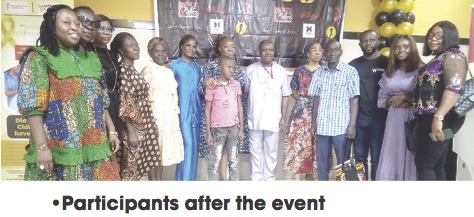
September, proclaimed the month of childhood cancer awareness, is dedicated to creating awareness and raising funds for young ones living with cancer. In keeping with this goal, alongside other groups around the world, Nigerians were enlightened about overcoming challenges related to childhood cancer and causes of distress in treatment, recently.
Mrs. Sherese Ijewere, clinical nutrition and gut health expert and other panelists spoke at the inaugural lecture of Children Living With Cancer Foundation (CLWCF), in Lagos. It was themed “Empowering the youth warrior: Nurturing the emotional resilence, during childhood cancer treatment.”
Ijewere, one of the discussants during the panel session, urged people to ensure their environment and homes were kept clean.
“People should have green plants around them and things that also help to clean the air. If you are not able to control what’s out there, you are able to control what’s in your home that also makes a positive difference,” she explained.
In addition, Ijewere, founder, Carib Health Limited, said nutrition plays a crucial role within the body because it gives energy, helps metabolism and people’s general wellness.
She said: “What are people eating and are not eating? Exposing children to have a variety of meals and paying attention to their nutrition will help them greatly. People should ensure, when it comes to nutrition, they should get food from the earth and not from the convenience of a laboratory or a box.
“And if any of your children has cancer or maybe they’re sick, talk to them about how these fruits and vegetables can help their skin, hair and make them become well.”
Dr. Nneka Nwobbi, founder, Children Living With Cancer Foundation, in her welcome address, said the theme for the inaugural lecture resonated deeply with the mission of the foundation to bring together a community dedicated to transforming lives, inspiring hope and fostering strength in the face of adversity.
Her words: “Childhood cancer is not just a medical challenge, it is a journey that encompasses the physical, emotional and psychological well-being of both the young patients and their families. Our foundation was born out of the understanding that every child’s battle is not just fought in the hospital room but in the depths of their hearts and minds.
“This lecture is not just about awareness, it is about understanding, empathizing and nurturing the emotional tenacity, that is the core of our theme. Our young heroes exhibit a courage that is awe-inspiring, a strength that defies odds and a determination that is unparalleled.
“They embody the true spirit of resilience, and it is our duty to nurture the flame within them. Through education, support and empowerment, we can enable them navigate the challenging journey with courage and grace.
“With hope as our compass and determination as our guide, let us move forward united in our mission to empower the youth and nurture their emotional resilience during childhood cancer treatment. Together, we can create a world where every child’s smile shines bright even through the darkest of times.”
Another discussant, Mrs. Abimbola Oluyemisi Adebakin, a pharmacist, said her organization helps people to get genuine medication.
She said: “Some people will tell you come and take this herbal drug, cleanser, raw meat, etc., and you are vulnerable or tense. The best is to listen to a professional when it comes to taking any drug for cancer.
“Pharmacists believe in real medication and we support the role in childhood cancer because there are some medicines that you need to weigh the child properly in order to understand the dose required for that child.
“In hospitals, we try to encourage multi-professional teams so that the medial doctor, dietician, nurse, surgeon and the pharmacist can assist in calculating what doses the child needs.”
Tolulope Adeyoola-Oladipupo, a public health professional in a foundation for cancer care, said it was important that paediatricians evaluate children at the different stages of their growth. Many childhood cancers are usually detected in the late stage because there is no prevention nor early diagnosis.
“It is a wake-up call for parents to ensure that their children are evaluated by the right medical practitioners. Many cases of late diagnosis of cancer are because people go to wrong practitioners who tell them to do all sorts of things that are detrimental to the health of the child.
“As young people, it is important that, as they grow, let them begin to be aware of their body for what is normal or not. When they see or observe something strange on their body that is not normal, they should take action in that regard.”
Narrating her ordeal, Mrs. Adebola Sobande told the audience how her one-year-old daughter was diagnosed with cancer 20 years ago.
“I took my daughter to the hospital for a general medical checkup, three days before her one-year birthday, and it was diagnosed that my child had cancer in her kidney, Will’s tumour.
“With the news, I could barely sleep and was really disturbed. I observed from what I had read about cancer in children that from the size of a lemon it could grow to the size of a grape fruit and that frightened me.
“My husband and I visited a medical doctor in Surulere and he told us that our daughter had cancer on one kidney and it needed to be removed immediately.
“Luckily for us, the cancer was at stage one, which was less than 30 grams on her left kidney, which was removed. Today, she is more than 20-years-old and she is hale and hearty,” she volunteered.
Prof. Edamisan Temiye, consultant paediatric haematologist/oncologist, in his lecture, titled “Causes of distress in childhood cancer management,” said any serious ailment such as cancer could lead to significant stress on the patient and their families and also cause post-traumatic stress disorder.
“Stress in this form is not the one that makes you to do great things but it is harmful to the well-being of the individual. From research done on family members, it is on record that mothers are the most stressed compared to their husbands and siblings of the child that has cancer and has disturbing situations confronting them.
“The chemotherapy itself gives pain, some of those drugs are oily and it gives pain when infused in the child.”
In his conclusion, he said efforts should be directed to allow children with cancer to express themselves in order to find means of dealing with the stressful conditions they go through.
According to him, the treatment environment should be made conducive and posttreatment support should be offered.
The CLWCF founder reiterated their commitment to help save more lives by supporting improved welfare and treatment for children battling cancer while extending support to their families by continuously pricking the consciousness of the public and facilitating timely medical intervention from appropriate quarters.