Follow Us on Google
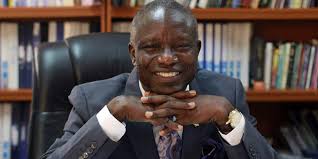
By Oluseye Ojo
After more than two decades of turning down opportunities to become an archbishop, the President of Sword of the Spirit Ministries and National President of the Pentecostal Fellowship of Nigeria (PFN), Bishop Francis Olubowale Oke, has finally accepted the elevation, saying that the decision was in accordance with the will of God.
Oke, who was consecrated a bishop in 1999, was elevated to the office of Archbishop by the Calvary Grace International College of Bishops during the 2026 annual Holy Ghost Convention of the Sword of the Spirit Ministries in Ibadan, Oyo State, which began on Sunday August 30 and will end today.
The elevation, announced by the South-West Presbyter of the college, Bishop Felix Adejumo, recognised Oke’s more than 27 years of episcopal service, spiritual leadership, mentorship and contribution to the development of bishops and Christian leaders across different parts of the world.
Accepting the new responsibility, Oke said he had deliberately declined similar opportunities since his consecration, choosing instead to devote himself to evangelism and preaching the gospel. He is the Prelate of the college.
He said he accepted the elevation this time because it had become clear to him that it was God’s will and the collective decision of the college.
“I accept the elevation with all my heart. Since it seems good to you and to the Holy Spirit, it seems good to me also. I concur with you,” he said.
The ceremony was attended by members of the College of Bishops and Christian leaders and was contained in a statement issued by the Media Bureau of the Sword of the Spirit Ministries.
Presenting the statement of purpose for the elevation, Bishop Julius Abiola described Oke as a father of fathers, pastor of pastors and bishop of bishops, citing his role in producing, mentoring and strengthening episcopal leaders.
The college said the elevation was not simply the conferment of another ecclesiastical title but a formal acknowledgement of a ministry that had been tested over time and demonstrated through service, spiritual fruit and the raising of other leaders.
According to the college, Oke’s influence has extended beyond congregational and denominational boundaries, with his episcopal ministry taking him across national borders. It said he had participated in the consecration and establishment of bishops in different parts of the world and provided spiritual oversight and fatherly guidance to many of the more than 50 bishops affiliated with the college.
It described his ministry as an episcopacy that has produced episcopacies, noting that he had identified, nurtured, mentored, affirmed, consecrated and commissioned other spiritual leaders.
The college charged the new archbishop with greater responsibilities in spiritual fatherhood, episcopal oversight and mentorship, promotion of unity and preservation of the integrity of the Christian faith.
Oke, in his response, thanked God and members of the college, while commending the organisation for maintaining what he described as strict standards in selecting and consecrating bishops.
He said prospective bishops always undergo rigorous examination before being admitted, stressing that only people with proven integrity and impactful ministries should be admitted.
“The door is still open to anyone who is interested, but the standard remains the same,” he said.
Reflecting on his journey to the episcopacy, Oke recalled that the late Archbishop Benson Idahosa had sought to consecrate him as a bishop as far back as 1988. He said he repeatedly avoided the elevation because of his strong passion for evangelism.
He also recalled participating in the consecration of Bishop David Oyedepo in Kaduna, where Idahosa told him that he should have become a bishop and declared, “You are next.”
Oke said he nevertheless continued to avoid the episcopal office for about another decade before eventually responding to what he described as the prompting of the Holy Spirit.
He was consecrated a bishop in the United Kingdom in 1999, with the consecration repeated three months later at the Garden of Victory in Ibadan.
Oke also traced the development of the Calvary Grace International College of Bishops to his desire to mentor younger ministers. He said his ministry began after responding to God’s call in 1976, while the mentorship fellowship that later became the college started as the Calvary Grace Covenant Fellowship International.
According to him, the fellowship expanded as ministers sought spiritual guidance and leadership, eventually leading to a meeting at Premier Hotel, Ibadan, where members agreed to establish the College of Bishops and adopt its present name.
He said the college has since expanded its membership beyond Nigeria to other parts of Africa, North America, Canada, the United States and Europe, with its first European member recently consecrated as a bishop.