Follow Us on Google
• The silent struggle of Abuja’s traders
From Francis Onyedikachukwu, Abuja
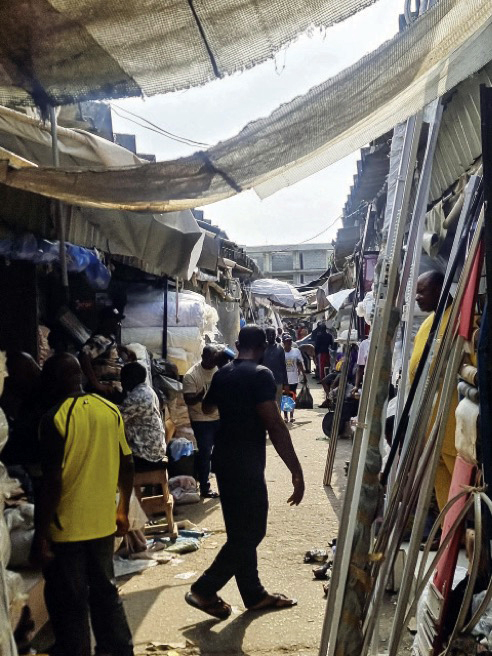
The silence is what strikes you first. Not long ago, the aisles of Wuse Modern Market, Abuja, pulsed with the sounds of bargaining customers, traders calling out buyers and porters weaving through crowded walkways with loaded trolleys. Today, the atmosphere is markedly different. Shop owners sit quietly outside their stores, watching the hours pass as empty corridors stretch before them.
For many traders in Abuja, business has become an exercise in patience, resilience and hope. Outside his interior decoration shop, Ejike scans the long row of stores opposite his own. Nearly every shop is open, but very few have customers.
He said: “If you check these lines now, I can assure you there isn’t a single customer,” he says, his voice carrying more resignation than frustration. Everything has gone upside down. It’s not only interior products; electronics, provisions, every business is suffering.”
His experience reflects the reality confronting thousands of small business owners in Abuja’s major markets. Rising fuel prices, transportation costs, import tariffs and persistent inflation have combined to erode consumers’ purchasing power, leaving traders with stocked shelves but dwindling sales.
For many, the crisis extends beyond poor business. It has become a fight to keep their livelihoods alive. Ejike: “People borrowed money believing business would continue as before.
“But now sales are so low that meeting repayment deadlines has become almost impossible. Our expenses are now higher than our income. That is why businesses are going down every single day.”
Behind every unsold item lies another financial obligation; bank loans waiting to be serviced, shop rents due for payment, salaries for employees, children’s school fees and household expenses that continue to rise regardless of whether customers make purchases. The economic downturn also altered the rhythm of international trade that once sustained many businesses in Abuja.
For years, traders regularly travelled to China to purchase goods directly from manufacturers, ensuring competitive prices and steady supplies. Those journeys have now become increasingly rare.
Other News
“This year, only about two people from this whole line have gone to China,” Ejike says. “Next year it may be just one. Last year only one trader bought a car. Even those who own vehicles hardly drive them because fuel is too expensive.
“The challenge does not end with sourcing goods overseas. Importers now face enormous clearing costs at Nigerian ports, making it increasingly difficult to remain profitable. If someone buys goods worth N20 million in China, clearing them here can cost as much as N25 million. The tariffs are even higher than the value of the goods.”
Those additional costs inevitably find their way into retail prices, placing goods beyond the reach of many consumers already struggling with the rising cost of living.
At Kubwa Market, household goods trader Eze Linda tells similar story: “Business has not been flowing since the increase in fuel prices. Customers complain every day because the prices of goods keep going up.
“To transport our goods from Lagos to Abuja used to cost about ₦30,000. But when the goods arrive in Abuja, moving them from the motor park to the market almost costs the same amount. By the time those costs are added to the selling price, customers can no longer afford to buy.
“Higher transportation costs have pushed up food prices as well. Because of transportation, even food has become more expensive. Everybody is feeling the impact. Families are struggling, and so are traders.”
Traders who once employed assistants have scaled down operations. Plans to expand businesses have been abandoned. Investments have been postponed indefinitely as survival takes priority over growth.
Many households have become increasingly cautious with spending, focusing almost exclusively on necessities while postponing purchases of furniture, electronics, interior decoration and other household items.
Despite the mounting challenges, the determination to keep going remains unmistakable. Every morning, traders continue to unlock their shops, arrange their products neatly on shelves and wait for customers who may never come. It is an act of resilience repeated day after day across the city’s commercial centres.
Looking around the nearly deserted market, Ejike reflects on the hope that has sustained generations of Nigerian entrepreneurs through difficult times: “Our fathers told us that things would get better, and we are telling our own children the same thing. We believe God will see us through. But the truth is, right now, things are not well.”
Traders are calling on the Federal Government to ease the burden by reviewing fuel prices, reducing transportation costs and reassessing import tariffs. They argue that lowering the cost of doing business will ultimately benefit consumers by making goods more affordable and helping small enterprises remain viable.
Without urgent intervention, they warn, more businesses may be forced to close, threatening thousands of jobs and livelihoods.