Follow Us on Google
From Okwe Obi & Suleiman Jessica, Abuja
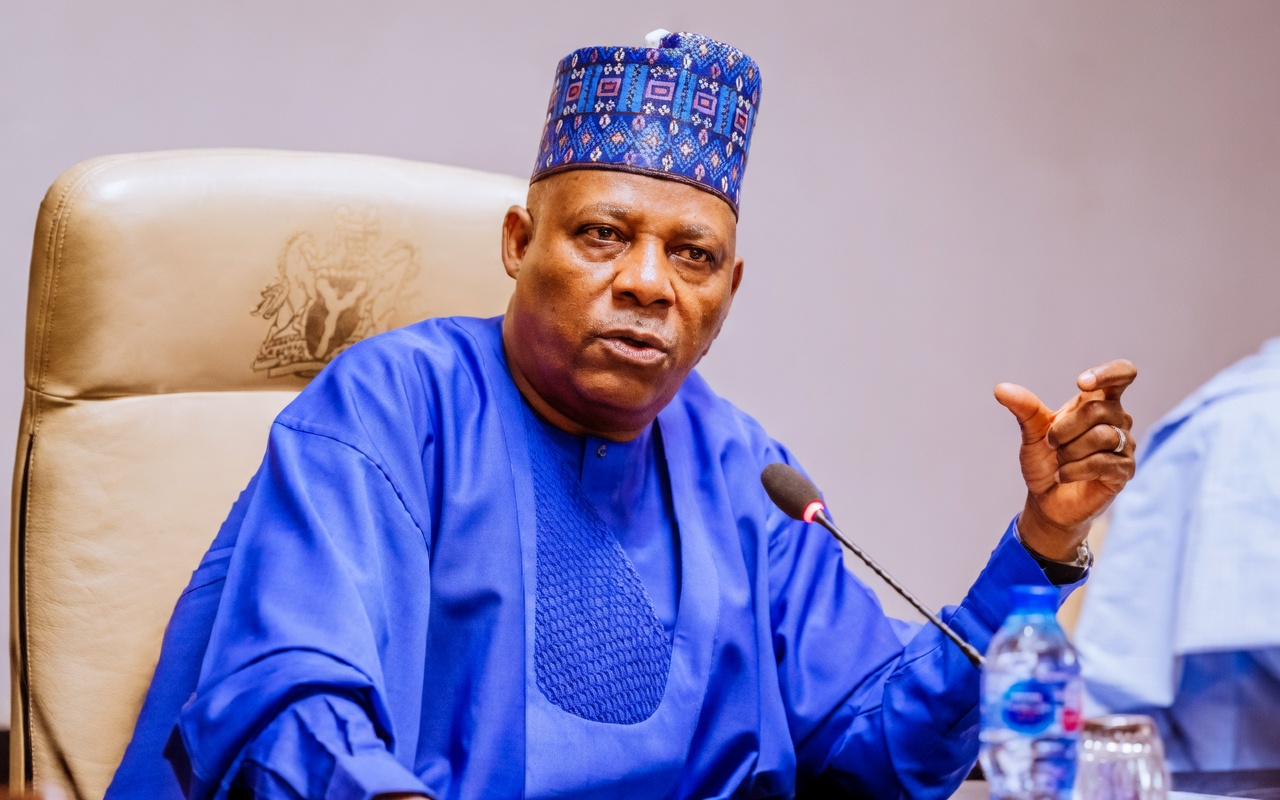
Vice President Kashim Shettima and Zamfara State governor Dauda Lawal have suggested proactive measures to address humanitarian crisis on the continent.
Shettima, also, noted that the humanitarian pressures affecting Nigeria are inseparable from developments across the Sahel, the Lake Chad Basin, West Africa and the wider continent.
Speaking at the United Town Agency for North-South Cooperation International Humanitarian Award and Lecture, yesterday in Abuja, the vice president stressed that the continent must join forces to tame regional crisis.
According to him, it was time for the continent to put an end to condolences, camps, appeals and statistics, stressing that society proves its seriousness when it can convert sympathy into systems, outrage into prevention, and relief into a pathway back to dignity.
Represented by the Director General of the National Emergency Management Agency (NEMA, Zubaida Umar, he said: “Early warning must also produce early action.
“Local leaders, traditional institutions, women, young people, humanitarian workers and security agencies must exchange information before rumours harden into mobilisation and before a dispute becomes a funeral.”
The vice president pointed out that President Bola Tinubu, has distinguished himself through his conviction that regional partnership remains a practical stepping stone towards global peace and shared prosperity.
“That principle has become central to our humanitarian agenda. No nation can purchase permanent safety while its neighbourhood is collapsing. Regional peace is the first wall of national security, and regional prosperity is among the strongest defences against the commerce of despair,” he added.
Governor Dauda Lawal, on his part, disclosed that across West and Central Africa, nearly 20 million people were forcibly displaced or stateless as of April this year, with internally displaced persons accounting for more than 15 million.
Lawal observed that the scale of displacement remains extraordinarily high and the pressure of forced communities, national institutions, and humanitarian systems continue to grow.
He added that in the Sahel, the reality requires Africa to broaden understanding of what humanitarian services are.
Represented by his Chief of Staff, Mukhtar Lugga, he added that the humanitarian challenges before us, therefore, is not simply how to respond more efficiently when people are already suffering, but how to understand the connections between these vulnerabilities and build systems capable of preventing, absorbing, and recovering from shocks before they become catastrophic.
“The figures emerging from the different parts of our continent give urgency to this conversation.”
Other News
The governor explained that humanitarian action must first and foremost protect life, uphold human dignity, provide food, water, shelter, healthcare, protection to women and children, education to children whose learning has become interrupted, and displacement, psychological support to those traumatized by violence and displacement, and assistance to those with disabilities and other groups whose vulnerability may have intensified by this crisis.
“But it may not end there. If people remain independently independent on emergency assistance, if children remain outside schools, if families cannot return to their farms, if communities lack access to basic services, and if displaced families have no realistic pathway towards rebuilding their lives, then we have addressed the symptoms of the crisis without resolving its consequences.
“The humanitarian imperative must therefore be connected to development imperatives.
“We must increasingly think of in terms of continuum in which immediate relief protects life, early recovery restores essential services, livelihoods restore economic independence, social protection reduces vulnerability, people can rebuild crops, reconstruction communities and development clears the conditions for people to live securely and productively. I will go straight to the experience of Zamfara State,” he added.
He disclosed that Zamfara State has had to deal with the consequences of banditry and insecurity for several years.
“Our people have experienced displacement, loss of lives and property, destruction of livelihoods, interruption of education, pressure on health services, and the awakening of communities from it.
“Yet, even in the face of these challenges, Zanfra has demonstrated remarkable courage and resilience.
“They have continued to farm when the circumstances permitted, to train, to educate their children, to support one another and to maintain faith in the possibility of recovery. It is this resilience that must inform our understanding of the humanitarian response,” he said.
UTA Nigeria Country President, Abigail Amalaha, solicited support to establish a humanitarian centre in Nigeria.