Follow Us on Google


• Says govt must stop treating journalists as enemies
• Identifies poor pay, ownership interference as threats to press freedom
• Calls for media-government-citizen pact to protect democracy ahead of elections
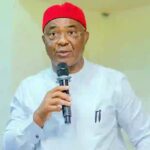
Imo State Governor Hope Uzodimma has proposed the establishment of a national media centre in honour of the late media entrepreneur, High Chief Raymond Aleogho Dokpesi, to promote research into the role of journalism in economic growth and national development.
Uzodimma also warned that political interference, poor remuneration, harassment of journalists and the growing economic vulnerability of media organisations threaten press freedom and Nigeria’s democratic development.
The governor, who made the proposal on Sunday in Abuja, said the best tribute to Dokpesi, founder of DAAR Communications Plc, was to protect the freedom he helped advance and ensure that journalism remained credible, independent and accountable to the public.
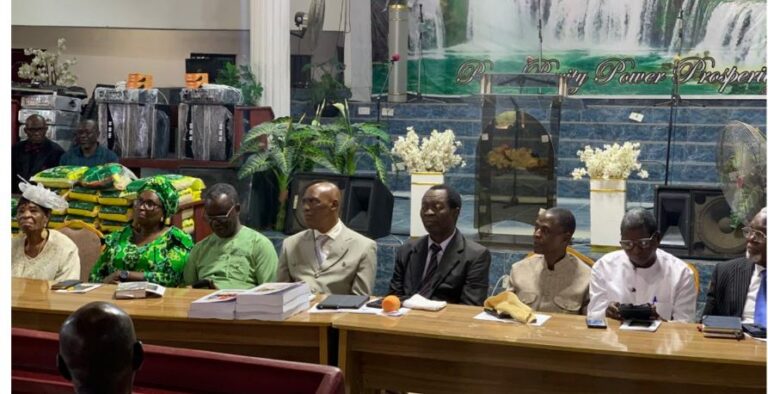
He spoke while delivering the third Raymond Aleogho Dokpesi Annual Diamond Lecture, organised by the Nigerian Institute of Public Relations (NIPR) in collaboration with DAAR Communications, on the theme, “Media, Democratic Consolidation and Development.”
Uzodimma, who pledged to lead the campaign for the establishment of the proposed centre, said it would serve as a hub for research into how the media could be better deployed to advance economic development and strengthen development journalism.
“But I think that as his friends and associates we should take the lead by building a national media centre in his honour. The centre will be a hub for research on the media and how it can be properly channelled for economic development, or, put simply, for development journalism. I shall be prepared to lead in the campaign for the establishment of this centre,” he said.
The proposal came as the governor called for a new relationship among government, media owners, journalists and citizens, arguing that democracy could not be consolidated where public officials resisted scrutiny, journalists lacked the resources to perform their duties or citizens were unable to distinguish credible information from misinformation.
He maintained that although Nigeria had made progress since its return to civilian rule in 1999, the sustainability of its democracy depended partly on the ability of the media to hold public officials accountable without intimidation or undue influence.
According to him, democratic consolidation goes beyond conducting elections every four years to ensuring that constitutional government, fundamental rights, independent institutions and peaceful transfers of power become firmly established.
“Democracy is sustained when rights are protected, when laws bind those who govern as well as those who are governed, when institutions retain their authority, when citizens participate meaningfully, and when political power can change hands through acceptable constitutional processes,” he said.
The governor identified the relationship between government and the press as a major determinant of the media’s ability to contribute to democratic development, urging public officials to abandon what he described as a paranoid attitude towards journalism.
He argued that government should regard the media as a partner in national development rather than an adversary, even when journalists publish reports that are uncomfortable for those in authority.
“Government at all levels must jettison the paranoid position that presents or views the media as detractors or enemies. In its place, it should have a new mindset that sees the media as partners in development,” he said.
Uzodimma acknowledged that public officials sometimes felt aggrieved by reports they considered unfair, inaccurate or sensational. However, he said such experiences did not justify weakening the press or restricting its independence.
He disclosed that, as a politician, he had encountered headlines he considered unrelated to the reports beneath them, stories based on incomplete facts and interpretations shaped by editorial positions.
He also acknowledged that government sometimes failed to provide information promptly or clearly, creating room for speculation.
Nevertheless, the governor said the discomfort associated with independent scrutiny was part of the responsibility of exercising public power in a democracy.
“Any public officer who wants only favourable coverage is asking the press to serve as his publicity department. Journalism has a different responsibility, and the discomfort that comes with independent scrutiny is part of the price of exercising public power, especially the right to free speech, in a democracy,” he said.
He warned that journalism operating at the pleasure of government could not credibly hold the same government accountable, adding that censorship could occur without formal directives when reporters feared detention, station closures, licence withdrawals or other forms of punishment.
According to him, the fear of reprisals could lead journalists to censor themselves, undermining the media’s constitutional responsibility to scrutinise public institutions.
Uzodimma identified interference by media proprietors, poor working conditions, delayed salaries, inadequate welfare and threats to journalists’ safety as some of the major obstacles confronting the industry.
He said media organisations owned or sponsored by political and commercial interests often faced difficulties maintaining editorial independence, while journalists working under financial pressure could become vulnerable to inducements and compromise.
The governor also expressed concern about harassment, arbitrary arrests, victimisation, brutality and other forms of pressure faced by journalists covering sensitive assignments.
He said the economic survival of professional journalism was becoming increasingly difficult as traditional advertising revenues migrated to global digital platforms, even as the cost of investigative reporting, fact-checking and maintaining competent newsrooms remained high.
“If we desire truly independent journalism, we must confront the question of how to finance it without compromising its editorial judgement,” he said.
He called for collaboration among government, media proprietors, advertisers, technology companies and the public to develop sustainable funding models that would allow news organisations to operate without sacrificing their independence.
Uzodimma also urged media owners and practitioners to place professionalism and ethical standards above commercial and partisan interests, while investing in continuous training, investigative reporting and responsible journalism.
Citizens, he said, also had a responsibility to verify the authenticity of information before sharing it, reject divisive ethnic and other forms of baiting, and support the survival of independent media.
The governor described this proposed three-way partnership among government, the media and citizens as necessary for strengthening democratic institutions and ensuring that journalism contributed meaningfully to national development.
With Nigeria approaching another general election cycle, Uzodimma warned that the rapid expansion of digital platforms and artificial intelligence had made the task of distinguishing credible journalism from fabricated information increasingly difficult.
He said technology had expanded public participation in communication, allowing individuals with mobile phones to reach audiences that once depended largely on traditional newspapers, radio and television.
However, he cautioned that the ability to publish information to a large audience did not automatically make its author a journalist.
According to him, professional journalism requires fact-checking, verification, context and accountability for published material.
“As technology makes publication easier and artificial intelligence makes fabrication more convincing, the discipline of verification becomes more important,” he said.
He warned that artificial intelligence could reproduce voices, faces, newspaper designs and broadcast identities so convincingly that the public could no longer rely on appearances alone to establish authenticity.
The governor said the implications were particularly serious during elections, when false information could spread rapidly and undermine public confidence in candidates, electoral institutions and the democratic process.
He also cautioned journalists against allowing political preferences to undermine their professional responsibilities, insisting that defending democracy did not give reporters the licence to campaign for preferred candidates or parties.
“We should also be careful about what we mean by neutrality. Journalism cannot be neutral between fact and a deliberate falsehood. Balance does not require a reporter to manufacture equivalence between evidence and an allegation for which there is no evidence,” he said.
He added that journalists must remain committed to truth, fairness, constitutional order and the public interest rather than the political fortunes of individuals or parties.
The governor maintained that public trust was central to the effectiveness of journalism, warning that news organisations perceived as partisan would struggle to persuade audiences to accept their fact-checking efforts, particularly during elections.
He therefore urged media organisations to build credibility consistently rather than attempting to establish it only when politically sensitive issues arose.
Uzodimma also argued that while journalism could expose corruption, electoral malpractice, institutional failures and poor public services, the media lacked the authority to resolve those problems without the intervention of relevant institutions.
He said reports exposing alleged corruption must be followed by investigations and prosecutions where offences had been established, while evidence of electoral malpractice required action by electoral and law-enforcement agencies.
Similarly, he said findings about failing public services must reach institutions with the authority and resources to address the problems.
“Democracy therefore needs more than courageous journalism. It needs institutions capable of responding to what journalism reveals. This is where media, democratic consolidation and development begin to meet,” he said.
According to him, a society where wrongdoing can be exposed but no consequences follow may have a vocal press without effective accountability.
He said democratic consolidation would become more meaningful when institutions operated according to established rules rather than the preferences of politically powerful individuals.
The governor linked this institutional accountability directly to development, arguing that public scrutiny helped citizens determine whether funds allocated to infrastructure, education, healthcare and other programmes were being properly utilised.
He said the media could not build roads or staff hospitals, but its scrutiny could help ensure that public money delivered the benefits promised to citizens.
Reflecting on Dokpesi’s legacy, Uzodimma said the late media entrepreneur helped transform Nigeria’s broadcasting landscape by challenging government dominance and expanding the range of voices that could participate in national discourse.
He recalled that RayPower 100.5 FM began commercial broadcasting on September 1, 1994, while Africa Independent Television (AIT) followed in December 1996, during a period of military rule.
The governor said the establishment of the two broadcast outlets created opportunities for political discussion, news, entertainment and public participation outside direct government ownership.
He noted that when Nigeria returned to civilian rule in 1999, private broadcasting had already begun changing the country’s media environment.
According to him, AIT subsequently became an important platform for political discourse, civil society participation and public scrutiny of elected officials.
He also cited the station’s legal challenge following the suspension of its licence by the National Broadcasting Commission in 2019, which he said resulted in the restoration of its licence.
Beyond its contribution to political discourse, Uzodimma said DAAR Communications had created jobs, stimulated advertising, supported the development of broadcasting infrastructure and promoted Nigerian culture across Africa.
He described Dokpesi as a trailblazer whose contribution to independent broadcasting deserved recognition for helping to widen the space for democratic participation.
However, he cautioned against treating the history of independent broadcasting as an entirely settled achievement, noting that private ownership did not automatically guarantee editorial independence.
He said commercial interests, political relationships and the financial condition of media organisations could exert pressure on editorial decisions just as government control could.
The governor urged the current custodians of Dokpesi’s legacy to sustain the institutions he established and protect the professional standards necessary to preserve their credibility.
In examining whether democracy automatically produces development, Uzodimma referred to the experience of Singapore under its former Prime Minister, Lee Kuan Yew, who argued that economic progress did not necessarily depend on liberal democracy.
He acknowledged Singapore’s achievements in economic transformation, education, housing, healthcare and public administration, despite restrictions on political freedoms and the media during periods of its development.
However, he cautioned against interpreting that experience as proof that restricting democratic freedoms was responsible for the country’s economic success.
According to him, Singapore’s experience demonstrated that economic development could occur under different political arrangements, but did not establish that similar restrictions would deliver comparable results elsewhere.
He argued that the more important lesson was the need for effective institutions, accountable leadership and the capacity to deliver public services without requiring citizens to surrender their right to question government.
Uzodimma also cited Norway, the United Kingdom, South Korea, South Africa, Ghana and India to illustrate the different ways press freedom, political institutions and economic development interact.
He said the experiences of these countries showed that media freedom was not simply a consequence of national wealth and that even established democracies could experience pressures arising from ownership concentration, political polarisation, economic difficulties and legal constraints.
He cautioned, however, that international press-freedom rankings should not be mistaken for comprehensive measures of democracy or development.
Assessing Nigeria’s democratic journey since 1999, Uzodimma said the country had recorded its longest period of uninterrupted civilian government, with successive transfers of power and the historic victory of an opposition party in the 2015 presidential election.
He also pointed to the strengthening of the legislature, judiciary, Independent National Electoral Commission, civil society and the media as developments that had contributed to the country’s democratic evolution.
The governor cited economic diversification, the growth of agriculture, telecommunications, banking, retail and services, and the international expansion of Nigeria’s creative industry as other areas of progress.
He also referenced the emergence of digital financial technology companies and recent economic reforms, which he said had supported efforts to improve macroeconomic stability, foreign reserves and infrastructure development.
However, he stressed that these achievements did not mean Nigeria had overcome its development challenges.
He identified inadequate infrastructure, particularly in the power sector, insecurity, fragile national unity, poverty, literacy and life expectancy as areas requiring further attention.
He also acknowledged the need to improve the country’s electoral processes.
Uzodimma argued that the media had contributed to the country’s progress by providing information, expanding political participation and holding public officials accountable, although he stopped short of suggesting that journalism alone explained the changes recorded since 1999.
He said the relationship between the media, democracy and development was interconnected: credible information enabled citizens to make informed decisions, those decisions influenced political institutions and leadership, and the quality of governance ultimately affected development outcomes.
Concluding, the governor said Nigeria’s democracy would be better served when journalists could pursue the truth without intimidation, government accepted the discipline of scrutiny and public institutions acted on credible evidence of wrongdoing.
He said the proposed national media centre in Dokpesi’s honour would provide an additional platform for examining how journalism could contribute to economic growth and national development.
“Our democracy will be better served when the media can pursue the truth without intimidation, when government accepts the discipline of scrutiny, and when the institutions of accountability respond to what is established,” he said.
Uzodimma maintained that protecting press freedom and ensuring that journalism remained worthy of public trust would be among the most meaningful ways to preserve Dokpesi’s legacy.