Follow Us on Google

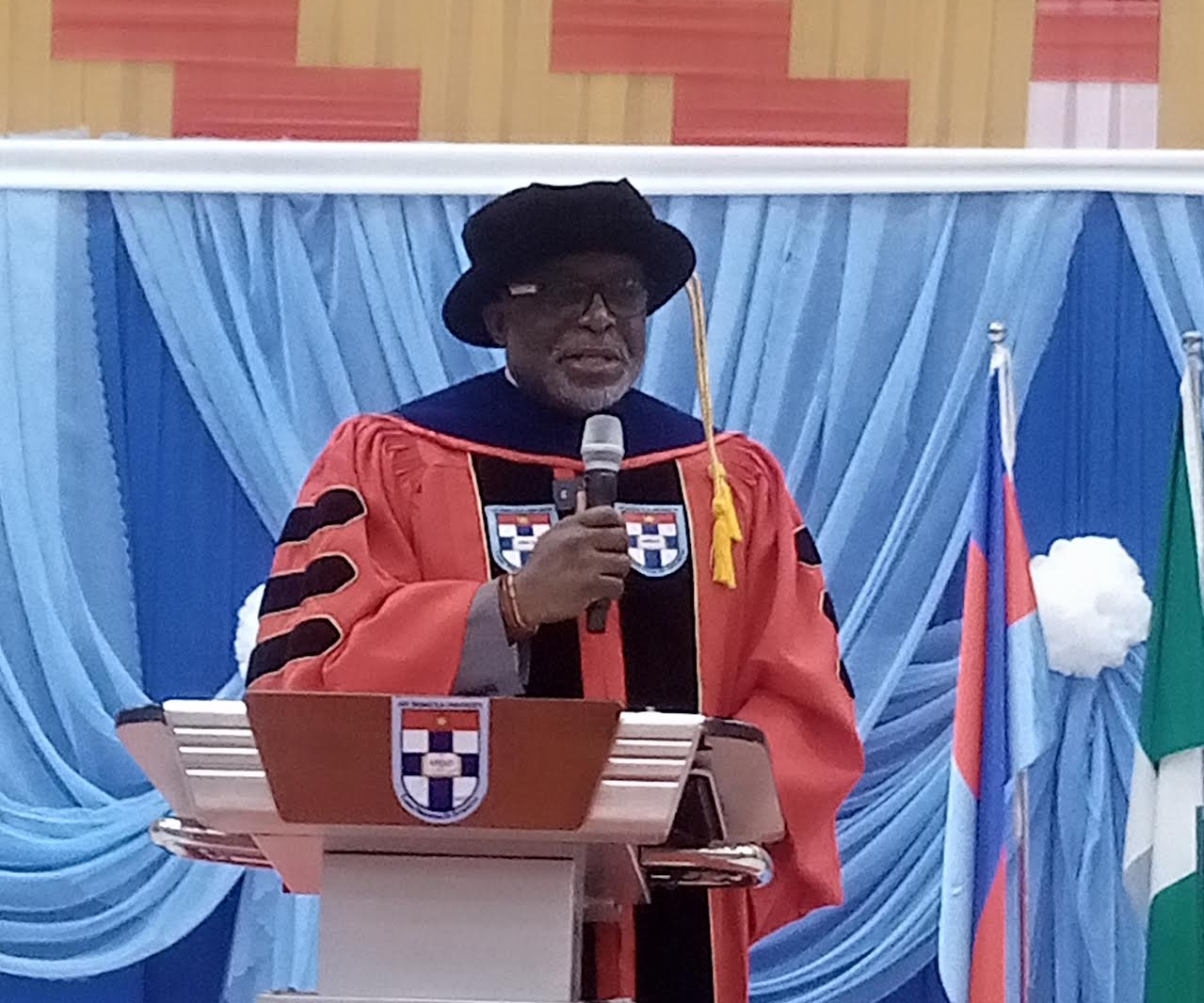
ABUAD founder Afe Babalola calls for curriculum reform, decries substandard universities
_________________________________________________________________
From Priscilla Ediare, Ado-Ekiti
The Executive Chairman of United Nigeria Airlines, Prof Obiora Okonkwo, has called for a fundamental shift in Nigeria’s educational system towards functional education that combines academic knowledge, practical skills, entrepreneurship and sound moral values to drive national development.
Okonkwo made the call while delivering the 14th Convocation Lecture of Afe Babalola University, Ado-Ekiti (ABUAD), held at the Alfa Begore Hall of the institution. The lecture was titled ‘Functional Education and the Nigerian Project: Strategic Human Capital Development for National Renewal.’
The airline’s executive, who holds the national honour of Officer of the Order of the Federal Republic (OFR) and a Fellow of the Nigerian Institute of Public Relations (FNIPR), argued that Nigeria’s educational system must go beyond the production of graduates with academic qualifications to developing individuals capable of solving practical problems, creating employment, promoting innovation and contributing meaningfully to national progress.
According to him, although functional education has remained a recurring subject in government policies, university programmes and employers’ demands, insufficient attention has been devoted to defining what functionality means and the specific needs education should address.
“For decades, public discourse has repeatedly called for functional education. Governments advocate it. Universities proclaim it. Employers demand it. Yet, surprisingly, little attention has been paid to defining what functionality itself actually means. Functional for whom and for what purposes?” he asked.
Okonkwo explained that functional education must be evaluated by its capacity to equip learners with relevant competencies, prepare them for the realities of the workplace, encourage entrepreneurship and enable them to contribute to the economic and social transformation of their communities.
He stressed that Nigeria’s development challenges required a deliberate alignment of educational curricula with the country’s economic priorities, technological advancement and labour market demands.
The convocation lecturer maintained that universities must evolve beyond their traditional roles as centres for transmitting theoretical knowledge and become institutions where students acquire practical experience, develop innovative ideas and create solutions to societal problems.
He cited agriculture, engineering, medicine, business, law and the sciences as fields in which educational institutions should strengthen practical training, research, multidisciplinary collaboration, international partnerships and entrepreneurship programmes.
The country’s future, according to him, depends significantly on its ability to develop human capital capable of responding to the demands of a rapidly changing global economy.
Beyond technical competence and professional expertise, Okonkwo emphasised the importance of character formation, describing moral values as indispensable to sustainable economic growth and national renewal.
He argued that a society could produce highly skilled professionals and accomplished entrepreneurs without achieving meaningful development if its institutions were weakened by corruption, dishonesty and a lack of accountability.
“Human capital without moral capital cannot sustain national development,” he declared.
The airline boss explained that education should produce not only competent graduates but also trustworthy citizens, ethical professionals and responsible leaders whose decisions are guided by integrity and a commitment to the common good.
He identified integrity, discipline, patriotism, leadership, accountability, industry, compassion and humanity as essential values that tertiary institutions must deliberately cultivate in their students.
According to him, these values are not peripheral to economic development but constitute an important foundation for building public trust, attracting investment, strengthening institutions and encouraging productive business relationships.
“Excellence without integrity is dangerous; competence without character is unstable; innovation without ethical restraint is destructive rather than transformative,” he said.
Okonkwo noted that investors were more likely to operate in environments where contracts were respected, institutions were trusted and ethical standards were upheld.
He added that scientific discoveries, technological innovations and entrepreneurial ventures could deliver sustainable benefits only when guided by responsibility, fairness and respect for human dignity.
Drawing on the works of scholars Francis Fukuyama and Douglass North, he explained that trust, institutional quality and the values underpinning social and economic relationships were critical to competitiveness and development.
He also invoked the philosophy of American civil rights leader Martin Luther King Jr, who emphasised the importance of combining intelligence with character in the pursuit of true education.
The convocation lecturer maintained that Nigeria’s educational challenge was not simply the need to produce more graduates but to ensure that graduates possessed the wisdom, conscience and sense of responsibility required to use their knowledge for the benefit of society.
He said the strategic human capital required for national renewal must combine professional competence with integrity, compassion, accountability and a commitment to justice and public service.
Okonkwo commended ABUAD for what he described as its commitment to connecting academic learning with practical application, innovation and entrepreneurship.
He observed that the institution had demonstrated an understanding that higher education should prepare students not only for salaried employment but also for professional practice, business ownership, innovation and value creation.
“From my findings, and I assure you, I have done extensive research on this institution well, ABUAD has, over the years, established a tradition of excellence in consistently turning out graduates who are not only employable, but are equipped to become innovators, entrepreneurs, professionals and creators of value,” he said.
He added that ABUAD’s contributions to functional education lay in its efforts to transform the university into an environment where knowledge could be applied, innovation nurtured and solutions developed for society.
However, Okonkwo urged the institution not to rest on its achievements, saying that more was expected of it as a model for educational reform and national renewal.
He maintained that universities must continuously review their programmes and strengthen partnerships with industry to ensure that graduates were adequately prepared for the realities of the modern workplace.
According to him, collaboration between educational institutions and the private sector is essential to narrowing the gap between classroom instruction and industrial requirements.
He advised the new graduates to be problem-solvers, job creators and not job seekers.
“Do not mistake your certificate for the education itself; let the true evidence of your education be found in what you do with the knowledge and opportunities you have received.”
“Go into the world not merely as degree holders seeking employment, but as problem-solvers, creators, innovators, professionals, entrepreneurs and value-makers, asking not only, ‘Where can I find a job?’ but, more importantly, ‘What problem can I solve?'”
“Pursue mastery in whatever path you choose, whether employment, entrepreneurship, research, public service or professional practice, and remember that in a rapidly changing world, your graduation marks not the end of learning but the beginning of a lifelong quest for knowledge.”
“Become internationally competent, embrace technology and global standards, but remain connected to Nigeria and committed to bringing knowledge, ideas, investment and solutions to the advancement of your society.”
Other News
“Start small if necessary, respect the dignity of work, guard your integrity, and remember that competence without character is ultimately dangerous. Above all, become responsible citizens who contribute rather than merely complain, and measure your success not only by wealth or position but by the lives you improve, the problems you solve, the institutions you strengthen and the legacy you leave behind.”
“Do not ask what the world owes you because you have graduated; ask what the world needs from you because you have been educated. Let your education become action, your knowledge become competence, your competence become value, your value become service and your service become a contribution to the transformation of your society.”
In his address, ABUAD Founder, Aare Afe Babalola, SAN, described Okonkwo as an accomplished entrepreneur whose leadership in the aviation industry offered valuable perspectives on the relationship between human capital development, enterprise and national progress.
Babalola expressed appreciation to Okonkwo for accepting the university’s invitation to deliver its convocation lecture, attributing his participation partly to his longstanding admiration for the university founder.
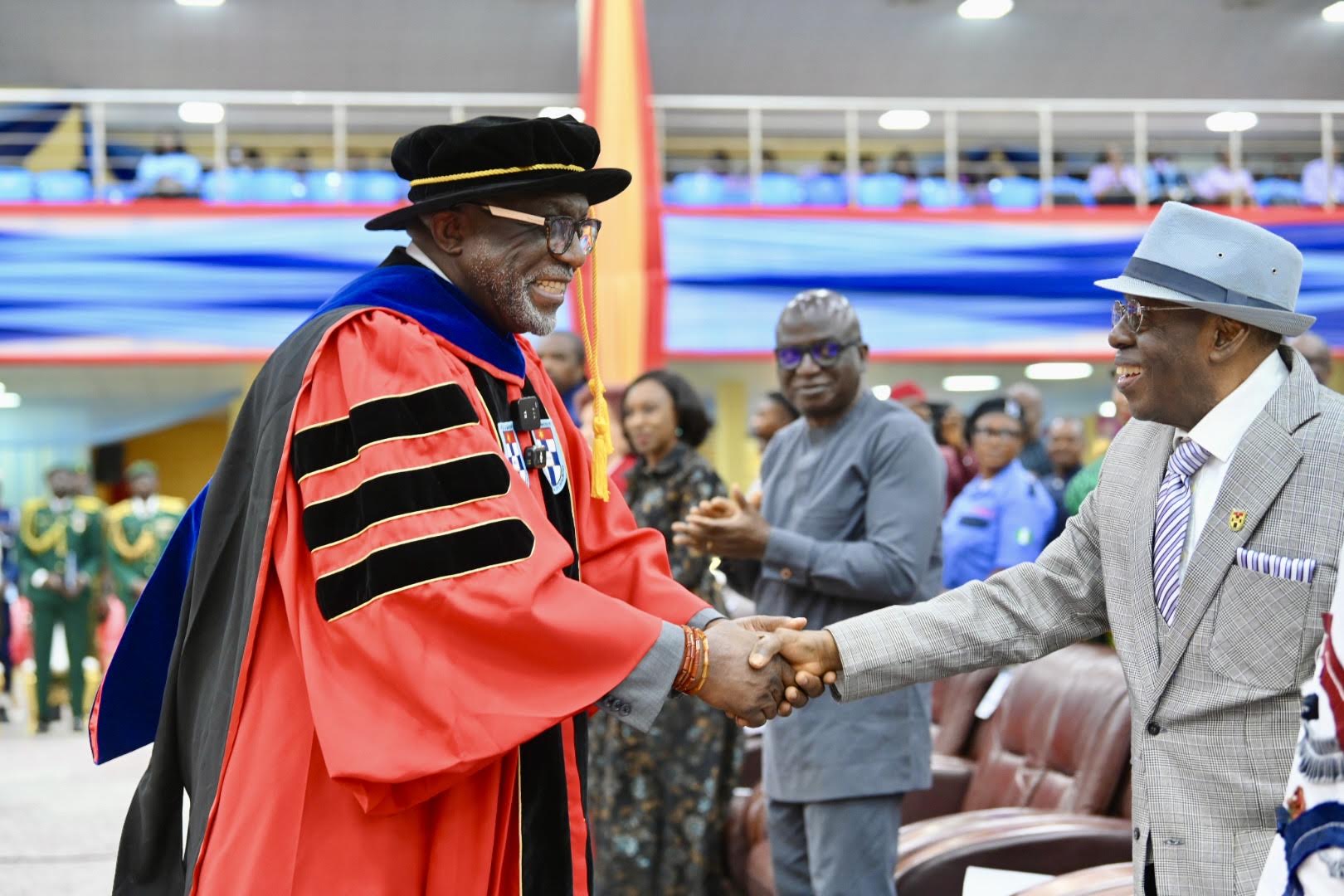
The legal icon subsequently described the presentation as one of the most brilliant lectures he had ever listened to, commending its emphasis on the need to reform Nigeria’s educational system to meet present and future national requirements.
“When I was planning this university, many universities visited us to find out why we were ranked number one in Nigeria for five consecutive years, number two in Africa and number 54 in the world,” Babalola said.
He explained that the lecture addressed an issue of personal importance to him, particularly the need for universities to examine their curricula and prepare students for the demands of a changing society.
The founder, who disclosed that the university had about 10,000 resident students, argued that educational institutions must anticipate future developments and equip learners with the knowledge and skills required to succeed in emerging industries.
“We cannot teach here what we are going to become in the future without considering the curriculum. There should be a curriculum that prepares university students for what they will become,” he said.
Babalola expressed concern over what he described as loopholes in existing university curricula, stressing that educational programmes should be designed around the realities of the economy and the competencies required by employers and entrepreneurs.
He also criticised the proliferation of universities that, in his view, lacked adequate facilities and standards, calling for more rigorous scrutiny of institutions seeking approval to operate.
The Senior Advocate recalled that, in the past, officials of the National Universities Commission (NUC) physically inspected university facilities and equipment before granting approval, suggesting that the regulatory process should continue to prioritise quality and institutional readiness.
He disclosed he plans to circulate copies of Okonkwo’s convocation lecture to the NUC, the Federal Ministry of Education and the President for consideration, particularly in relation to the need for educational reform.
Babalola further argued that functional education could create opportunities for individuals to earn a living despite the economic difficulties confronting the country.
“If you are properly educated, there are jobs that you can do despite the poverty in the land,” he said.
He urged policymakers and education administrators to give greater attention to the content and delivery of university education, noting that the quality of education received by students would significantly influence their capacity to contribute to national development.
Earlier in her address, the Vice-Chancellor of ABUAD, Prof Smaranda Olarinde, described the convocation lecture as an important platform for intellectual engagement, critical reflection and the exchange of ideas on issues affecting the university, the nation and humanity.
The VC said the annual event provided an opportunity for scholars, industry leaders, policymakers and members of the university community to examine critical national issues and consider practical solutions.
Olarinde said the university was particularly pleased to be associated with United Nigeria Airlines, noting that the partnership between both institutions represented a significant step towards strengthening the relationship between academic instruction and industrial practice.
She disclosed that the strategic partnership, formalised through the signing of the Memorandum of Understanding between the university and the airline in February 2026, was designed to provide students with practical exposure and opportunities to acquire industry-specific skills.
According to her, the arrangement would enable students in aeronautics and aerospace-related programmes to undertake six months of intensive, hands-on industrial training at the airline’s engineering workshop in Lagos.
“A new chapter is opening in our efforts to bridge the gap between classroom instruction and the industrial space. Under this arrangement, our aeronautics and aerospace students are afforded the opportunity to undertake six months of intensive, hands-on industrial training at the airline’s state-of-the-art engineering workshop in Lagos,” she said.
Olarinde explained that the arrangement would give students the opportunity to apply classroom knowledge in a professional environment, gain practical experience and develop competencies required by the aviation industry.
She added that the collaboration reflected the importance of partnerships between universities and private-sector organisations in developing a workforce capable of supporting economic growth and technological advancement.
Olarinde also highlighted the airline’s relationship with the university community, describing United Nigeria Airlines as the first commercial airline to operate at the Ekiti Agro-Allied International Cargo Airport.
She further noted that the airline had operated a flight that transported ABUAD students directly from Ado-Ekiti at a subsidised rate for their end-of-year vacation on December 10, 2025.
According to her, these initiatives demonstrated the practical benefits of collaboration between the university and the aviation industry, particularly in improving access, providing professional exposure and creating opportunities for students.
The 14th Convocation Lecture reinforced the need for Nigeria to rethink the objectives and delivery of higher education, particularly at a time when unemployment, technological change and the demand for specialised skills continue to shape the country’s development priorities.
The central message of the lecture was that educational reform must extend beyond the expansion of access to universities and the award of academic qualifications.
Instead, universities must deliberately integrate academic excellence, practical skills, entrepreneurship, innovation and character formation into their programmes.
The discussions also highlighted the importance of sustained collaboration between government, regulatory agencies, universities and private-sector organisations in developing curricula that respond to national needs and global developments.
For ABUAD, the partnership with United Nigeria Airlines provides an example of how industry collaboration can support practical learning and professional development.
For Nigeria, the broader challenge remains translating the principles of functional education into a coordinated national strategy capable of producing skilled, ethical and innovative citizens.
As Okonkwo argued in his lecture, the ultimate value of education lies not merely in what graduates know or what they achieve individually, but also in how they deploy their knowledge, skills and influence to advance society.
The lecture therefore called attention to a fundamental question confronting Nigeria’s educational system: whether its institutions are adequately preparing students not only to earn a living but also to create opportunities, strengthen institutions and contribute to sustainable national development.