Follow Us on Google
By Gabriel Dike
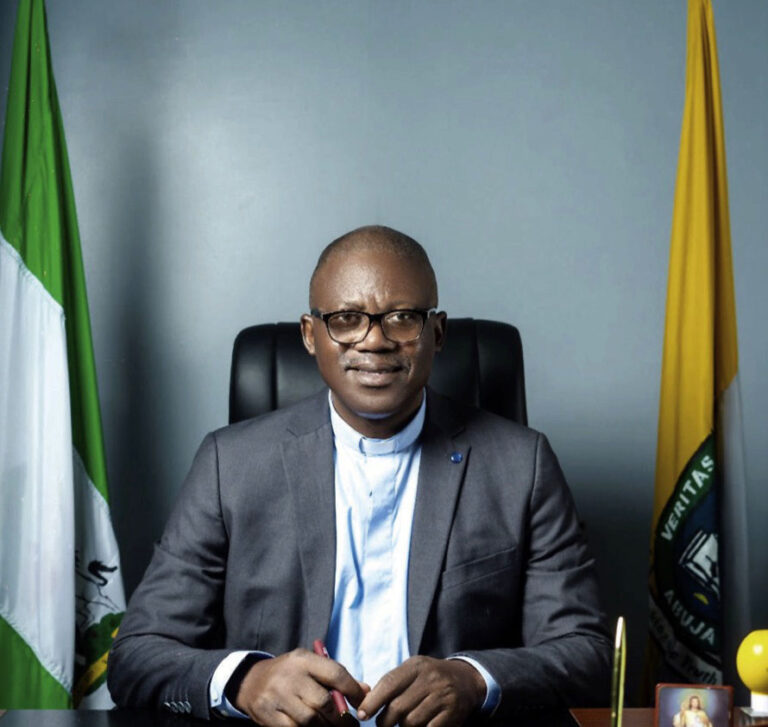
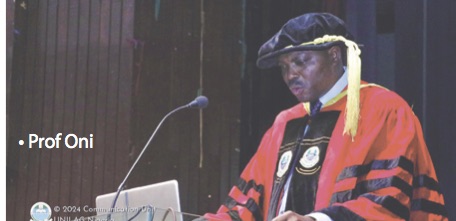
The eight inaugural lecture in 2023/2024 academic session of the University of Lagos (UNILAG), Akoka was delivered by Prof. Babatunde Adetunji Oni in the Department of Private and Property Law, Faculty of Law.
On Wednesday, February 7th, 2024, Prof. Oni, also a Senior Advocate of Nigeria (SAN) paid his academic debt to the Nigeria University System (NUS) and was discharged and acquitted by UNILAG Vice Chancellor, Prof. Folasade Ogunsola. The Oyo State born Law scholars is from Igboho, Orelope Local Government of Oyo. To confirm his claim as an ‘Ibadan boy’, he attended Baptist Central Primary Mary School, Oke-Afin, Igboho, Igboho- More Community Grammar School and Ansar-ru-deen High School, Saki, Oyo for His HSC/GCE A Level and graduated as the best Arts students.
After his LLB degree from Ogun State University, Ago-Iwoye with 2nd Class Upper Division and LL.M from Obafemi Awolowo University, Ile-Ife. Not wanting to locate to Lagos, Oni secured a job as a legal petitioner in a Law firm at Ibadan.
Prof. Oni explained that the nudge to become an academic was captivated in 2003 and the wind blew from the direction of Lagos, adding, “It was irresistible’’.
According to him, through an advert for a position of lecture II in the Department of Commercial and Industrial Law, UNILAG, he applied but did not expect a response and one year after, he got a call for an interview.
His words: “Almost a year after I had applied, I was called for an interview which I also reluctantly attended due to my inclination to detest anything that had to do with Lagos. However, the conspiracy, between my wife and pastor put a seal that led to this path. Divine I should say, is the road I now traverse.”
Oni, who was appointed Professor of Private and Property Law on October 1st, 2019, paid his academic debt with an inaugural lecture titled: Crying from the Grave: Trust’s Resonance in Inheritance Tales”.
In the inaugural lecture, Prof. Oni navigated the intricate terrain of mortality, estate planning, and the consequential impact on the distribution of self-acquired properties. The lecture’s resonance lies in its powerful argument for the inevitability of death and the imperative need for a crafted estate plan.
He explored the ramifications of neglecting estate planning, unraveling a narrative of unplanned estates fraught with potential conflicts among heirs. Prof. Oni sheds light on the consequences of society’s reluctance to confront mortality, resulting in animosity, legal disputes, and the erosion of familial bonds.
His lecture served as a wake-up call and urged individuals to embrace the responsibility of crafting a well-thought-out estate plan to safeguard the legacies they leave behind.
Oni turned the lens towards Nigeria’s legal landscape and dissected the structure of succession laws, with a focus on intestate succession. Through analysis, he categorizes these laws into English Common Law, state-specific Administration of Estate Laws, and Customary Law, including Islamic Law. His exploration provided a comprehensive understanding of the diverse legal frameworks governing the distribution of estates in Nigeria.
Delving into the rich tapestry of Nigerian customary law, Oni examined inheritance practices across various ethnic groups and geographical regions. The lecture illuminates the influence of religion, indigenous beliefs, and customary laws on the intricate web of property, titles, and rights inheritance. By doing so, he unveiled the rich diversity and subtle nuances inherent in customary laws, contributing to a more profound comprehension of the cultural mosaic that defines Nigeria.
A pivotal aspect of the lecture is its emphasis on estate planning mechanisms. Prof. Oni presented a repertoire of options, including Wills, Trusts, Gifts, Power of Attorney, Succession by Contract, and the nomination of beneficiaries for diverse assets. Central to the argument is the assertion that Trusts, despite their acknowledged complexities and limitations, occupy a fundamental role in any comprehensive estate plan.
According to him, the absence of a deliberate plan, the lecture contended, does not exempt individuals from the imposition of trust principles by law when managing the properties of a deceased individual.
However, Oni did not shy away from addressing the challenges associated with implementing customary trusts in Nigeria. He discussed difficulties in obtaining legal recognition, lack of standardization, limited awareness, resistance to cultural shifts, and documentation challenges.
Despite these hurdles, Prof. Oni painted a hopeful picture, envisaging the prospects of customary trusts as potent instruments for cultural identity preservation, community empowerment, social cohesion, and economic development.
In his conclusion, Oni explained that the study stands as a testament to its multifaceted contributions, a beacon in legal scholarship, a catalyst for cultural understanding, and a practical guide to estate planning in the Nigerian context.
The professor of law advocated for a holistic approach that intertwines legal principles with cultural sensitivity, ensuring not only the efficient distribution of wealth but also its preservation across generations.
He recommended the recognition of partially oral Wills, the incorporation of technology, standardized formats, public awareness campaigns, legal recognition of customary trusts, and legislative support. Noting that these measures aim to harmonize tradition with contemporary legal expectations, ushering in an era where trusts seamlessly weave into the fabric of customary inheritance practices in Nigeria.