Follow Us on Google
• Urges country to learn from what isn’t working to protect children
From Juliana Taiwo-Obalonye, Abuja
The United Nations Children’s Fund (UNICEF) has identified poor communication and weak translation of research findings into practical recommendations as major barriers preventing evidence from influencing policies and programmes for children in Nigeria.
The UN agency also urged policymakers, researchers and development partners to have the courage and openness to examine what is not working, learn from failures and change course where necessary to improve outcomes for children.
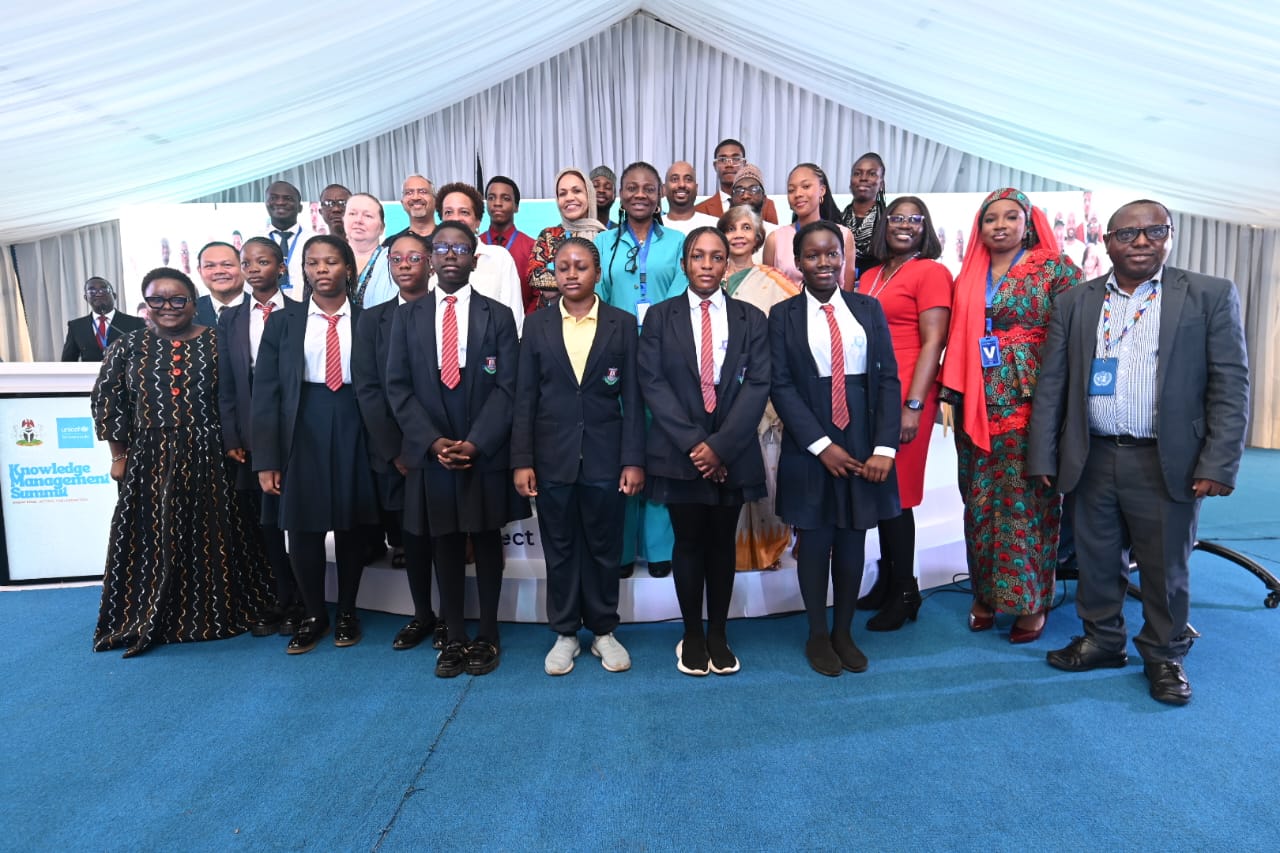
The UNICEF Representative in Nigeria, Wafaa Saeed, made the call on Wednesday at the Knowledge for Use (K4U) Summit on Child Rights, held at the United Nations House grounds in Abuja.
The summit, themed “From Knowledge to Action: Advancing Child Rights Through Evidence, Innovation and Learning,” brought together policymakers, development partners, academics, young people, civil society organisations, media professionals, UN agencies and UNICEF staff to examine how evidence, knowledge and innovation could be translated into better outcomes for children.
Saeed said large volumes of research and evaluations were being produced without being adequately communicated or used by those responsible for making decisions and implementing programmes.
She said evidence that was generated but not used could not deliver meaningful results for children, stressing the need to move beyond producing reports to ensuring that knowledge informed decisions and action.
According to her, stakeholders must have the “honesty and courage” to learn from what was not working and use those lessons to improve programmes.
She also stressed the need to communicate research findings in forms that policymakers, communities, parents and other stakeholders could understand and apply.
The UNICEF chief said young people should be involved not merely as beneficiaries or respondents, but as participants in generating and shaping knowledge about issues affecting them.
“Young people are experts in their own issues,” she said, adding that UNICEF had received feedback from young people that they did not want to be consulted only after decisions had been made, but wanted to participate in co-creating knowledge and solutions from the beginning.
Saeed said this would require greater engagement with communities and parents, as well as opportunities for stakeholders to pause, reflect on lessons and adapt programmes rather than continue with approaches simply because they had been used in the past.
Also speaking, UNICEF Chief of Planning and Monitoring, Wayne Bacale, said the summit was designed to bring government, academia, UN agencies and other partners together to share knowledge generated through research, evaluations and assessments on child rights.
Bacale said the objective was not simply to present research findings but to ensure that knowledge was used to improve the lives of children and mothers.
“This effort to share, learn, and put knowledge into action should not stop, should not end here,” he said.
He called for sustained dialogue among researchers, policymakers and implementing institutions to identify concrete ways of translating research and evaluation findings into policy actions.
UNICEF’s Child Protection Chief in Nigeria, Natalie McCauley, said Nigeria and its development partners already had significant evidence on child rights issues, but the challenge was ensuring that existing knowledge was accessible, synthesised and used.
She said children often experienced multiple forms of deprivation simultaneously, making it necessary to bring evidence from different sectors together rather than considering child protection, health and education in isolation.
McCauley also identified weak institutional memory as a challenge, noting that changes in personnel could result in new officials being unaware of previous research, programmes and lessons, leading to repeated approaches without sufficient understanding of what had worked or failed.
She said the large volume of reports, studies, emails and other information available to development organisations therefore needed to be distilled into knowledge that could directly support decision-making, while the methodology and context of each study had to be considered before its findings were applied elsewhere.
The challenge of why evidence fails to translate into policy was also a major focus of a roundtable session moderated by UNICEF Deputy Representative, Rownak Khan.
The session, titled “Knowledge for Use on Child Rights: Lessons from Publications and Collaborative Action for Impact,” featured participants from academia, the Ministry of Budget and Economic Planning (MBEP), UNICEF, UNFPA and ECOWAS.
Professor Alphonso Isara of the Behavioural Research Design Laboratory (BIRD Lab), University of Benin, said the way evidence was presented could determine whether it was understood and used.
He said research findings should be packaged in accessible language and formats suitable for their intended users, rather than presented solely in technical academic language.
He cited situations where technical medical or research terminology could make findings difficult for community members to understand, stressing the need for researchers to return findings to the communities from which data were collected.
Isara advocated stronger links between research institutions and communities, describing the process as a connection between “town and gown”.
Participants also identified the disconnect between research institutions and organisations responsible for implementing policies as an obstacle, noting that researchers sometimes regarded publication as the end of the research process when the findings should instead serve as the starting point for implementation.
They also stressed the importance of ensuring that evidence was relevant to the population and circumstances where it was being applied, particularly as lengthy research processes could mean findings lagged behind changing realities.
The summit further highlighted the need to close the feedback gap between development organisations and communities, with participants noting that organisations often collect data and community perspectives without systematically returning the findings to the people who provided the information.
They said closing that feedback loop would strengthen accountability and help communities understand how their contributions were being used.
On parents and communities, participants said engaging people around children, including parents, extended families and community leaders, could improve outcomes.
UNICEF said its parenting programmes had demonstrated the importance of removing technical language and using peer-to-peer and community-based communication, particularly in communities with low literacy and numeracy levels.
The role of young people also featured prominently, with participants advocating their inclusion as knowledge producers and co-creators of solutions.
They stressed that youth engagement should extend beyond urban and higher-income groups to young people in rural and disadvantaged communities whose experiences could be different.
Saeed, in her closing remarks, said evidence should ultimately answer a practical question: “What are we going to do differently because we know this?”
She said research findings should be communicated differently to policymakers, communities and other stakeholders according to their needs and level of understanding.
The summit also proposed stronger mechanisms for synthesising existing research and making it easier for decision-makers to access relevant evidence, rather than continually generating new studies without adequately using those already available.
UNICEF said the K4U Summit marked the beginning of a continuing dialogue on how evidence, innovation and learning could be converted into policies and programmes that deliver better outcomes for children in Nigeria.