Follow Us on Google

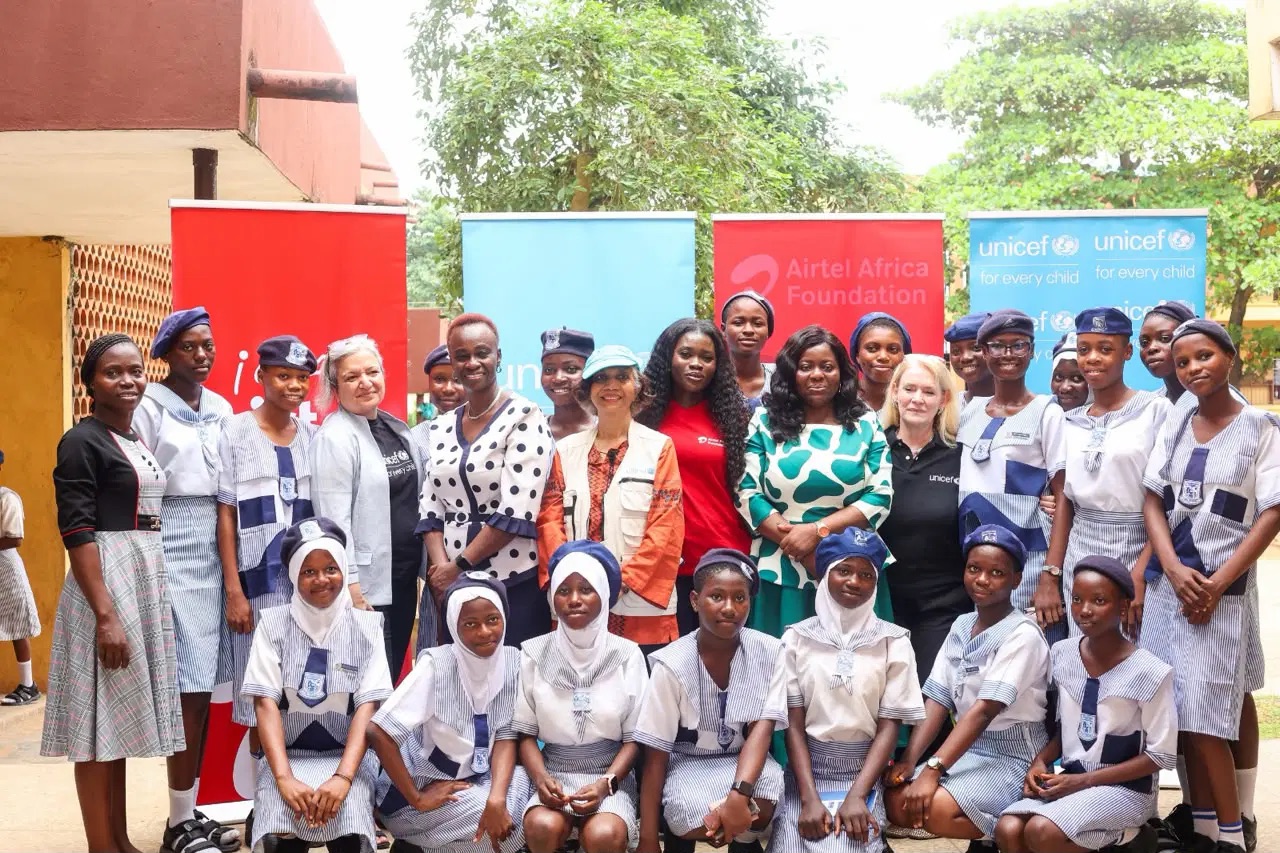
Airtel Africa, UNICEF and the Federal Government have expanded access to digital education in Nigeria, connecting nearly 2,000 schools and reaching about one million students as efforts intensify to bridge the country’s digital learning gap.
The initiative, which removes data-cost barriers to digital education, also covers more than 20,000 teachers, with over 19,000 trained in digital literacy, enabling them to integrate technology into classroom teaching.
The progress was highlighted during a joint Airtel Africa-UNICEF delegation’s visits to schools and youth programmes in Lagos, followed by engagements with government officials in Abuja to strengthen digital learning and skills development.
Led by Garreth Spillane, Chief of Staff to the Chairman of Airtel Africa, the delegation visited Government Senior College, Agege, and St George’s U.N.A. Primary School, where students and teachers demonstrated how digital tools, including artificial intelligence, are being used to support learning.
At Yaba College of Technology, young people showcased how digital platforms are equipping them with employability, entrepreneurship and other practical skills, while opening pathways to mentorship, internships and livelihood opportunities.
The development underscores efforts to move digital education beyond internet access to the acquisition of skills that can improve young Nigerians’ prospects in the labour market.
A major component of the partnership is the removal of data charges on selected education and youth development platforms. These include the Nigeria Learning Passport, the Federal Ministry of Education’s Inspire and Ignite platforms, the Digital National Education Management Information System and the Youth Agency Marketplace, also known as YOMA.
The Nigeria Learning Passport alone has recorded more than 2.5 million registered students and nearly 100,000 registered teachers, reflecting the growing reach of digital learning platforms in the country.
However, sustaining the gains will require more than connectivity, with reliable internet access, quality educational content, teacher capacity, child online safety and inclusive access remaining critical to improving learning outcomes.
In Abuja, the delegation met with officials from the Office of the Vice President and the Federal Ministry of Education to advance these priorities, including stronger education data systems and sustainable financing for digital learning.
Speaking on the initiative, UNICEF Deputy Representative in Nigeria, Rownak Khan, said free access to digital learning could help bridge the digital divide while bringing children and young people closer to the knowledge, skills and opportunities needed to shape their futures.
She said the partnership was supporting teachers and creating pathways from learning to earning, stressing that girls, children with disabilities and learners in underserved communities must be prioritised.
“Access to free digital learning not only bridges the digital divide but also brings children and young people closer to the knowledge, skills and opportunities they need to shape their and their country’s future,” Khan said.
Spillane said connectivity created transformative opportunities when students could access quality digital learning and teachers were equipped to use digital tools effectively.
He reaffirmed Airtel Africa’s commitment to connecting schools, removing data-cost barriers and supporting teachers through its collaboration with UNICEF and governments across the continent.
The Minister of State for Education, Prof. Suwaiba Sa’idu Ahmad, said transforming education in Nigeria required strong partnerships aligned with government priorities and learners’ needs.
She emphasised the need to strengthen teachers’ capacity, expand access to quality digital content, protect children online and ensure that digital learning reached every child, irrespective of location.
Across 13 African countries, the five-year Airtel Africa-UNICEF partnership has connected more than 3,000 schools, removed data charges on over 60 learning platforms and reached more than 2.5 million children.
The Nigerian initiative forms part of broader efforts to use technology to improve educational access, strengthen digital skills and create opportunities for young people in underserved communities.