Follow Us on Google

From Juliana Taiwo-Obalonye, Fred Ezeh and Adesuwa Tsan, Abuja
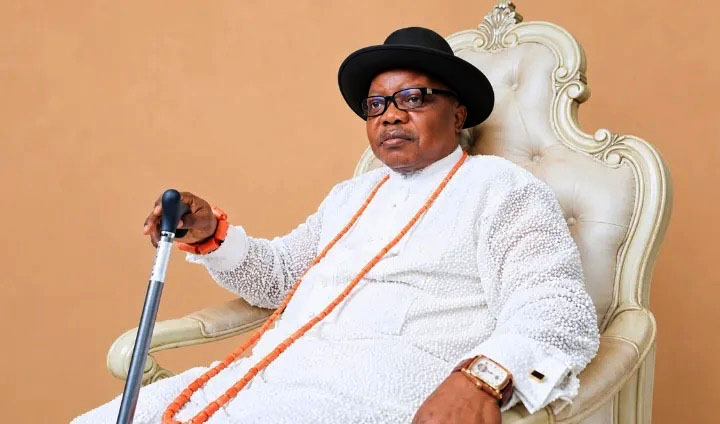
President Bola Tinubu, the Nigeria Governors’ Forum (NGF), former Abia State Governor Orji Uzor Kalu and other prominent Nigerians have paid tribute to former Delta State Governor, Emmanuel Uduaghan, who died on Monday at the age of 70, describing his passing as a major loss to Delta State and the nation.
Uduaghan, whose death was confirmed by his family, governed Delta State from 2007 to 2015, having previously served as Commissioner for Health and Secretary to the State Government. His contributions to healthcare, infrastructure, education, economic diversification and national unity featured prominently in the tributes.
Tinubu, in a condolence message issued on Monday, described Uduaghan as a dedicated public servant whose leadership was devoted to the development of Delta State and the welfare of its people.
“Dr Uduaghan was a public servant whose leadership was devoted to Delta State’s development and service to our nation,” the President said.
He noted that the former governor occupied a central position in Delta State’s political and developmental journey, pursuing initiatives aimed at improving infrastructure and healthcare delivery.
According to Tinubu, Uduaghan remained involved in the state’s political and socio-economic affairs after leaving office, contributing to democratic governance and public service. “His passing is a great loss to his family, his community, Delta State, and the nation at large,” he said.
The President extended condolences to Uduaghan’s wife, Roli, children, cousin and former Delta State governor, James Ibori as well as friends and political associates, praying for divine comfort and eternal rest for the deceased.
Similarly, NGF Chairman and Kwara State Governor, AbdulRahman AbdulRazaq, acknowledged Uduaghan’s years of public service and contributions to Delta State’s development.
In a statement signed by the Director of Media and Strategic Communications at the NGF Secretariat, Yunusa Abdullahi, the forum said his eight-year administration constituted an important chapter in the state’s governance history, particularly his efforts to advance development priorities and address the needs of the people. The forum extended its sympathies to the family and people of Delta State.
Kalu, who represents Abia North Senatorial District, described Uduaghan as an accomplished medical doctor, experienced administrator and dedicated public servant whose contributions would remain part of Delta State’s development history.
“Dr. Uduaghan was an accomplished medical doctor, experienced administrator and dedicated public servant who contributed immensely to the development of Delta State.
“From his years as Commissioner for Health and Secretary to the State Government to his tenure as Governor, he demonstrated a commitment to public service and the welfare of his people,” Kalu said.
He particularly acknowledged the former governor’s achievements in healthcare, governance and infrastructure, while extending sympathies to his family and former colleagues.
The Christian Association of Nigeria (CAN) also mourned Uduaghan, describing him as a political leader who promoted dialogue, confidence-building and national unity during periods of heightened political tension.
CAN President, Daniel Okoh, said his approach to political engagement and peaceful coexistence deserved recognition.
“Dr Uduaghan played a notable role during a period of heightened political tension in Nigeria. His commitment to dialogue, confidence-building and the preservation of national unity remains worthy of commendation,” Okoh said.
Other News
He urged the bereaved family and the people of Delta State to draw strength from the former governor’s contributions to public service.
Senator Natasha Akpoti-Uduaghan, representing Kogi Central Senatorial District, remembered the former governor as a father figure, respected elder and source of guidance.
“Today, we mourn not merely the passing of a distinguished former governor, but the loss of a father figure, a revered elder and a man whose presence meant so much to those privileged to know him,” she said.
Akpoti-Uduaghan recalled Uduaghan’s public service career, beginning with his appointment as Commissioner for Health from 1999 to 2003, followed by his tenure as Secretary to the State Government between 2003 and 2007, before his election as governor. “Public office eventually comes to an end, but the memories of a life devoted to service endure. As we grieve his departure, we must also give thanks to God for the years He granted him, the responsibilities he discharged and the legacy he leaves behind,” she said.
Former Delta State Commissioner for Information, Chike Ogeah, who served during Uduaghan’s second term, offered a detailed account of the administration’s policies and projects, describing his former principal as a visionary administrator whose overriding concern was improving the quality of life of the people.
“I had the privilege of working closely with him in his second term as Commissioner for Information. His major pre-occupation was always what to do to improve the quality of living of the people and residents of Delta State.”
Ogeah identified the maternal and child healthcare initiative, which provided free medical services for children under five, pregnant women and nursing mothers, as one of Uduaghan’s most significant achievements.
“The initiative revolutionized health services in Nigeria because it was unknown in the country. His background as an accomplished medical practitioner and administrator equipped him for the project and he drove it with immense passion.”
Ogeah also recalled the construction of modern classrooms equipped with science laboratories, the introduction of the EduMarshal programme to discourage children from staying out of school, and a scholarship scheme that provided N5 million to Delta State indigenes who graduated with first-class degrees from Nigerian universities to pursue further studies.
On economic development, he highlighted the “Delta Beyond Oil” initiative, which sought to diversify the state’s economy and reduce its dependence on crude oil revenues.
“Nigerians got to know that crude oil which remains the mainstay of the economy is a finite resource that has a limited life span.
He began the process of weaning Delta’s economy from dependence on oil and growing other sectors of the economy,” Ogeah said.
He listed the construction and operationalisation of Asaba International Airport, the Government House in Asaba and major road projects, including the Trans-Warri–Ode-Itsekiri Road and Bridge, among the administration’s infrastructure achievements.
Other projects he recalled included the 18.4-kilometre Ugiliama–Eweshioum–Ogume–Abbi Road and the 42.6-kilometre Iselegu–Utagba Uno–Obiaruku Road.
In healthcare, Ogeah pointed to investments in the Mother and Child Hospital in Warri and the Delta State University Teaching Hospital, Oghara, while noting that the administration also sponsored more than 40 journalists for specialised training at the Thomson Reuters Foundation in London.
Reflecting on his years working with the former governor, Ogeah said Uduaghan’s commitment to service had left a lasting impression on him.
“I was greatly inspired by Dr. Uduaghan’s sense of service to the people. It was a great privilege to have worked closely with him. I commiserate with his wife and children. He was a great boss I will always cherish. May God receive him in His paradise,” he said.