Follow Us on Google

From Fred Ezeh, Abuja
Universal Basic Education Commission (UBEC) has suggested an upward review of consolidated revenue funds from the current two percent to four percent.
This, it said, was to enable UBEC have more funds to attend to the emerging constraints in basic education delivery in Nigeria, taking note of rising students population which also poses urgent need for teaching facilities.
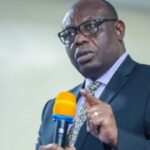
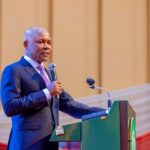
UBEC Executive Secretary, Hamid Bobboyi, made the plea at a one-day Civil Society Organisations CSO-Legislative Round Table Meeting, in Abuja, on Tuesday, where some National and State Houses of Assembly members were present.
He argued that while the children of the elites who are merely 20 percent of the population can afford to garner resources for private schools, the less privileged constituting 80 percent are stocked with the public institutions.
The UBEC Boss equally tasked relevant civil society organisations, the media and other critical stakeholders not to shy away from rendering assistance to the government in bridging observed gaps in learning and teaching processes, especially at the basic school level.
He also stressed the enormity of challenges in the basic education subsector, stating that over 50 per cent of schools in Nigeria have no furnitures, hence the pupils sit on the floor to take lessons.
Chairman, Senate Committee on Basic Education, represented by Senator Frank Ibiziem, decried the failure of States’ Universal Basic Education, SUBEBs, to sustain some UBEC initiated projects such as classrooms, libraries earlier introduced by the commission in all constituencies in the country.
He commended UBEC for the construction of classrooms in schools across the country, and lamented the poor maintenance culture, noting that there is no school in the country that does not have a dilapidated block.
He called for a rapid response initiative to commence repairs of dilapidated schools and pledged Senate’s support for any move by the Commission towards ensuring the provision of a good learning environment for students.
A representative of MacArthur Foundation, Mr. Dayo Olaoye, in his remarks, called on stakeholders to review the impact of the country’s annual budget on education, stressing that it was not enough that the country is increasing its budget to the sector.
“As we think about reforms, let us think beyond buildings that have been delivered, let us start thinking about how many children have been brought to school,” he said.
He emphasized the need for accountability in the educational sector, noting that in addition to vertical accountability, there was need to entrench horizontal accountability whereby the office of the accountant general strengthens other accounting offices to ensure transparency in the sector.