Follow Us on Google

- Why terrorist insurgency is on the rise in Nigeria
- FG has shown gross incapacity to redress killings
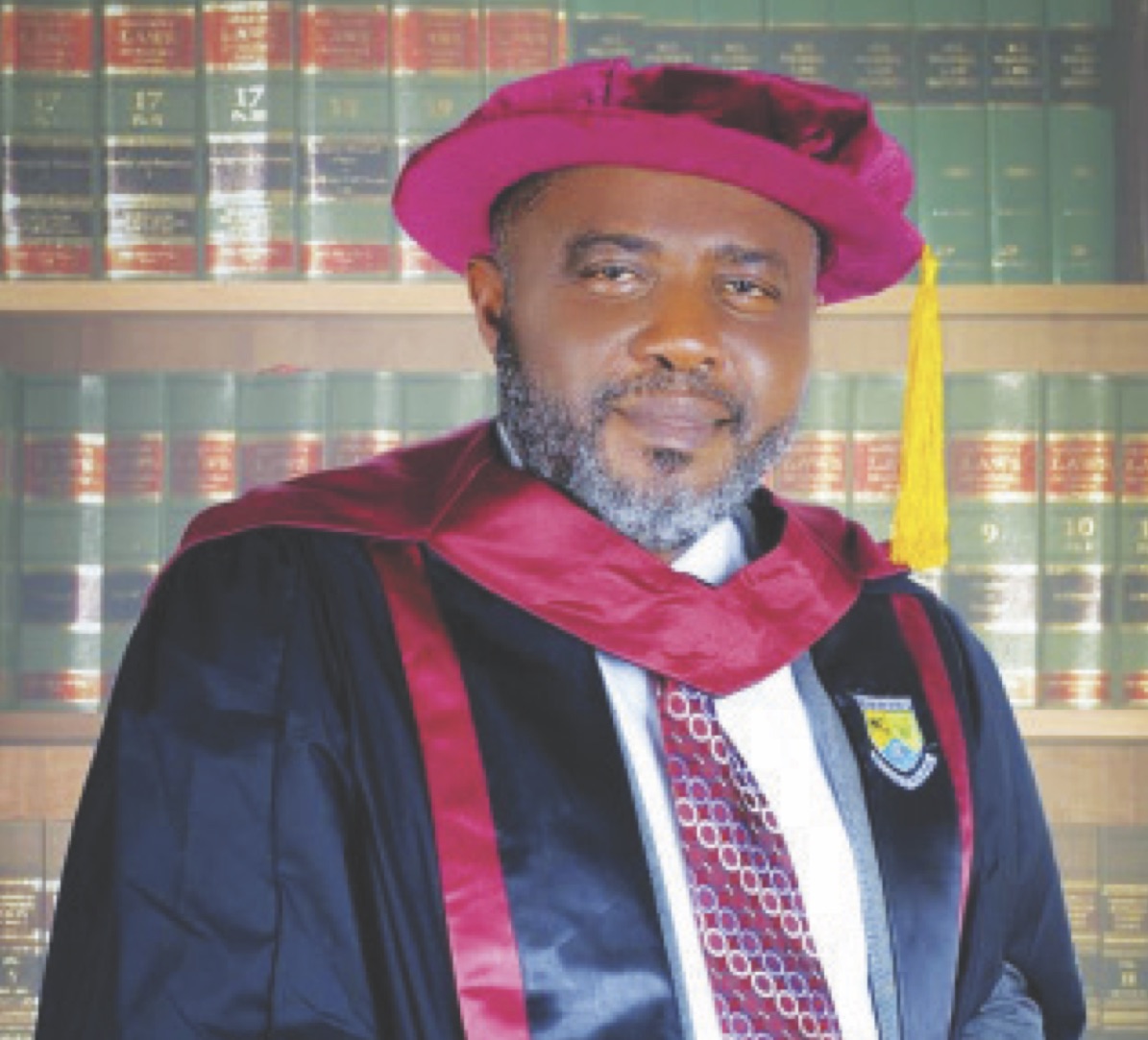
An expert in national security, Dr Ody Ajike, has said that the dramatic rise in terrorist insurgency in Nigeria is largely reactive and driven by the failure of governance in Nigeria, the propagation of ethnic rivalry, politicisation of defence and security, and the inability of the country to spread socioeconomic prosperity and development across all groups and for all people.
In an interview with VINCENT KALU, Ajike, who is also a lawyer, pointed out that a nation such as Nigeria that cannot protect the people or its territorial integrity cannot talk about sovereignty in any way, noting that sovereignty is about protection of life and property
President Donald Trump has designated Nigeria as a Country of Particular Concern (CPC), citing killing of Christians in the country. What are the implications?
In Nigeria, ethnic groups are primarily structured in particular geo-political zones and across different political regions. So, we have the South-East, South-South, and South-West predominantly Christians and the North-East and North-West predominately Muslims, while the North Central is mixed and the epicentre of Christian deaths and internal displacements. A country not at war has a huge population of internally displaced persons and we smile and politicise it away. We politicise mass killings of Christians through the mischaracterisation of causes and tempered or subtle labels of the killers. We politicise mass killings through the absence of political will by successive Nigerian leaders to bring such atrocious conducts to an end.
Because of ethnic alignment and political correctness, our leaders have failed to tackle these issues and punish perpetrators of this evil. Regardless of our rich diversity, the political elites aligning with their ethnic nationalities have deliberately mismanaged our diversity due to ethnic animosity, ethnic rivalry, the nature of our political system, the nature of the Nigerian State and entrenched physical and structural violence. We cannot deny that ancient ethnic animosities and rivalries exist. We also cannot deny that the nature of our political system, which dictates the ‘winner takes all’ approach, is a huge challenge to our diversity. We also cannot deny that, the nature of the Nigerian State permits a structural imbalance, wherein certain regions have more legislative seats and more states within a region. These issues create political upheavals in-country.
Genocide against Christians and the designation of Nigeria as a “Country of Particular Concern” is the only acceptable pretext that the United States can adopt as a playbook to suit our situation and as a justification to reassert control of political and socioeconomic activities in Africa. The US would take a more militant approach to permit it to act violently and flip the government in Nigeria. It is the usual US arrogant disposition to exert its messianic notion that the US represents God’s chosen people and God’s chosen system of government and establish their manifest destiny.
Under our present circumstances, this intervention is acceptable as an instrumentality towards purposeful leadership in Nigeria. We have always had external influences regulating governance in Nigeria and at the bottom of our challenges, only an external influence can change the direction of decline and failure we are headed to.
It is true that Christians are killed in Nigeria and the government has consistently done nothing about it. Muslims are also killed, but we should be allowed to situate our problems correctly. The dramatic rise in terrorist insurgency in Nigeria is largely reactive and driven by the failure of governance in Nigeria, the propagation of ethnic rivalry, politicisation of defence and security, and the inability of the Nigerian State to spread socioeconomic prosperity and development across all groups and for all people.
The implications of US action could be a potentiality of regime change, to reassert US influence, control of energy resources, and to whittle down Chinese and Russian influence in West Africa and within the continent. It is all about US interests framed under pseudo–Christian solidarity.
Added to that, Trump has declared readiness to get rid of terrorists that are causing mayhem in Nigeria. Is it not poking his finger in the eyes of a sovereign nation like Nigeria?
Sovereignty is not an impregnable fortress that a state should straddle itself with as an insulation device. Also, the protection of our territorial integrity is a lame argument. We have never had the capacity to protect any inch of our territory except Aso Rock. Tracing sovereignty from the Thomas Hobbes 1861 Conception of The Leviathan, Hobbes hinged sovereignty on a strong State that protects the people and ensures order and not chaos. As far as Nigeria is concerned, no state official should talk about sovereignty or protection of our territorial integrity. More so, the concept of sovereignty has been on a decline since the beginning of this century. We must distinguish political sovereignty from empirical sovereignty, which comes from the people. Political sovereignty is embedded in the responsibility of the state to protect the people and nothing more. A state such as Nigeria that cannot protect the people or its territorial integrity cannot talk about sovereignty in any way. Sovereignty is about protection of life and property and of what use is a state when it cannot at least protect the people? In Nigeria, we experience mass killings of innocent people, internal displacements, a fear society, and porous borders. What is the ruse about sovereignty and territorial integrity when the state cannot protect the people?
The West has always deployed the doctrine of responsibility to protect citizens of a state when their state is unable to protect the citizens. We all know that the Nigerian state cannot protect any citizen or denizen and people are left at the mercy of terrorist insurgents, bandits and all sorts of criminals. No Nigerian government official should stand before the people and talk about sovereignty or territorial integrity. The security agencies have failed to protect the people and we are busy talking about sovereignty and territorial integrity. Defence and security have been politicised and the Nigeria Police Force destroyed and we are busy talking about sovereignty. Of what use is an abstract state without the people safe and secure?
What should Nigeria do about this threat?
Nigeria has a slim chance for a revival and there is no silver bullet for a reformed Nigeria. Let’s look at the national motto of Nigeria established in 1978. Unity and Faith, Peace and Progress is our national motto. No state can achieve unity, faith, peace, socioeconomic, political progress and security of its citizens without justice. Justice is missing in the Nigerian assembly of diverse groups. Justice here means socioeconomic, political justice and rule of law. As long as justice is missing from our national motto, we cannot achieve unity, peace, and progress. There must first, be a deliberate action by the Nigerian state to institute justice and rule of law across all facets of our society. Justice is cardinal and the first casualty of injustice is insecurity. Justice must therefore, be a centrality in the affairs of the Nigerian state.
The government should engage a deliberate policy, not high-minded rhetoric of restructuring the largest bureaucracy in Nigeria and that is the police. The police should be reformed, restructured and retooled to handle the most essential service for the citizens, which is security. In all these terrorism and insurgency, the police that are the largest bureaucracy with presence in 774 local government areas and over 6000 divisions are not primarily engaged in counter terrorism and counter insurgency operations. It is only a retooled police force that can combat these evils the Nigerian state is facing today. There must be a deliberate policy to institute a Peace Building Infrastructure across all geo-political zones in Nigeria. An infrastructure comprising credible men and women empowered to rebuild ethnic relations and serve as an earlier warning system for peace and equality among groups. The government should have a deliberate policy for equal opportunity, equal access to social welfare, education and economic opportunities. Finally, the government should democratise wealth for a critical mass of Nigerians.
Is the country not headed towards a religious war as Christian leaders are at the receiving end for taking the internal affairs to the global community?
This may be the finest time in Nigeria to reorder political and socioeconomic events. Certain groups have been marginalised in Nigeria. There has been an overt and covert machination of oppression of certain groups such as the Igbo by the Nigerian State. Much of the things done in secret against certain groups in Nigeria are now being done openly and we can only wonder what continues to be done under cover. Nothing is more destructive of democracy or peace than secret oppressive acts of government. Oppressive acts of government destroy the foundation of peace and oppressive acts are carried out against our own citizens because of where they come from.
In 2014, President Bola Tinubu lambasted then President Goodluck Jonathan for doing nothing while Christians were being slaughtered. Now, Tinubu is singing another tune. What’s your take on this?
We all know that the president was part of the organised hypocrisy at the time against President Jonathan due to his now overt selfish interest. The president abused the use of patriotic words and kicked President Jonathan out just to grab access to power. The same President Tinubu neglected the Christian community and chose a Muslim as his running mate. He had no regards for the other faith and has continued to look away at the killing of Christians across Nigeria. Tinubu has shown gross incapacity to redress the challenges faced by Christians in Nigeria and has not taken any credible action against the killings of Christians in Nigeria.
How should the federal government handle the issues of bandits, Boko Haram and the killer herdsmen, to restore sanity in the country?
There is no silver bullet for our national challenges. However, the politics of insecurity is one we can handle if our leadership has the political will. Terrorism is usually a reaction to governance failure, injustice and socioeconomic and political failures. In this context, we should determine the objective for power for the average northerner and southerner.
For the average Northerner, their objective for power is for prestige and not development. That explains why northerners having been in power more than other regions and yet poverty, hunger, unemployment and primitive economic structures abound more in the north than any other part of Nigeria. The average Southerners are interested in development, but ethnic rivalry and injustice have crippled their plans for development. They are more interested in enriching themselves and their regions instead of a conjunctural development of Nigeria.
When Boko Haram started in Nigeria over a decade ago, no established Northerner on record condemned the killings because at that time, only minority religious entities such as Christians were killed. In fact, the Northern Elders Forum stood against President Jonathan and accused him of all sorts of injustice and marginalisation. When Boko Haram initially finished the destruction of churches and killing of Christians, they started killing Muslims, who were of a different sect from them and who did not believe in their own understanding of Islam and the Northern elders started speaking out against it, That is an organised hypocrisy and today we have a country completely devastated by terrorist insurgency largely due to our organised hypocrisy and lack of political will. To handle the politics and issues of insecurity, the government should establish a credible social safety net, emphasise socioeconomic justice, ensure economic development across board, promote education, depoliticise defence and security, and ensure equal opportunity for all. To understand this proposal, we should understand the causes of insecurity in Nigeria. The causes are purely socioeconomic and political -hunger, poverty, unemployment, poor education and absence of social safety nets. You cannot shoot down hunger, poverty, unemployment with guns, bullets and boots. Only socioeconomic tools and adherence to the rule of law (justice) can redress these challenges.
Can this issue at hand shape the way the 2027 presidential election will go?
We have lost so much strategic significance as a country. However, from the framing of Nigeria’s contemporary political issues internationally, the 2027 Presidential election would be shaped by these issues. It is not just the presidential election that will be shaped by this; a lot of issues will be reshaped, including our justice system and structural violence issues. This U.S threat has reshaped a lot of things in Nigeria already without us knowing right now, the full implications on our political system.
Following the gale of defections to the ruling APC, is Nigeria not headed towards a one-party state?
Nigeria cannot head towards a one-party state. We tend to forget history and this same thing has happened before and yet the beneficiary could not use the ticket for the presidential election. A diverse country like Nigeria cannot be a one-party state.
Some political pundits argue that Tinubu has already won the 2027 presidential election before the election proper. Do you agree or disagree with their sentiments?
I do not agree with them that President Tinubu has already won the 2027 election. President Tinubu may not win a free and fair election in Nigeria in 2027.
What is actually pushing elected members and other critical stakeholders of the opposition party into the APC?
It is the nature of our political system and the nature of the Nigerian state that is pushing the gale of defections to the APC. It is the understanding of these politicians that justice is absent in our polity that is pushing them into APC for perceived proper political alignment in the absence of justice.
PDP, the once behemoth is haemorrhaging, while Labour, a fledgling party that showed promises is now asphyxiating. Does this signal the death of opposition for 2027 elections?
The opposition is not dead in Nigeria. The opposition is busy reorganising themselves and will certainly make a rebound in our political space. Those who have destroyed PDP are the most beneficiaries of the party and they have decided to burn the bridges they had passed and came to political and economic prominence.
The three tiers of government are getting a humongous amount of money, but the cry of hardship, hunger is hitting the heavens. What is your take on this?
The governors are not helping the people who elected them. The governors are destroying the last and closest level of government to the people. Local government autonomy has become an elusive concept because governors have refused that this system work. We should assess and review the procedure for local government elections in Nigeria and make it more credible and completely remove it from the hands of the states. The governors are levying the people with hardship with their subjugation of the local governments.
What is your view on the Tinubu tax policy?
President Tinubu’s tax policy is not people-oriented. His fixation on taxation and the expansion of the tax net is not a model for economic growth. Taxing hell out of people reduces disposable income in the hands of people in an environment where at least social infrastructure is absent or at best primitive. However, there is a nice point out of this. Nigerians will seek more accountability from the government once the burden of taxation increases.