Follow Us on Google

From Fred Itua, Juliana Taiwo-Obalonye, Romanus Ugwu, Ndubuisi Orji, Abuja; Femi Folaranmi, Yenagoa; Noah Ebije, Kaduna; Scholastica Hir, Makurdi; Abel Leonard, Lafia; Stanley Uzoaru, Owerri; Laide Raheem, Abeokuta; Joe Obukata Ogbodu, Warri; Aniekan Aniekan, Calabar; Lateef Dada, Osogbo; and Tony John, Port Harcourt
A Daily Sun audit of ten states, the Presidency and the Federal Capital Territory shows a movement that is formidable in Rivers and Osun, contested in Bayelsa and Imo, and barely visible in Northern States, South East and South South
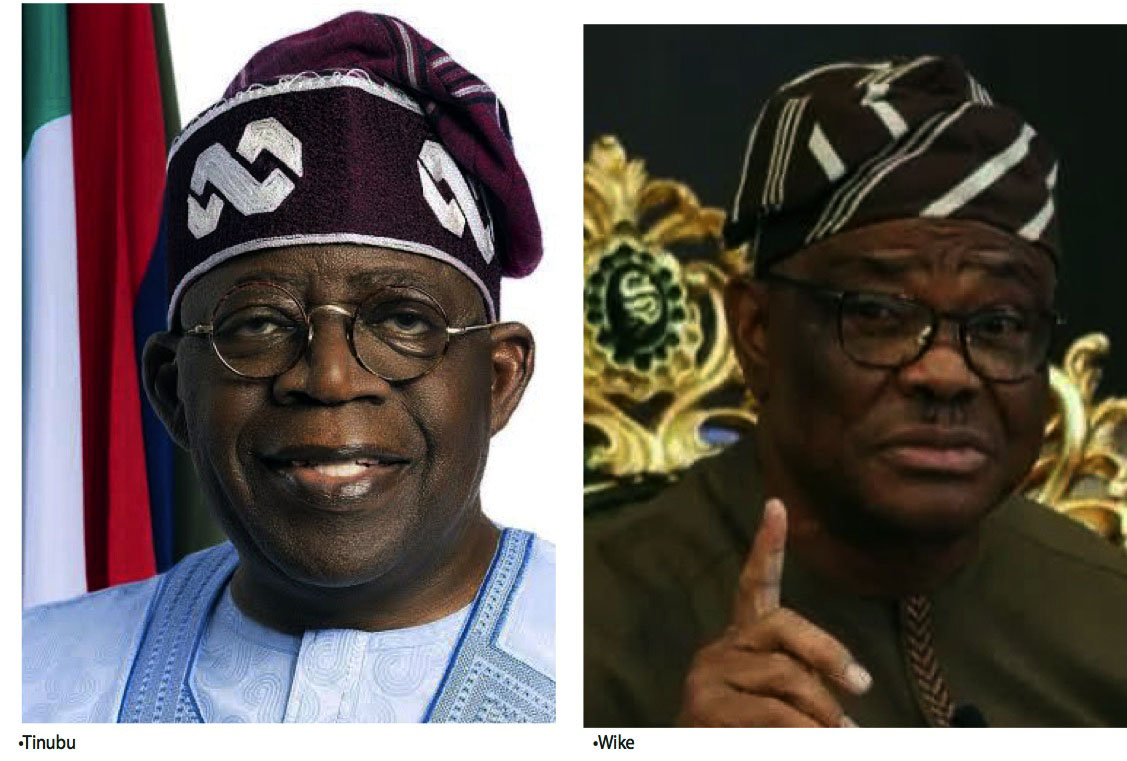
Every ruling party eventually confronts a paradox of its own making. It assembles a broad coalition to win power, rewards defectors to expand its reach, and then discovers, as the next electoral cycle approaches, that the very elasticity which delivered victory has loosened the bonds of internal discipline. The All Progressives Congress (APC) now finds itself in precisely this predicament. The Rainbow Coalition, a cross-party platform promoted by the Minister of the Federal Capital Territory, Nyesom Wike, has become the most divisive question within the ruling party as the 2027 general elections draw near.
The coalition’s stated purpose is deceptively simple. It seeks to mobilise politicians from the Peoples Democratic Party (PDP), the Labour Party, the Accord Party and other formations behind the re-election of President Bola Ahmed Tinubu, while permitting those same politicians to field their own candidates for governorship, National Assembly and state assembly seats.

It is this dual character, loyalty to the President coupled with competition against his party, that has unsettled APC governors and state leaders. The reports filed from the states, taken together with the reactions of the party, the FCT Minister and the PDP, reveal a coalition that is strong where it commands inherited structures, feeble where the APC is firmly entrenched, and potentially disruptive in states where the ruling party is divided against itself. Above it all hangs the conspicuous reticence of the President himself.
The anatomy of a quarrel
The dispute did not emerge suddenly. Late September recorded the loudest quarrel inside the ruling coalition, the product of a contradiction tolerated for roughly two years, namely that a serving minister who belongs to the PDP presents himself as the most vigorous champion of a Tinubu candidacy. The Progressive Governors Forum (PGF) met in Abuja in September and declared that its members would neither participate in nor endorse any alliance capable of undermining the party, the President’s re-election or the candidates of the APC. Although the statement did not name Wike, it was observed that it was widely read as a response to his arrangement.
Wike replied within a day. He insisted that the coalition was not an APC structure, that he had never approached the governors’ forum for any alliance, and that he had made no promise to any governor. He described the governors as politically lazy, and, in a remark that drew considerable attention, said that Governor Hope Uzodimma of Imo State should count himself fortunate that Wike was not a member of the APC. The tone was set. What began as a disagreement over strategy acquired the character of a personal and institutional contest.
APC’s response
The national leadership of the APC has adopted a posture of studied composure laced with unmistakable concern. In a conversation with the Daily Sun by the Special Adviser on Media and Information Strategy to the national chairman of the APC, the party rejected the proposition that the coalition posed any threat to the party across the states. He argued that claims of the coalition’s strength must be tested against verifiable evidence and not merely against the declarations of political actors or the movement of a few individuals. He drew a careful distinction between political noise, political calculation and actual electoral strength.
Yet, the chairman’s statement conceded more than it denied. He acknowledged the concerns of party members, promised internal consultation, reconciliation where necessary and regular engagement with stakeholders, and cautioned that support for the President must translate into support for the APC and its duly nominated candidates. His observation that any arrangement which supports the President but works against APC candidates in other elections raises questions that must be addressed is, in effect, the party’s central grievance in a single sentence.
Elections, he added, are won by organisation, credible candidates and grassroots mobilisation, and not by headlines. The message to members, that there is no room for complacency but equally no reason for panic, reveals a leadership attempting to reassure an anxious base.
Below the national level, the response has been sharper. The South East leadership of the party has rejected what it called a chameleon coalition and warned that parallel structures should not confuse or compete with existing APC grassroots organisations. The governors, for their part, have framed the matter as one of divided loyalty.
The FCT Minister’s position
Wike’s defence rests on a deliberate separation of two ideas that the APC insists on fusing. In his account, support for Tinubu is a presidential commitment, whereas support for APC candidates is a matter for those who hold APC membership cards. He has told Nigerians, in his own words, that he promised to support Tinubu in realising a second term and that he promised no governor anything. He has maintained that the coalition is not an APC structure, that it was not designed to destabilise the ruling party, and that he has never gone to the APC forum to form an alliance.
He has also asserted proximity to the President. He said there was nothing he had done that he had not first told Mr. President. At a media parley in Abuja on 13 October he declared that the coalition had come to stay and that nobody could do anything about it. He has further suggested that opposition from some governors is driven by their interest in the leadership of the next National Assembly, and, according to reports, has claimed that only the President, and not any governor, may question him.
In the Delta report, it is noted that some APC governors are unhappy that Wike claimed Tinubu had ceded nine states to his coalition, a claim that, if accurate, would amount to a substantial reallocation of political territory.
The PDP reaction
The PDP presents the most intriguing spectacle, for the coalition has not merely strained the APC; it has fractured the opposition party from which Wike emerged. A member of the PDP Board of Trustees, Chief Eddy Olafeso, who sympathises with the faction led by Tanimu Turaki, called it an anathema for a major opposition party to work for a ruling party that has allegedly not served the people well. He asserted that the true owners of the party, the majority of its members, had chosen to collaborate with other opposition parties while awaiting the judgment of the Court of Appeal on the leadership dispute, and he pointed to the emergence of Governor Seyi Makinde as a figure around whom a new generation might rally.
The Turaki faction’s Interim National Publicity Secretary, Ini Ememobong, went further, stating that the true and principled members of the PDP were not part of the support for the APC led Federal Government and its policies. The consequence is a coalition that draws heavily upon one faction of a divided party, while the rival faction denounces it. The pending appellate judgment will therefore matter enormously, for whichever wing is recognised will determine which structures carry the coalition’s banner in several states.
South East: Outright repudiation
Nowhere has the rejection been more categorical than in the South East, especially in Imo State. The APC spokesman, Onwuasoanya Jones, stated that as far as the party is concerned there is nothing like a Rainbow Coalition and that the APC is the only viable platform in the state. The state chairman, Austin Onyedebelu, accused Wike of using the arrangement to revive the PDP. Governor Hope Uzodimma, who leads the Progressive Governors Forum, has been the most prominent target of Wike’s rhetoric.
The coalition nevertheless exists in structure, if not in official recognition. The PDP National Secretary and governorship aspirant, Senator Samuel Anyanwu, has inaugurated coalition structures and is a member of it. The arrangement is a tripartite contest involving Uzodimma, former Governor Rochas Okorocha and Anyanwu. The image of a magnet with two opposing poles is apt, for the coalition attracts the PDP faction and repels the ruling party in equal measure. The danger to the APC lies in the possibility that an internal rival such as Okorocha and an external challenger such as Anyanwu may together fragment the vote.
Cross River: A fading momentum and a contested narrative
In Cross River State, the coalition’s early cohesion appears to have dissipated. The activities have waned in recent weeks as candidates have returned to consolidating their respective party bases. The Commissioner for Information, Ekpenyong Cobham, dismissed its relevance in uncompromising terms, alleging an attempt to recolonise the state and take its resources, and vowed resistance to the last drop of blood.
The PDP’s publicity zecretary, Prince Mike Ojisi, countered that the coalition was waxing strong though operating quietly, and that a consultative tour of the Central Senatorial District would soon formalise it. The resignation of the immediate-past PDP chairman, Venatius Ikem, complicated the picture. The Turaki aligned faction, in a statement signed by governorship candidate Julius Udayi and 37 other candidates, declared that his exit marked the collapse of the coalition and linked it to an expected Court of Appeal judgment. Cross River thus illustrates how the coalition’s fortunes are tethered to the resolution of the PDP’s legal crisis.
Benue: Where the coalition feeds on the APC’s own wounds
Benue State offers the clearest example of a coalition prospering from divisions inside the ruling party. The coalition’s National Secretary, Austin Agada, leads a faction of the APC believed to be loyal to the Secretary to the Government of the Federation, Senator George Akume. At a recent event in Makurdi, he declared that members of different parties had joined the movement. Governor Hyacinth Alia, who seeks re-election, has not identified with it, and his Chief Press Secretary, Tersoo Kula, stated that the governor was unafraid of any coalition unless it was a coalition of the masses against him.
The analytical significance is considerable. The coalition’s endorsement of Tinubu does not automatically translate into endorsement of Alia, and the rift between the governor and the SGF creates the competing interests that rival camps may exploit. Other opposition parties have been lukewarm. The PDP Secretary, Dan Nyikwagh, said the party had joined unofficially pending a meeting to determine its official stance. The Abure faction of the Labour Party, led by Ibrahim Idoko, stated that it was not part of the coalition and was partnering with individuals such as Abba Moro.
An African Democratic Congress (ADC) stakeholder, Adakole Elijah, said the coalition offered no benefit to his party. The strength of the coalition in Benue therefore remains unproven, but the APC’s internal fissures give it room to manoeuvre.
Ogun: A coalition without a vehicle
Other News
In Ogun State, the coalition is, not a political consideration. The ruling party is firmly in control and in government, and the principal opposition, the PDP, has been thrown into disarray by the omission of its governorship candidate, Oladipupo Adebutu, from the list of candidates published by the Independent National Electoral Commission (INEC). Adebutu is loyal to the Turaki faction, whereas the Wike aligned leadership is the one recognised by INEC, and the omission is attributed to the list submitted by that leadership.
An APC stalwart who spoke anonymously asserted that there is no credible evidence that Governor Dapo Abiodun or the recognised APC leadership is working for the coalition, and that the party is focused on what he termed a five out of five victory across all levels. Ogun is therefore an instructive case of a state where the coalition’s theoretical appeal is neutralised by factional litigation within the PDP.
Kaduna and North West
The Kaduna report, vis-a-vis, the North West, is notable for what it cannot establish. Daily Sun found that none of the stakeholders consulted could demonstrate that the state and the geopolitical zone had formally rejected the coalition or that it had been disbanded, yet there was insufficient verified information to identify its officially recognised coordinators, the stakeholders who have joined it, or any functioning structure across the three senatorial districts of Kaduna State and the seven states of the North West.
Invisibility is itself a form of weakness in Nigerian politics, where electoral strength depends on structure, funding and the capacity to place agents in polling units. A coalition that cannot be located on the ground cannot easily be relied upon to deliver votes, and for the APC in Kaduna and in the North West, it represents, for the present, an uncertain rather than an immediate danger.
Delta: Absorption rather than opposition
Delta State presents a different model altogether, in which the ruling party has neutralised the coalition by absorbing its space. Governor Sheriff Oborevwori and the state’s political structure aligned with the APC following the April 2025 defection from the PDP. Findings by Daily Sun show that the opposition Rainbow Coalition is weak or virtually non-existent.
Two homegrown third force movements, the Delta Unity Group and Hilary Ibegbulem’s Lion Family, have aligned with the APC. The Deputy Director-General of the state APC Campaign Council is Chiedu Ebie, a cofounder of the Delta Unity Group, while Ibegbulem has urged supporters to back all APC candidates in 2027.
An APC chieftain summarised the situation with evident satisfaction, saying that the coalition in Delta is no longer opposition, that the governor absorbed it, and that all are rainbow now but inside the APC. The report adds that although some governors are aggrieved at Wike’s claim that Tinubu ceded nine states to his coalition, the friction has not reached Delta, where Oborevwori has embraced rather than fought the idea. The lesson is that a governor with firm control of state finances and the grassroots machinery can convert a threat into an asset.
Contest widens in Kwara, Kebbi, Ebonyi and the South East
Beyond the states covered in the reports, further findings indicate that the contest has spread. The clash has intensified in Kwara, Ogun, Benue, Kebbi and Ebonyi, with the minister’s allies accused of seeking to frustrate the re-election of some governors, and that the coalition is believed to be backing non APC candidates in Enugu, Nasarawa, Gombe and other states.
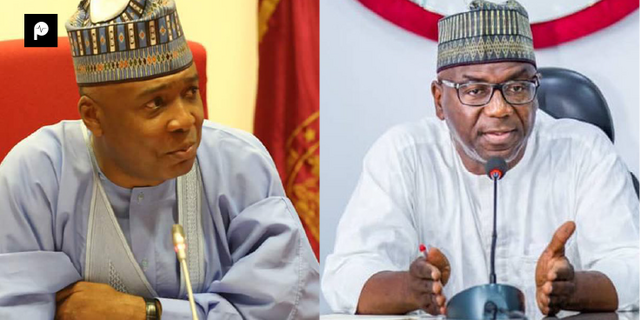
In Kwara, it was observed that Saliu Mustapha, who left the APC after losing the party’s return ticket for the Kwara Central Senatorial seat, joined the PDP, obtained its ticket and embraced the coalition while maintaining support for Tinubu. He is backed by former Senate, President Bukola Saraki.
The Kwara example demonstrates the mechanism by which the coalition could wound the APC. A disaffected aspirant, denied a ticket, finds a new platform that permits him to oppose the party’s candidate while professing loyalty to the President. Such a design converts every internal grievance into a potential electoral contest.
Osun: The coalition in government
Osun State shows the coalition at its most institutionally advanced. Governor Ademola Adeleke of the Accord has been appointed state coordinator of the presidential campaign council for Tinubu’s reelection, and he has inaugurated the council in the state in the presence of prominent APC figures, among them the Minister of Marine and Blue Economy, Adegboyega Oyetola, the governorship candidate Bola Oyebamiji, the National Secretary Ajibola Basiru and Bisi Akande. The PDP chairman, Sunday Bisi, pledged support for Adeleke’s political direction, while the Accord chairman, Victor Akande, stated that his party would mobilise for Tinubu as well as for all Accord candidates in the National and State Assembly contests.
The APC state chairman, Tajudeen Lawal, said the party was open to making concessions for the President’s re-election. The scene is one of apparent harmony, yet it conceals a structural tension, since the Accord and the APC will presumably compete for legislative seats even as they cooperate on the presidential ballot. How the concessions Lawal mentioned are defined will determine whether harmony endures.
Bayelsa: Assertiveness and argument
In Bayelsa State the coalition is both organised and combative. It is coordinated by Chief George Alabh Turnah, a close associate of Wike and the state chairman of the PDP, and counts grassroots leaders such as Joshua Maciver of Southern Ijaw and Moses Bless Olomu of Sagbama among its members. Turnah described the APC’s claim that it does not need the coalition to win as a dangerous misreading of realities, and argued that Governor Douye Diri, now associated with the APC, is not firmly on the ground politically. He recalled that Peter Obi almost won the state in 2023 without clear structures, and warned that with Obi now in the Nigerian Democratic Congress (NDC), whose national leader is former Governor Henry Seriake Dickson, the APC could be beaten unless the coalition lends its structure to the Tinubu campaign.
The coalition has released a calendar that includes the commissioning of a campaign secretariat and campaign buses donated by Wike on 9 November, the presentation of flags to its candidates, and a grand finale on 12 January. Wike himself has said that Tinubu will win seamlessly in Bayelsa because of his efforts there. The Bayelsa case shows a coalition that presents itself not as an appendage to the APC but as the indispensable instrument of the President’s success.
Nasarawa: Open support and ambiguous neutrality
In Nasarawa State, the coalition has secured its clearest public declaration from the PDP governorship candidate, David Ombugadu, who at his campaign flag off in Lafia on 26 September, affirmed that the entire state stood with the coalition and awaited direction from Wike. Governor Abdullahi Sule of the APC has adopted a more ambiguous posture. He expressed relief that he was not on Wike’s list of APC governors said to be fighting the coalition, and he asked what the whole essence of an alliance might be.
A declaration by a candidate does not prove that all opposition parties or their supporters share the position, and there is a distinction between supporting the President and participating in a coordinated coalition. Sule’s remarks do not make him an opponent, yet they do not commit the state APC either. The unresolved question is whether the coalition will remain a platform for the President’s re-election or mature into a broader political arrangement with grassroots structures.
Rivers: The citadel and Its cracks
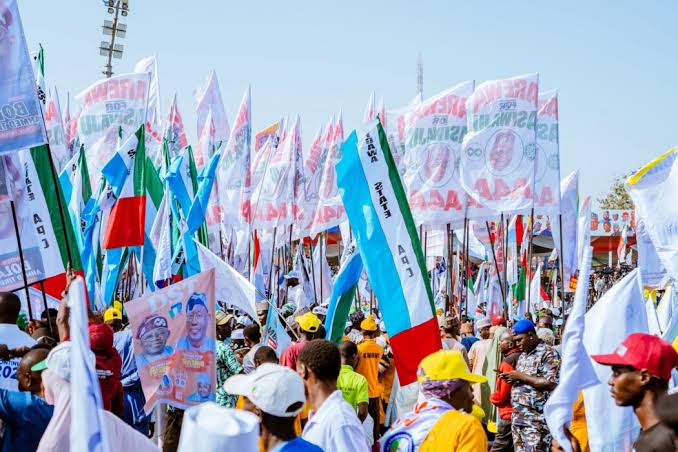
Rivers State remains the coalition’s heartland. It is the most dominant political machine in the state, drawing its strength from Wike’s own structure, with a presence spanning the APC, PDP, Labour Party and Action Alliance under what it calls the Renewed Hope Family. It controls the State House of Assembly and has unveiled a governorship campaign council for its candidate, Kingsley Chinda, with Major Jack as running mate. Sources report that Governor Siminalayi Fubara, who joined the APC after the coalition’s formation in January 2026, has aligned with the bloc, having reportedly endorsed Chinda and declared support for the President after two private meetings. Wike has said Fubara is playing an active role and that his quiet disposition does not signify exclusion.
Cracks nevertheless appear. A faction loyal to the governor has called on him to distance himself from the coalition and threatened to move to the ADC. The ADC’s state publicity secretary, Chizy Enyi, dismissed the coalition as monochromatic, observing that the chairmen of the APC and PDP and all governorship candidates are Ikwerre. The NDC and ADP chairmen have dissociated themselves, opposition parties claim the coalition represents less than seven percent of the population, and litigation over Chinda’s defection from the PDP to the APC hangs over the contest. The assessment that the coalition is strong at the top but fragile at the base is perhaps the most balanced judgment available.
The Villa and the loud silence
The most consequential actor in this drama has said the least. The President has remained publicly quiet as the exchanges continue. There are fears that the longer the silence lasts, the more the disagreement risks hardening from a quarrel between allies into two separate operations competing for the same voters. The silence is not accidental. Tinubu has an evident interest in retaining both Wike’s capacity to mobilise votes, linked to the 230,000 votes the President won in Rivers in 2023 against 66,000 in Imo, and the loyalty of governors who control state machinery.
What the President has done is communicate through gesture and not through declaration. On 14 October, he inaugurated the APC Presidential Campaign Council, whose membership includes Wike of the PDP, Governor Chukwuma Soludo of the All Progressives Grand Alliance (APGA) and Governor Adeleke of the Accord. He charged members to deliver their wards and votes, remarking that no one receives credit for an incomplete assignment. He did not mention the coalition, though the inclusion of non APC figures signals a willingness to accommodate them. Yilwatda described their participation as evidence of the party’s appeal beyond its membership.
The First Lady, Oluremi Tinubu, struck a different chord at the inauguration of the Presidential Women Campaign Council, announcing that all separate women’s support groups had been consolidated into one structure and that what appears on the ballot is the APC, and nothing less. These signals suggest a presidency simultaneously embracing Wike’s outreach and reaffirming the primacy of the party. Such ambiguity may serve tactical purposes, but it leaves state chapters without clear guidance, and it permits each camp to claim the President’s blessing.
Addendum
The evidence assembled from the states permits a tentative typology. In states where the APC governor commands unchallenged control, such as Ogun and Delta, the coalition is marginal or absorbed. In states where the party is internally divided, such as Benue, Kwara and Imo, the coalition offers aggrieved aspirants a vehicle for challenge. In states where the coalition is institutionally embedded, such as Rivers, Osun and Bayelsa, it may reshape the contest itself. In states such as Kaduna, Cross River and Nasarawa, its fate depends on structures not yet demonstrated and on the outcome of the PDP’s legal crisis.
For the APC, the principal danger is not that the coalition will defeat the President, since it professes to support him, but that it will deprive the party of governorship and legislative seats through the splitting of loyalties. As Yilwatda warned, support for the President must be matched by support for the party’s candidates.
Whether the Villa breaks its silence before the campaign proper begins may determine whether this quarrel is resolved as a family matter or hardens into two competing operations. In Nigerian politics, silence from the summit is rarely neutral, and the states are already interpreting it in the manner most convenient to themselves.