Follow Us on Google


•Despite Tinubu’s Oct 1 pledge, cheap fares remain a mirage •Weeks after, FG’s promise stalls, as states move to bring transport cost down
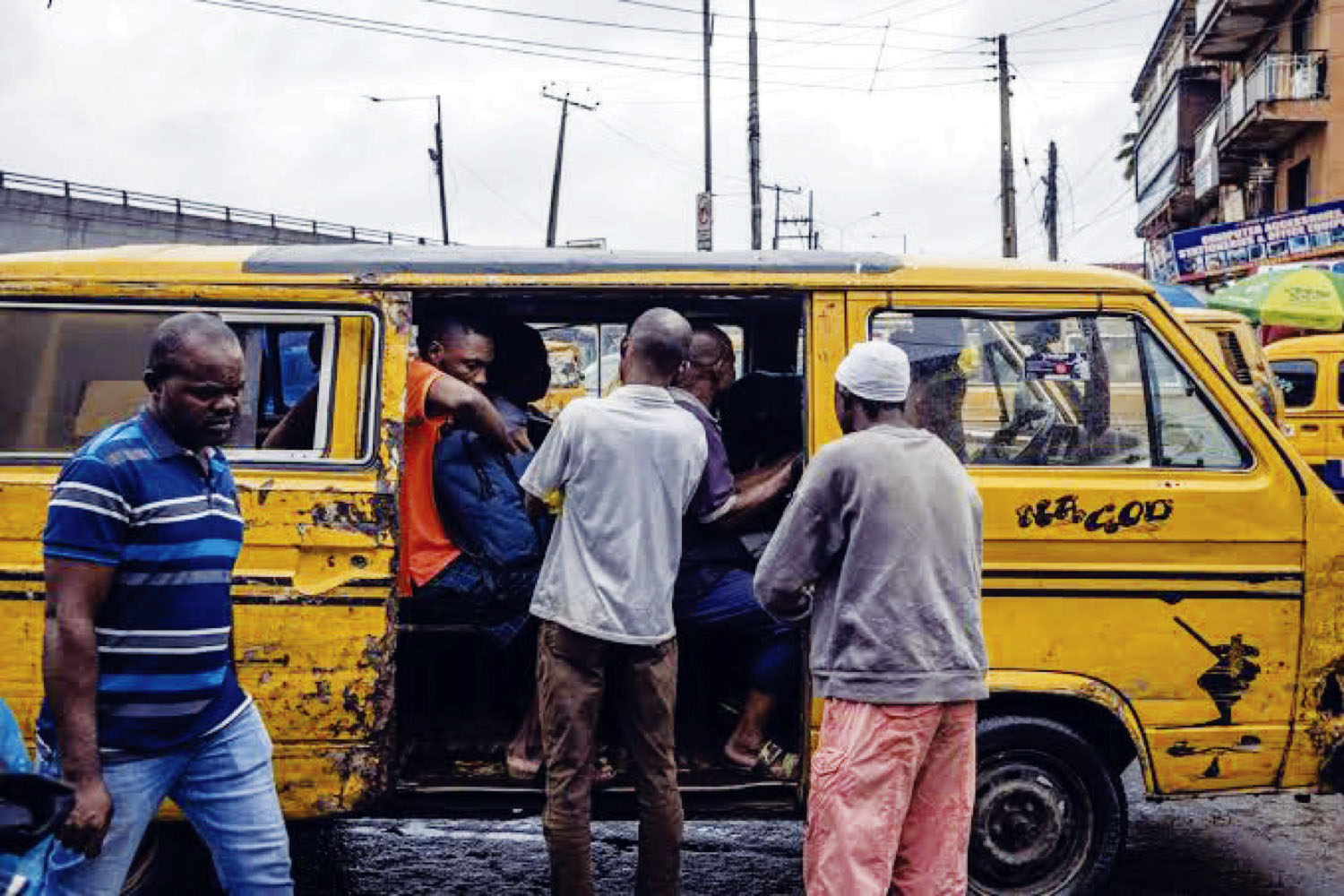
Three weeks after President Bola Ahmed Tinubu announced an immediate relief to the high transport fares afflicting Nigerians, the promise has remained a mirage.
In his October 1 broadcast to the nation, President Tinubu had announced the roll-out of Compressed Natural Gas (CNG) buses, conversion of petrol vehicles to CNG and discounted petrol at Nigeria National Petroleum Corporation (NNPC) retail outlets, assuring that the measures would crash transport costs from October 1.
For millions of commuters battling high fares, it was a promise of immediate respite, one they anticipated with excitement.
But three weeks after that broadcast, checks by Saturday Sun across the country show the promise is yet to arrive at the bus stop.
From state to state, fares have remained either unchanged or risen. Fuel still sells for between N1,400 and N1,500 per litre, conversion centres are scarce, CNG buses are few and parked, and private operators who carry most Nigerians say they cannot cut fares.
There are interventions from some states, like Kaduna’s free CNG buses and Benue Links’ subsidised services, which offer some relief. But for most commuters, cheap transport remains a mirage.
Benue residents yet to feel impact of Tinubu’s promise
…But Gov Alia subsidises transportation cost, state govt says
Residents of Benue State have expressed worry over the steady rise of transportation fares despite President Bola Tinubu’s promise to provide Nigerians with cheaper transportation costs from October 1.
Some residents, who spoke on the development, said they had yet to experience any reduction in the cost of transportation, lamenting that rising fuel prices have continued to affect fares charged by commercial motorcycle operators and other transporters.
For many who depend on commercial motorcycles for short distance journeys, transportation costs remain a daily concern, with the increases adding to the money required to get to work, markets, churches and other destinations, reports Scholastica Hir in Makurdi.
A resident, Mr Bem Abela, who expressed dissatisfaction with the Federal Government’s announcement, said the president’s promises had not translated into tangible benefits for residents of Benue State.
He said “All the president’s promises are not being fulfilled here in Benue. That promise is a total lie. I feel it’s another promise to hold the people to ransom to feel that the government would actually do something. But we haven’t seen any reduction in transportation fare,” Abela said.
Another resident, Mrs Martha Tondo explained that transportation fares had not reduced, noting that the cost of going from one point to another within the state had continued to rise alongside petrol prices.
According to her, trips that previously cost N200 via commercial motorcycles now attract fares of about N400, while journeys that cost N500 have had their fares increased to between N700 and N800.
Mrs Tondo also added that fares for some trips that previously cost N1,000 had risen to about N1,200 and N1,500 depending on the time of the day and passengers’ bargaining power.
The resident noted that the variation in cost of transportation meant that commuters could pay different amounts for similar journeys, particularly during periods of high demand.
Another respondent, who said the price of petrol remained unchanged based on personal observation, questioned how transport fares could have reduced when the cost of fuel had yet to come down.
“I buy fuel, and the last time I checked, the price of fuel has not reduced; it is still the same, so transport fare couldn’t have reduced,.”
“The only place you see reduction is in Benue Links, the state transport company, compared to other private companies and because the government made it so. Else the other companies are charging according to fuel price and it has not reduced,” she said.
Another resident, Miss Deborah Shima corroborated the earlier speakers saying “Yes, I use Okada, Keke, and taxi. Transportation costs have not reduced in Makurdi at all. As a matter of fact, I wanted to take a bike to somewhere close to my house, a trip that I usually would have paid N200 for, the person was charging me N500. So it has not reduced.
“Whenever I want to take bike or enter Keke or bus and I complain of the price, they will be telling you that fuel increase, fuel increase. It has been going up rather. I have seen the big Macorpolos buses repaired by the state government at Benue Links which plies Apir road and other places but I have not entered any before. But I can tell you we are paying more.”
The residents called on President Tinubu to consider restoring the petrol subsidy, arguing that its removal had placed additional financial pressure on Nigerians.
Tondo particularly said: “Mr President should just bring back subsidy, even if he can’t do any other thing.”
To ameliorate the suffering of citizens and ensure that the Benue people have access to affordable transportation services, the Benue State Government said it has subsidised transportation cost for citizens.
The General Manager of the state owned transport company, Mr Alexander Fanafa, in an interview with our correspondent in Makurdi, said the Benue State Government, under Governor Hyacinth Alia, has introduced several measures to improve public transportation, reduce the cost of commuting and expand access to transport services across the state through Benue Links Nigeria Limited.
Fanafa said tangible transport interventions by Benue State Government include the injection of 100 brand-new buses into Benue Links Nigeria Limited to improve its operations and ease transportation challenges facing residents.
According to the company’s General Manager, to make transportation more affordable, the government has directed Benue Links to reduce fares to the barest minimum, prioritising affordable services over profit maximisation.
He said “The Governor also introduced a 50 per cent fare discount for passengers living with disabilities, allowing them to pay half the already reduced fares on Benue Links vehicles.
“Therefore, wherever a person living with a disability boards a Benue Links vehicle, that passenger is entitled to pay only half of the applicable fare, courtesy of the Governor of Benue State.”
“The government has also supported the refurbishment of abandoned Marcapollo buses, which have returned to the roads to provide transport services within Makurdi metropolis. In addition, Benue Links has introduced intervention services for commuters travelling from Makurdi town to Joseph Sarwuan Tarka University, former University of Agriculture Makurdi as well as other routes, including the Air Force Base, Apir and George Akume Way.”
The GM said the initiative provides students and other residents with more affordable alternatives to commercial transport operators, including tricycle services.
“So Governor Hyacinth Alia has subsidised transportation cost in Benue State,” he said.
Kaduna’s free CNG buses offer relief, but many await FG fares reduction
While free Compressed Natural Gas (CNG)-powered buses introduced by the Kaduna State Government have provided some relief to commuters, many residents who depend on commercial transportation are still waiting for lower fares following President Bola Tinubu’s promise to reduce transportation costs.
The President had directed state governments to intensify efforts to make transportation more affordable, with October 1, 2026, set as a target for delivering relief to Nigerians grappling with rising living costs.
The initiative includes the deployment of CNG-powered buses, conversion of petrol-powered vehicles to CNG, and measures aimed at reducing the cost of fuel and public transportation.
However, the experience of commuters in Kaduna suggests that the benefits have yet to reach everyone, particularly passengers who rely on commercial minibuses, taxis and other privately operated vehicles, so writes Noah Ebije.
Although the state’s free bus scheme offers an alternative for passengers travelling along designated routes, transport fares on some commercial routes reportedly remained unchanged after the October 1 deadline.
There are indications that commuters in Kaduna were still paying the same fares on some routes despite the President’s promise.
At Sabo Motor Park, a commuter, Markus Audu , said the fare from Sabo to Kasuwa remained ₦700 for a one-way trip, while a journey from Samrada Filling Station in Ungwan Romi to Kasuwa cost ₦500.
“There is no way these commercial bus owners can reduce the transport fares, knowing well that the cost of fuel has not come down,” Audu said.
His remarks reflect the concerns of passengers who had expected the President’s directive to translate into immediate reductions in their daily transportation expenses.
For workers, traders and students who travel regularly, transportation costs can consume a significant portion of their income, leaving less money for food, accommodation, school expenses and other necessities.
A commercial driver, Mallam Musa Nasir also told Saturday Sun that drivers were still buying petrol at between ₦1,450 and ₦1,500 per litre.
The high cost of fuel, he said, remained a major obstacle to reducing fares.
Despite the concerns surrounding commercial fares, the Kaduna State Government has introduced a free public transportation scheme using CNG-powered buses to ease the burden on residents.
The initiative, introduced under Governor Uba Sani, provides free transportation on designated routes within the Kaduna metropolis.
According to the Kaduna State Commissioner of Information and Culture, Malam Ahmed Maiyaki, Kaduna remained the only state providing free CNG-powered mass transit services to its residents, while other states had adopted different levels of fares reduction.
“Kaduna is the only state offering free services in the whole of Nigeria. Other states offer different forms of subsidised costs; some offer 50 per cent, while others offer certain percentages.
“Even the FCT, where the Federal Government is partnering with the NURTW, is not offering it free. Kaduna is the only state providing free services to students, civil servants, traders, artisans and the entire citizens of the state,” he said.
The commissioner said the state operated the scheme through eight routes with 100 CNG buses and about 200 bus stops. He said the initiative had reduced the financial burden on residents, particularly civil servants, students, traders and artisans, by freeing up money previously spent on transportation.
“Transportation takes a chunk of people’s income. Taking that off their shoulders is reducing the impact of the removal of fuel subsidy.
“Instead of spending the money on transport, they have more money for their families, feeding and the education of their children. It has significantly improved the productivity of our civil servants because they can save between 40 and 50 per cent of their salaries that would ordinarily have gone into transportation,” Mayaki stated.
October 1 promise: Rivers commuters yet to see Tinubu’s cheap transport
President Bola Tinubu’s promise of cheap transportation for Nigerians effective from October 1 has yet to translate into lower fares for commuters in Rivers State, reports Tony John in Port Harcourt.
President Tinubu had announced the roll-out of Compressed Natural Gas (CNG) buses, conversion of petrol vehicles to CNG and a discount on petrol at NNPC retail stations, as measures to crash transport costs.
However, checks by our correspondent in Port Harcourt and other parts of the state show that transportation fares have remained largely unchanged.
On major routes such as Mile 1 to Choba, Rumuokoro to Onne, and Borokiri to Artillery, commercial drivers still charge between N500 and N1,500 depending on distance, the same rate before the October 1 announcement. Drivers attribute the situation to high cost of vehicle maintenance, scarcity of CNG conversion centres and limited availability of NNPC stations selling at discounted rates.
Some commuters who spoke to our correspondent said they had yet to feel any relief.
A civil servant plying the Mile 3 to Secretariat route said she still pays N800 daily, adding that the promised intervention has not reflected on fares.
Another commuter in Obio/Akpor Local Government Area said: “We heard the President’s promise, but transport is even more expensive. The CNG buses are not in Port Harcourt. We are still paying the same.”
A commercial driver in Rumuola, Augustine Onah, said most drivers have not converted their vehicles to CNG due to high conversion cost and lack of refilling stations.
“The CNG is a good idea, but where do we convert the vehicles? How many filling stations have CNG in Rivers? Government should make it available and affordable,” he said.
On the part of the Rivers State Government, findings showed that the state has sustained its free transport scheme for students in school uniforms and state civil servants.
The State Ministry of Transport recently said it was in talks with private investors to expand the state-owned mass transit fleet and explore CNG-powered buses in line with the Federal Government’s initiative.
But residents say the number of buses is grossly inadequate compared to the daily commuting population.
Stakeholders have called on the Federal Government to ensure wider distribution of CNG buses to states, accelerate conversion centres and ensure NNPC discount is enforced nationwide, if the cheap transportation promise is to be realised.
Transportation fares double in Kebbi despite President Tinubu’s announcement
In Kebbi state, despite the promise by President Bola Ahmed Tinubu that transport fares would reduce across the country, the cost of transportation has nearly doubled in Kebbi, Ola Muhammad, writing from Birnin Kebbi, reports.
It was observed that some filling stations had shut down their stations due while few stations still operating are experiencing large crowds of motorists desperate to get the product.
Speaking with our correspondent in Birnin Kebbi, a commercial driver at Sabo Tarsal Main Garage, Mallam Aliyu Maikasuwa explained that due to the closures of many filling stations, the transport fares have increased. He disclosed that fares from Birnin Kebbi to Lagos, Ibadan and Ilorin, which used to cost N30,000,N27,000 and N25,000 respectively, now go for N45,000, N40,000 and N35,000 respectively.
Mallam Yazid Aminu, a civil servant in Kebbi State told our correspondent that there was no reduction in the transportation fares since the president made his announcement.
Other News
He said: “As a Nigerian, I never observed any changes or development in the transportation sector, rather it’s been hardship. The transport fares have been increased which led to the increase in food prices.
“My view on this matter is that the president just made a political statement, and it is not possible to fulfil the promise he made. The President just mentioned that in order to attract or get the voters of Nigerians. “
Similarly, Mallam Adamu Dan Aliyu, a health worker in Kebbi State, noted that the reduction in the price of transportation was a good measure. But reduction for a month is a No- No. The measure should be put in place for a longer period. This short time measure is not the best.”
Adamu said that the Federal Government should set up a regulatory body to control and monitor transportation fares in Nigeria, saying that the government should ensure that the supply of petrol is in abundance all over the nation before exportation to other countries.
He explained that if the government makes the supply of CNG vehicles available across the country with affordable prices, the transportation fares will drastically reduce.
“The government should ensure our refineries are working. If they are not working, they should be sold out to private entities to make them functional again. Again, the refined petrol and other products should be sold in Naira.”
Adamu added that the cost of transportation had yet to reduce, noting that he paid N2,100 from Birnin Kebbi to Gwandu which used to be N1,500.
As at the time of filling this report, filling stations in Kebbi State capital are full of crowds desperate to buy fuel due to artificial hoarding of PMS by the independent fuel dealers.
In the outskirts of Birnin Kebbi, especially in Kalgo, Jega, Koko and Yauri towns, filling stations are selling their products at cost of N1,450 per litre without long queues.
Despite over 300% fare hike, electric buses in Cross River remain in parks
Commuters in Cross River State are still groaning under high transport fares, despite a presidential assurance that fares will come down. Findings revealed that transport fares within Calabar metropolis and inter-state routes have increased by over 300 per cent.
For instance, a short drop within Calabar, which was N50, now costs N200 and in some areas N300. The Calabar to Ikom route, which was N5,000 over two years ago, now costs N15,000. Calabar to Ogoja now costs up to N20,000 depending on the service provider.
The situation has forced many residents to trek long distances, while others now spend over half of their daily income on transportation, reports Saturday Sun correspondent, Aniekan Aniekan in Calabar.
A commuter, Richard Effiom told our reporter that she now spends N1,200 daily to and from work. “Before, I used to spend N200, now it’s N1,200. The money is not even there. We are suffering,” she lamented.
Another resident, a student of the University of Calabar, said he now skips lectures on certain days because he cannot afford the fare from his residence in Efut Anantigha, Calabar South LGA to campus.
The government, during festivities like Easter and Christmas, usually offers free rides to its citizens. The rides usually cover the Calabar Metropolis and some local government areas.
While commuters continue to bear the brunt, 10 electric buses procured by the Bassey Otu administration under its mass transit scheme to cushion the effect of subsidy removal are still parked.
The buses are currently parked at the premises of the state-owned Construction and Fabrication Academy of West Africa along Murtala Mohammed Highway, Calabar.
The state government had also distributed electric vehicles to magistrates and top government functionaries as part of its green economy drive, and unveiled a CNG conversion centre in partnership with the Federal Government.
However, both initiatives appear to have stalled, leaving commuters to the mercy of private transporters who fix arbitrary prices.
Speaking on the delay, the State Commissioner for Transport, Pastor Kingsley Egumi, said government is working on constructing charging and CNG stations.
As of press time, it remains unclear when the buses will finally hit the roads to mitigate the plight of the long suffering commuters in the state.
High transport fares persist in Enugu despite Tinubu’s promise
Despite President Bola Tinubu’s promise to reduce transportation costs for Nigerians from October 1, commuters in Enugu State are still paying high fares, with a trip from Enugu to Nsukka costing as much as N3,500, writes Jude Chinedu.
The fare from Enugu to Agwu is about N3000, while similar rates apply to other destinations, leaving many residents struggling to cope with the rising cost of transportation.
The situation is largely attributed to the high cost of petrol, which currently sells for about N1,400 per litre in parts of the state.
Although the Federal Government has introduced compressed natural gas (CNG)-powered buses and encouraged the conversion of petrol-powered vehicles to gas, the impact of the initiative has yet to be felt across all transport routes in Enugu.
The 100 CNG buses provided by the administration of Governor Peter Mbah, however, offer some relief to passengers travelling on the routes they serve, with fares reportedly about 50 per cent lower than those charged by conventional commercial transport operators.
But the buses do not provide short-distance shuttle services within Enugu metropolis, leaving many residents who depend on intra-city transport to contend with the high fares.
Within the metropolis, a trip from Abakpa to Garriki costs about N1,500, while passengers travelling from Abakpa to Obiagu or Old Park pay N500. A journey from Old Park to Garriki costs about N1,000.
For many residents, the fares have become a source of concern, particularly for workers, traders and other commuters who must travel daily.
Okechukwu Nnamani, one of the residents who expressed concern over the situation, said the high cost of transportation was putting pressure on household finances.
“Transportation has become a serious problem for ordinary people. You leave home with a particular amount in mind, but by the time you pay your transport fares, a large part of your money is gone,” he said.
Another resident, Ibezim Aniakor, said the rising fares were affecting people’s ability to manage their daily expenses.
“The problem is that transport is not something you can avoid. Whether you are going to work, your business or the market, you must pay. When fares keep increasing, it affects everything else you need to do with your money,” he said.
Stella Adukwu also called for measures to make transportation more affordable, saying the situation was particularly difficult for people who depended on commercial vehicles for their daily movements.
“Not everybody has a car, and not everybody can afford to spend so much on transportation every day. We need something that will bring down the fares and make life easier for people,” she said.
However, some commuters who use the CNG-powered buses said the initiative had helped reduce their transportation expenses.
Adaeze Ugwu commended Governor Peter Mbah for the initiative, saying the lower fares offered some relief to passengers travelling on the routes covered by the buses.
“The CNG buses have been helpful because the fares are cheaper than what we pay in other commercial vehicles. At least, you can save some money when travelling on the routes they cover,” she said.
Chinecherem Agbo also praised the initiative, describing it as a welcome development at a time when transportation costs were rising.
“I appreciate the government for providing these buses. The difference in the fares is important, especially for people who travel regularly. I only wish the buses could cover more routes within the metropolis,” Agbo said.
Another commuter, Ikenna Eze, said the buses had provided an alternative for passengers seeking cheaper transportation.
“The buses are helping those of us who use them because we pay less than we would in ordinary commercial vehicles. The government should consider expanding the service so that more people can benefit,” he said.
Transportation costs get higher in Kogi
In spite of the reduction in the price of premium motor spirit in some filling stations for a period of one month by the Federal Government, transportation fares in Kogi State are still rising, reports Emmanuel Adeyemi in Lokoja
This is because petrol stations in the statec even now sell higher than what it was before the announcement on October 1.
A litre of petrol which used to sell for between N1,280 and N1,350 in Lokoja, the state capital, now sells for between N1,400 and N1,510 while the same product is sold for N1,650 or more from outside the state capital, depending on the areas.
For example, it was gathered that in some remote areas in the state such as Aiyegunle Gbedde, Mopa, Omala , Abocho and others ,the price has increased by more than 35 per cent, as the product now sells for between N1,780 and N2,000 per litre with even most of the filling stations not dispensing the product accurately.
This, has greatly increased the prices of transportation costs in the state as commercial drivers have jerked up their prices while commuters complain bitterly.
For example from Kabba- to Lokoja, a journey of about one hour, which used to cost N5,000 before October 1, is now N7,000.
Okene to Lokoja, a journey of less than 45 minutes which used to be N4,000, is now N6,000. This development, it was learnt, has reduced the numbers of passengers travelling within and outside the state as commuters now devise means of calling or sending messages through the drivers and would travel only when it is compulsory.
This sudden rise in transport fares has also affected workers in the state, some of who go to work two or three times a week due to the soaring transportation costs.
We’ve not witnessed improvement in transport costs – Jos commuters
Motorists in Jos, the Plateau State capital, have said they had yet to witness any drop in the cost of transportation despite the assurance of the federal government to reduce transport fares from October 1.
A cross section of residents who spoke to Saturday Sun in Jos and Bukuru metropolis also said that they have not seen any drop in the pump price of petroleum products as petrol still sells between N1,440 to N1,500 per litre, reports Jude Owuamanam.
However some of them who are regular riders on the Plateau metro buses, a transport scheme introduced by Governor Caleb Mutfwang, gave kudos to the Mutfwang administration for subsidising transport fares. A drop, no matter one’s destination, costs N200 per drop.
The scheme, run by the Plateau State Transport Service, has brought tremendous relief to residents of the state
But a greater majority said that they don’t have the luxury of endlessly waiting for the buses at the designated bus stops.
Mr. Davou Gyang, who works in Vom in Jos South, but lives in Jos North said that but for the metro buses, he would have stopped work, noting that his salary could not sustain him for two weeks if he were to take public transport to go to work every day.
He said: “When the federal government announced the reduction in transport fares from October 1, we all saw it as a welcome development, but more than two weeks after that promise, we have yet to see any improvement. We have not also seen the CNG buses. But for some of us on the Plateau, the metro buses introduced by our God-sent governor have been our saviour. For me a journey that would have taken me more than N1,500 to and from work now costs me N400. But it’s not every day that I use the buses because you have to keep to schedule to be able to catch the buses. So I still pay through the nose each time I miss the bus.”
Another resident, Juliet Pam, said that she still uses public transportation as the metro buses do not ply her route. According to her, “I am still waiting for the federal government promise of cheaper transport fares. Since the pronouncement, cost of fuel has not come down and we’re still witnessing corresponding increase in transport fares. A drop in Keke is now between N400 to N500 and could be more, depending on the distance.
However for those not on regular routes plied by the metro buses, they would have to bear the high cost of using public transport.
Esther Nasara said she’s a trader and does not have to wait for metro buses for her daily buses.
“If I have to wait for metro buses, then my business will suffer. My time is not determined as I can go out any time depending on when I need to supply vegetables to my customers. Do you expect me to wait for metro buses.
As for journalists working in Plateau State, the buses don’t confer any advantage. A journalist, who preferred anonymity said, “You’re one of us and you know the nature of our job. We work with time and if my assignment is timed, waiting for metro buses will render me useless that day because I will definitely be unproductive. So I have no option than to rely on the expensive public transport system.”
At Lagos Costain terminus, commuters report mixed fare changes
Weeks into the policy announced by the president, commuters and transport operators at Costain, one of Lagos’ busiest transit hubs, say they are beginning to see slow changes, even though there is no uniformity across all routes, as reported by Ngozi Nwoke.
Taiwo Adebayo, a bus conductor on the Costain – Oshodi route, said fares have dropped slightly on buses that have switched to CNG. “Before October 1, we were collecting ₦700 to Oshodi. With the discount by the federal government, we still collect the same amount because the transport union still charges us the same loading fees,” he said.
Charity Nsikan, a trader at Iponri Market, noted a modest reduction in her daily transport expenses. “I come from Surulere three times a week. Before, going and coming was ₦700. Now with the CNG buses and some drivers doing promo fares, I spend between ₦550 and ₦600. It’s not yet as cheap as we expected. Not all drivers have reduced though. Some still say fuel is expensive,” she said.
Douglas Ugwuoha, a civil servant who works at Alaka, said the short hop from Costain has become cheaper. “On September 30, I paid ₦300 from Costain to Alaka. Since last week, the CNG buses charge ₦200 and the regular buses are still ₦300. So there’s a reduction, but it depends on which bus you enter.
“In the mornings the CNG buses fill up very fast because people are aware. If government brings more and ensures fuel is available at the discounted stations, the price can hold,” he said.
Grace Ndukwe, a student commuting to Yaba, also confirmed a drop but called for consistency. “My fare from Oyingbo to Yaba used to be ₦700. This week I paid ₦700 on a CNG bus and ₦800 on a petrol bus that said they bought fuel at NNPC. Some drivers are still collecting ₦700 and saying conversion is expensive. The policy is working a little, but students will feel it more if there are more CNG buses and proper monitoring,” she said.
A transport union worker identified as Okunola at Costain said wider adoption of CNG and steady supply of discounted fuel at NNPC stations will determine whether the fare reductions will take effect, confirming that the old price is still charged.