Follow Us on Google
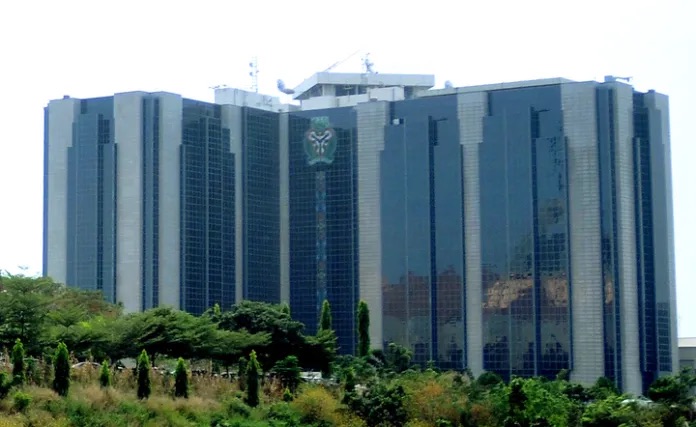
Nigeria’s largest banks could be forced into another round of capital raising despite completing recapitalisation exercises earlier this year, as the Central Bank of Nigeria (CBN)’s proposed overhaul of the financial holding company framework introduces fresh capital requirements estimated at more than N531.6 billion, Daily Sun investigations reveal on Thursday.
The projection is contained in an analysis of the CBN’s exposure drafts on the Revised Guidelines for the Licensing and Regulation of Financial Holding Companies in Nigeria and the Guidelines on Ring Fencing Operations of Closely Linked Entities in the Nigerian Financial System, both issued on June 10, 2026.
According to a report titled; A New Blueprint for Financial Holdcos by Cordros Research, an investment based firm, tier-1 banking groups could collectively face a capital shortfall of approximately N531.55 billion if the proposed requirement that financial holding companies (HoldCos) maintain regulatory capital equal to at least 120 per cent of the combined minimum capital of their subsidiaries is implemented in its current form.
The estimate comes barely months after banks concluded major recapitalisation programmes ahead of the CBN’s new minimum capital requirements, suggesting that some lenders may once again have to tap investors through rights issues, public offers or private placements.
The analysis covers five of Nigeria’s largest banking groups in Access Holdings Plc, First HoldCo Plc, Guaranty Trust Holding Company (GTCO), United Bank for Africa (UBA) and Zenith Bank Plc.
Among the lenders, First HoldCo is estimated to have the largest capital gap of N140.07 billion, although its planned N253.10 billion capital raise was expected to more than cover the shortfall. GTCO follows with an estimated deficit of
N115.10 billion, while Access Holdings faces a capital gap of N52.51 billion.
The proposed reforms are part of the CBN’s effort to strengthen oversight of increasingly complex financial groups by separating banking activities from non-banking operations, reducing contagion risks and improving governance across holding company structures.
Under the draft framework, a financial holding company would remain a non-operating parent entity but would be required to maintain a minimum 51 per cent equity stake in each subsidiary and hold paid-in capital exceeding the combined regulatory capital requirements of all subsidiaries by at least 20 per cent. Importantly, excess capital held by one subsidiary cannot be used to offset a capital deficiency elsewhere within the group.
They say the capital implications could become even more significant for banks with extensive international operations.
“Currently, Nigerian banks own most of their foreign subsidiaries directly through their operating banking entities. However, the proposed guidelines require those offshore businesses to be transferred either directly to the HoldCo or through a single Intermediate Holding Company (IHC).
Other News
If foreign subsidiaries are transferred directly to the HoldCo, their regulatory capital requirements would also count toward the HoldCo’s capital base, increasing the amount of capital the parent company must maintain.
An IHC structure, while operationally simpler, could prove even more capital-intensive because the proposed 20 per cent capital buffer would effectively apply twice, first at the IHC level and again at the HoldCo level’, the report said.
The report notes that uncertainty also remains over the treatment of international banking licences following such restructuring. If foreign subsidiaries are no longer owned by the operating bank, the bank could effectively become a national bank, potentially reducing its minimum regulatory capital requirement from N500 billion to N200 billion.
However, the CBN’s exposure drafts are silent on this issue, leaving the final capital implications dependent on the regulator’s eventual guidance.
Head, Research at FSL Securities, Chiazor Victor, added that beyond capital, the proposals introduce sweeping governance reforms aimed at strengthening the independence of subsidiaries within banking groups.
He explained that the draft limits HoldCo directors to serving on only one subsidiary board, restricts HoldCo representation on subsidiary boards to no more than 20 per cent, prohibits HoldCo employees from serving as non-executive directors within subsidiaries and prevents HoldCos from participating in subsidiary lending decisions.
“The accompanying ring-fencing framework also seeks to reduce operational interdependence across financial groups. Banks, payment companies, pension administrators, insurance brokers and other affiliated financial institutions would be required to maintain separate governance, risk management and customer onboarding processes, while transactions between related entities would have to be conducted on an arm’s-length basis and receive regulatory approval where necessary.
Although the measures are intended to strengthen financial stability and limit regulatory arbitrage, i really think that maybe they could increase compliance costs and reduce the operational efficiencies that have historically supported cross-selling across banking groups”, he said.
The proposals remain in draft form, with the consultation period ending yesterday (July 9, 2026).
Following stakeholder feedback, the CBN is expected to issue the final guidelines, which may amend key provisions, including the proposed capital buffer, ownership requirements and treatment of international subsidiaries before implementation begins.