Follow Us on Google

From Charity Nwakaudu, Abuja
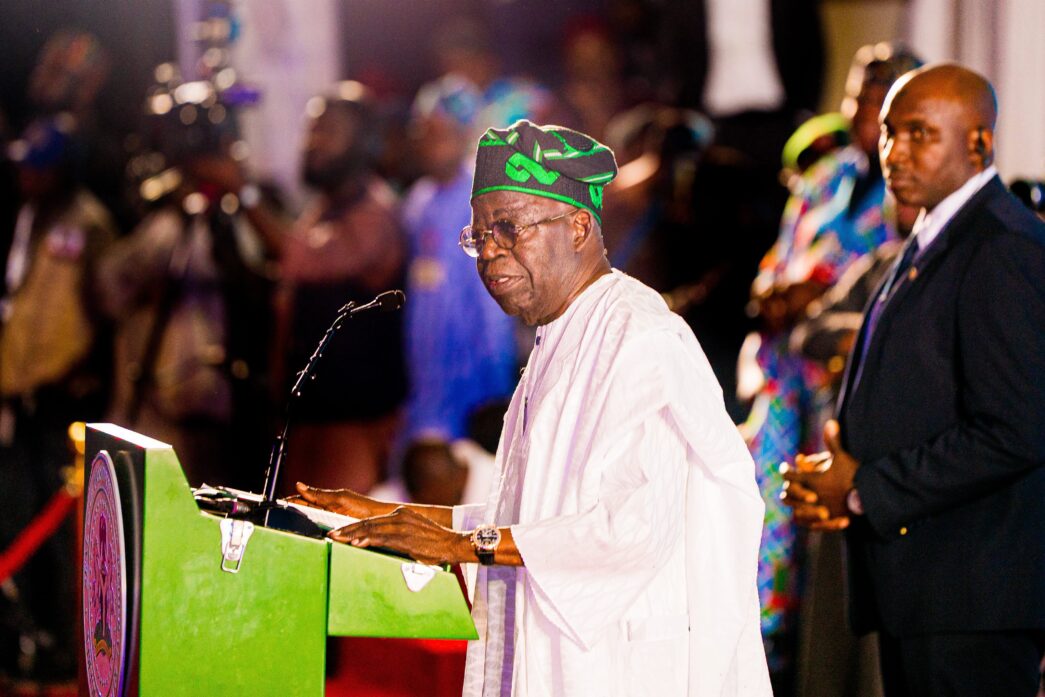
The Democracy Watch Initiative (DWI) has commended President Bola Tinubu’s economic reforms, citing reports attributed to Bloomberg Economics and the World Bank as evidence of improvements in Nigeria’s economic outlook.
The organisation, however, urged state governors to translate increased revenue allocations into better infrastructure, healthcare, education, agriculture and job opportunities for their residents.
In a statement, DWI’s Director of Strategic Communication, Dr Tunji Bamidele, said the reports indicated progress under the Federal Government’s Renewed Hope Agenda.
According to him, Nigeria’s investment outlook, economic growth, foreign reserves and revenue generation have improved, while poverty is projected to decline gradually.
Bamidele cited the 2026 Bloomberg Economics Investment Risk-O-Meter, which he said ranked Nigeria eighth in Africa, four places higher than its previous position, attributing the improvement to changes in fiscal policy, foreign exchange management and the power sector.
He also referenced the World Bank’s October 2026 Nigeria Development Update, which he said indicated that the country’s poverty rate had stabilised for the first time since 2019, with further improvement projected as economic growth outpaces population growth.
On economic growth, he said Nigeria’s economy expanded by 4.2 per cent in the first half of 2026, compared with 3.9 per cent in the corresponding period of 2025, while medium-term growth projections averaged 4.4 per cent between 2026 and 2028.
He further cited a decline in inflation from 27.6 per cent in early 2025 to 15.2 per cent by December 2025, with expectations of a further drop to 12 per cent by 2028.
According to him, Nigeria’s gross external reserves rose to $53.8 billion in August 2026 from $45.5 billion at the end of 2025, while the country recorded a current account surplus of $12 billion, representing seven per cent of gross domestic product.
Other News
On revenue generation, Bamidele said federation revenues grew by 69 per cent in real terms between 2023 and 2025, enabling state governments to increase capital expenditure by 151 per cent within the period.
He said the increased spending had supported investments in roads, agriculture, energy, housing and social services, urging governors to ensure that the benefits reached ordinary Nigerians.
“For years, difficult economic structural defects held our country back. President Bola Ahmed Tinubu took the tough, bold decisions not for short-term political gain, but for the long-term prosperity of every Nigerian,” he said.
Bamidele added that the administration’s economic reforms were beginning to yield results, pointing to increased foreign reserves, improved fiscal indicators and higher state-level spending.
He also expressed support for the administration’s proposed Renewed Hope Agenda 2.0, which he said would expand targeted cash transfers, promote cheaper transportation through compressed natural gas (CNG), improve agricultural productivity and make healthcare more affordable.
The DWI director said the cash transfer programme was already serving more than 10 million households.
He added that the organisation would continue to mobilise and educate citizens across the country’s 774 local government areas on government policies and development initiatives.
“We commend the Economic Management Team, state governors and the resilient citizens of Nigeria for their patience and cooperation,” he said.
Bamidele urged state governments to ensure that increased federation allocations translated into measurable improvements in living conditions, adding that the benefits of economic reforms must be felt at the grassroots.