Follow Us on Google

From Romanus Ugwu, Abuja
The Director-General of the Raw Materials Research and Development Council (RMRDC), Nnanyelugo Ike-Muonso, has endorsed the re-election of President Bola Tinubu, saying it is critical to consolidating Nigeria’s industrial transformation, attracting investments and creating jobs through local processing of the country’s abundant natural resources.
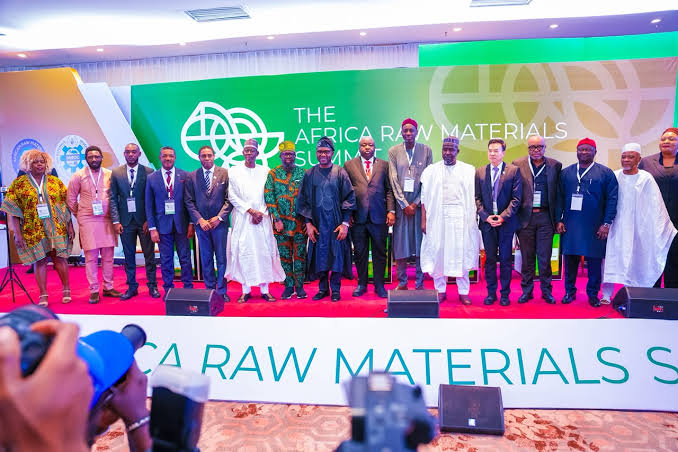
He made the appeal on Monday in Abuja at the second Africa Raw Materials Summit 2026, themed ‘From African Feedstock to African Factories.’
In his remarks, Ike-Muonso stated that the continuity of the administration’s industrial policies would accelerate the establishment of processing plants and manufacturing clusters.
He further argued that the re-election would enable Nigeria to move away from exporting unprocessed commodities to producing finished goods.
He said that major industrial projects, including battery-refining complexes and heavy manufacturing facilities, require sustained policy implementation to achieve their full potential.
He warned that policy uncertainty could undermine investments and delay the country’s transition from a raw material exporter to a manufacturing powerhouse.
“To solidify these gains and complete the transition from feedstock exporter to industrial power, we must sustain this momentum, maintain policy predictability, and support President Tinubu’s visionary leadership for a consolidated second term to finish the job he so courageously started,” he said.
He equally cautioned that Nigeria could no longer afford to export its natural resources without substantial local processing, noting that the practice deprived the country of employment opportunities, industrial expertise and wealth that could be generated through domestic manufacturing.
He identified the African Continental Free Trade Area (AfCFTA), which provides access to a continental market of about 1.3 billion people, as a major opportunity for expanding manufacturing and intra-African trade.
He, however, warned that the agreement would deliver limited benefits if African countries lacked the manufacturing capacity to compete with imported finished products.
He identified the proposed 30 per cent Raw Materials Value Addition Bill as a key instrument for strengthening domestic processing and reducing dependence on raw material exports.
He projected that the proposed framework could generate more than 1.2 million high-value jobs and attract foreign direct investment into industrial clusters.