Follow Us on Google

Protests, especially in Abuja and Lagos, punctuated Nigeria’s Democracy Day, marked on June 12, 2026. Civil society groups, including #EndBadGovernance and Take-It-Back movement, organized rallies to protest worsening insecurity and extreme economic hardship. In Abuja, the police were in their element. They fired tear gas at the protesters. Activist, Omoyele Sowore, collapsed after inhaling the chemical fumes.
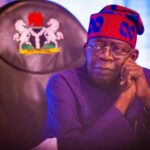
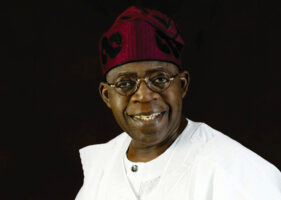
Ironically, President Bola Tinubu, in his broadcast to Nigerians, eulogized the country’s democracy. His speech was full of sound bites, which, on further scrutiny, signified nihilo. With pleasure, he announced national awards to some Nigerians “who suffered persecution, endured indignities, exile, incarceration, and, at times, solitary confinement, so that we have democracy today.”
Giving national awards to those who fought for democracy is good. But some of the names on the list are not supposed to be there. They suffered no persecution or indignity. Their only qualification for the award is that they have proximity to the people in power. Curiously too, the former National Security Adviser, Col. Sambo Dasuki (retd), who is standing trial for alleged money laundering, criminal breach of trust, and the diversion of funds originally meant for arms and security, is among the beneficiaries.
According to the President, the greatest tribute Nigerians can pay to these people as beneficiaries of their struggle is to deepen and strengthen democratic institutions, build a Nigeria where freedom is protected, justice is upheld, opportunity is expanded, and government is accountable. How I wish this government does all that it preaches. It is common knowledge that freedom is often abridged and accountability is not in the good books of this government. Or do we call suppression of dissent and protests democracy?
For 27 years, President Tinubu said, “Nigerians have chosen their leaders through the ballot, witnessed peaceful transitions of power, and resolved disagreements in courtrooms and legislative chambers – not through violence.” He added that “democracy fails when citizens doubt the process.”
Incidentally, many Nigerians have doubted our democratic and electoral processes since 1999. Yes, we have always held elections, but how credible, peaceful and free are those elections? The fact that the military has not intervened does not make the outcome of most of those elections acceptable to the majority of Nigerians.
Almost every general election in Nigerian is truncated by violence, including ballot box snatching and killings, threats of attack, manipulation of election result, and long litigation that leaves corrupt judges smiling to the banks after some jaundiced judgments. The manipulation of the 2007 presidential election was such that the then President Umaru Yar’Adua, who won the election, promised to institute reforms of the electoral process. Unfortunately, he could not achieve that before he died in 2010.
The 2011 elections turned out to be one of the bloodiest since 1999 when the Fourth Republic journey started. The contest was between former Presidents Muhammadu Buhari of the then Congress for Progressive Change (CPC) and Goodluck Jonathan of the Peoples Democratic Party (PDP). It was so contentious that over 800 people died.
The 2015 and 2019 elections were similarly contentious. Hundreds of people also died. What saved the day in 2015 was former President Goodluck Jonathan. Announcement of election results has not been concluded when he threw in the towel and congratulated Buhari. He said his ambition was not worth the blood of any Nigerian. In 2019, Buhari came back for his second term after a highly manipulated election.
The 2023 presidential election appeared to be the most manipulated. Nigerians desired a change. They trooped out to exercise their franchise, but most of them were technically disenfranchised. Some stood under the sun for long hours but still could not vote because electoral officials were nowhere to be seen. Some were not allowed to vote in Lagos and some other parts of the country because it was suspected that they either belonged to the opposition party or to the Igbo ethnic nationality. Some others voted but their votes did not count due to the manipulation of election results.
The Independent National Electoral Commission (INEC) concluded the manipulation when it announced suspicious results in the wee hours of March 1, 2023. The umpire claimed that there were technical glitches in the upload of results to its result viewing portal (IReV). This was how an election that witnessed initial massive turnout of voters became the worst in Nigeria’s history in terms of low voter turnout. Even before, during and after the election, many people were attacked and killed. In the 12 months preceding the election, the Armed Conflict Location & Event Data (ACLED) reported over 200 violent events involving party members and supporters resulting in about 100 fatalities.
The 2027 election is following the same trend. The signals Nigerians are getting are ominous. Many opposition state governors were cajoled or intimidated to join the All Progressives Congress (APC), not because the ruling party is performing wonders. They joined to protect their selfish interests and to be in the centre where the national resources are shared. The Zamfara State governor, Dauda Lawal, who joined the APC a few months ago, lamented that the Federal Government excluded his state from special intervention funds such as the N500 billion palliatives because he was in the opposition party.
Other News
The worst is that there have been vicious attacks on leading opposition figures and their supporters and parties in the run-up to the election. Chieftains and supporters of the African Democratic Party (ADC) were attacked in Edo, Lagos, Ekiti, Kebbi, Rivers, and Kaduna states. The party’s secretariats in some states were set ablaze.
Even the Osun State governorship poll coming up on August 15, 2026 has not been spared of the violence that trails our elections. Last week, someone lost his life while some others were injured in the violence that erupted between the supporters of the Accord Party and the APC in some parts of Osogbo, the state capital. Osun is known for its violence-prone elections. In the April 14, 2007 governorship and House of Assembly elections in the state, 12 people lost their lives.
Mr. President said, in his broadcast, that electricity was a democratic dividend his administration owed every Nigerian. “We intend to deliver it,” he enthused. Should we cry or clap? Whichever, the administration has delivered solar energy to Aso Rock. Tinubu promised during his campaign for the 2023 election that he should not be voted for again if he failed to provide electricity for Nigerians in his first term as president. We are all living witnesses to the near collapse of the energy sector. The national grid has often collapsed to the dismay of millions of Nigerian electricity consumers. Shouldn’t the president rather resign than making another phantom promise?
It is laughable to hear from Mr. President that fiscal transparency has improved, leakage reduced, and public funds directed to national priorities. If fiscal transparency has improved, how was the bid for the Lagos-Calabar Coastal Highway made and won? Is directing public funds to purchase of presidential jet, lawmakers’ vehicles, and some other inanities part of the national priorities?
The worst hypocrisy of our politicians is that they pretend to love the masses so much that they promise heaven and earth during campaigns. Immediately they get into office, things change. For most of them, all they care about are the spoils of office and how to loot public treasury.
The president spoke about terror-related deaths dropping by 81 per cent, and that over 13,000 terrorists have been neutralized in the past year. He is trying to be smart here. It is true that terror-related deaths are lower now than in the peak period of Boko Haram insurgency, especially between 2014 and 2015.
Nevertheless, in the three years of Tinubu’s presidency, the country harvested more deaths compared to what it inherited from Buhari in May 2023. The 2026 Global Terrorism Index (GTI) report shows that there were 171 attacks in Nigeria in 2025 as against 120 in 2024. The country also witnessed one of the highest increases in terrorism deaths in the world in 2025. It recorded 750 terrorism-related deaths, which represents a 46 per cent increase from the previous year. The National Bureau of Statistics reported that between May 2023 and April 2024, about 2.2 million Nigerians were kidnapped. Thus, from its eighth and sixth positions in the 2024 and 2025 GTI respectively, Nigeria declined to the fourth position in the 2026 GTI.
Last Saturday, information came that the kidnapped former Director of Defence Information, Major General Rabe Abubakar (retd), has died in captivity. May his soul rest in peace! Bandits kidnapped the man and his wife recently in Katsina.
Let’s commend the President for committing N5.41 trillion to defence and security, and for approving the recruitment of over 50,000 new police officers and thousands of military recruits. The 2026 defence budget is said to be our largest ever. Tinubu did this because, according to him, “democracy without security is not solid enough.” But how this has translated into better security for Nigerians remains to be seen.
The over 80 schoolchildren abducted in Borno and Oyo states are still in captivity exactly one month after their abduction. The president simply told us that “we remain hopeful for their safe return.” We will remain hopeful because we have no other option. But Mr. President, please it is overdue to bring back our children!
Sadly, some of these terrorists are being rewarded one way or the other. Tinubu claimed over 124,000 fighters and dependents have laid down their arms since 2023 through Operation Safe Corridor (OSC). The FactCheckHub reported it to be false. It said the 124 figure related to the total number of terrorists and dependants who had surrendered since OSC began in 2015, not since 2023.
Besides, the so-called amnesty is partly what emboldens the terrorists to continue in their atrocities. People are jailed for stealing fowls, but those who have killed thousands and held the country hostage are rewarded with the so-called amnesty while their victims are left in the lurch. It is unfortunate.
The suffering of Nigerians under this so-called democracy is enough. Reeling out statistics, some of which are unverifiable and half truths, is being unfair to the people. Such does not win sympathy for any government. It rather brings a climate of resentment and mistrust against the government. Let the hypocrisy stop!