Follow Us on Google

From Juliana Taiwo-Obalonye and Romanus Ugwu, Abuja
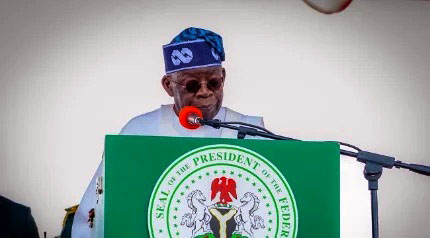
President Bola Tinubu has defended his decision to remove the petrol subsidy, declaring that Nigeria cannot return to what he described as a failed economic path, in an apparent response to former Vice-President Atiku Abubakar’s call for the restoration of the subsidy.
Tinubu, who said his administration inherited an economy facing serious financial challenges, insisted that reversing the reforms would amount to taking the country backwards, urging Nigerians to scrutinise the promises of opposition politicians.
The President spoke yesterday at An Evening with the Original City Boy, an event organised by the City Boy Movement, led by Seyi Tinubu, where he addressed youth supporters and mobilisers ahead of the 2027 general election.
His defence of the reforms came as his campaign council extended its consultations to traditional rulers in the North, assuring them of greater inclusion, while the City Boy Movement pledged to mobilise at least 10 million youth votes for his re-election.
Although Tinubu did not mention Atiku by name in the relevant portion of his address, he challenged his political opponents to explain how their proposed policies would address the country’s economic difficulties, maintaining that difficult decisions were necessary to prevent a deeper crisis.
“I took difficult decisions from the first day of this administration because I believed Nigeria could not continue on its previous path. We must not allow the country to go backwards,” he said.
“You will hear our political opponents making promises, but you must examine those promises carefully and ask whether they offer practical solutions to the challenges facing Nigerians.”
The President’s remarks came amid continuing debate over the economic consequences of subsidy removal, which has contributed to higher transport and living costs, even as the Federal Government maintains that the reforms are necessary to stabilise public finances and redirect resources towards development.
Tinubu told the gathering that his administration confronted serious economic difficulties when it assumed office on May 29, 2023, including pressure on government finances and obligations that the country struggled to meet.
“When we took office, we faced serious economic challenges. We were struggling to meet some of our obligations, including payments to airlines. Almost everything in Nigeria depends on transportation. Our national carrier and the aviation sector faced difficulties,” he said.
“We could not simply continue printing money as though that were a sustainable solution.”
Acknowledging the difficult consequences of the reforms, the President argued that leadership required accepting responsibility for decisions taken in the national interest.
“Looking back, I have learnt important lessons from the challenges of the past. The first lesson is that leadership requires taking responsibility for the consequences of one’s decisions,” he said.
He recalled predictions that young Nigerians would abandon his administration because of the hardship associated with its policies, arguing that the turnout at the event demonstrated otherwise.
“I remember the predictions that young people would turn their backs on our reforms. Those who made such predictions were wrong. You are here, demonstrating your faith in the promise of a better Nigeria,” Tinubu said.
Drawing parallels with the biblical and Quranic accounts of Moses and Musa, he said the journey towards progress required faith, courage and perseverance through difficult circumstances.
Tinubu urged the movement to take his administration’s message to campuses, markets, workplaces and communities, insisting that the election would be about more than his personal political ambition.
“You must go to your campuses, your markets, your communities and your places of work. Engage every young person you know. Whether they hold a PhD or have no formal qualifications, speak to them about what we have done and what we intend to do,” he said.
“Explain our policies. Present the facts. Compare our record and our plans with those of our opponents.”
The President said his administration had taken steps to expand young Nigerians’ access to education, credit and opportunities in government, citing support provided through the Nigerian Education Loan Fund (NELFUND).
“Today, more than one million students have benefited from support through the Nigerian Education Loan Fund (NELFUND),” he said.
“We are also creating opportunities for young Nigerians to access credit and acquire the tools they need to improve their lives.”
He said he had deliberately entrusted young people with responsibilities and intended to expand their participation.
“I have entrusted young people with real responsibilities in this government, and I have watched them deliver. I intend to do even more because those who will live longest with the consequences of today’s decisions must have a role in shaping them,” he said.
Commending the movement’s grassroots organisation, Tinubu said its presence across states, local government areas, wards and polling units demonstrated its capacity for mobilisation.
“You have not merely gathered people; you have built an organisation. You have established a presence across the states, local government areas and wards, extending to the polling-unit level,” he said.
“I therefore assure you that you will not be left behind—not in this campaign, not in this government and not in the Nigeria we are building together.
“Nigeria belongs to all of us, and its future belongs to you.”
He also reiterated his commitment to reducing disruptions to university academic calendars.
“I promised to address the recurring disruption of academic calendars caused by strikes in our universities. A four-year university course should take four years. We have continued to work towards that objective,” he said.
The assurance of inclusion also featured in the campaign council’s consultations with traditional rulers, during which its Director-General, Abdulaziz Yari, conveyed the administration’s commitment to carrying traditional institutions along.
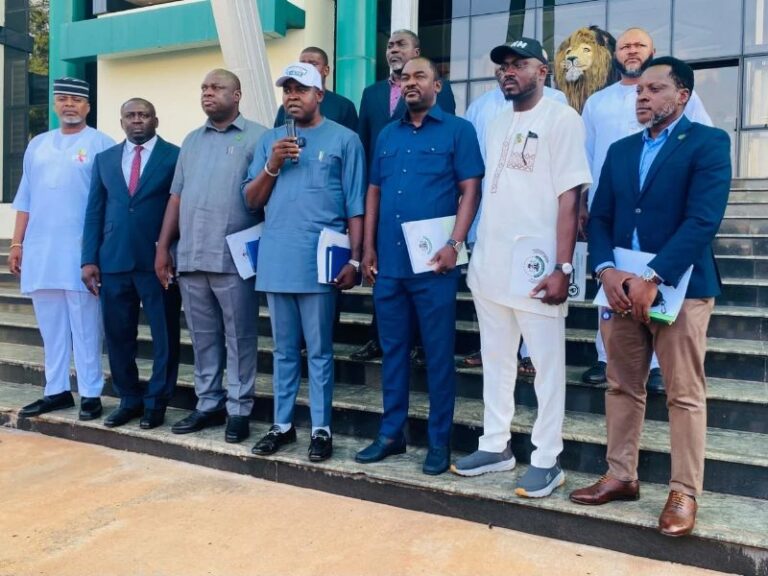
According to a statement by the Yari Media Office, the delegation visited the emirs of Gwandu, Katsina, Daura and Zaria as part of nationwide consultations with traditional and political leaders ahead of the election.
Yari said the engagements were intended to build consensus and mobilise support for campaign activities leading to the January 16, 2027 presidential election.
“The royal visits form part of a broader consultative tour to traditional and political leaders across the country, as the Council builds consensus and galvanises support ahead of key campaign activities leading up to 16th January 2027, a significant date in the electoral calendar,” he said.
Other News
He described engagement with traditional institutions as a cornerstone of the council’s consultative strategy, explaining that the delegation sought the rulers’ prayers, blessings and counsel rather than endorsements.
“This PCC and our party want to reassure you of our profound respect for Nigeria’s traditional institutions and the pivotal role you play in fostering peace, unity, and stability. This government remains committed to carrying all stakeholders along in the build-up to the 2027 general elections,” he said.
The statement said the traditional rulers offered prayers for peace, unity and the success of the country’s democratic journey.
Yari’s entourage included former governors Ali Modu Sheriff of Borno, Abdullahi Umar Ganduje of Kano, Adamu Aliero of Kebbi and Sani Ahmad Yarima of Zamfara.
At the City Boy gathering, Vice-President Kashim Shettima defended the administration’s economic policies, arguing that Tinubu’s reforms had prevented a more severe economic crisis.
He said the President chose to accept responsibility for inherited challenges rather than blame his predecessor, former President Muhammadu Buhari.
“The President is an honourable man. Instead of resorting to name-calling, instead of heaping the blame on his predecessor, what the President said was that he had to inherit the assets and liabilities of his administration,” Shettima said.
He argued that the reforms were yielding results, citing economic growth, declining inflation and an increase in foreign reserves.
“The President took those far-reaching decisions. He had the courage of conviction and the knowledge to take those decisions that repositioned the Nigerian economy,” he said.
“Yes, Nigerians have gone through some tough times, but it could have been worse.”
Shettima promised further interventions to address agricultural challenges and food prices.
“In the coming weeks, the President will come up with robust responses to agricultural challenges, and prices of foodstuff will certainly come down,” he said.
He urged young supporters to defend the administration with facts and engage opponents on policy rather than personal attacks, recalling the longstanding political relationship between Tinubu and Atiku.
“Desperation is not insanity. There is honour even amongst politicians, and I believe that there is a minimal threshold below which, even as politicians, we should not fall,” he said.
“They are not our enemies. They are our co-travellers in national rebuilding.”
Speaker of the House of Representatives, Tajudeen Abbas, urged the movement to go beyond mobilisation and establish a system through which Nigerians could assess the performance of the administration and other public officials.
“This must not be a celebration; it must be an audit,” he said.
“A political movement must not become a fan club. Leadership must be judged by performance, not by the number of people who celebrate the leader.”
Abbas called for the documentation of budgets, projects, implementation records and outcomes, saying the records of presidents, ministers, governors, legislators, local government chairmen and political appointees should be accessible to the public.
He urged the movement to use artificial intelligence and policy analysis to improve access to government information while ensuring the inclusion of women and persons with disabilities.
“Carrying the President’s portrait or celebrating his leadership is not enough,” he said, stressing that supporters should demonstrate how government programmes had improved citizens’ lives.
Deputy Senate President Barau Jibrin also commended the movement’s use of technology and artificial intelligence to document the administration’s programmes.
“I believe there is no other political organisation in this country doing what you are doing. This organisation is not only human-driven; it is also technology-driven and AI-driven,” he said.
Barau urged the movement to incorporate Tinubu’s political philosophy and history into its content and provide a question-and-answer component through which users could compare the records of opposition politicians with their campaign promises.
“This will enable people who engage with your technological platform to understand the issues and make informed decisions. We must ensure that Nigerians are not misled by false promises or carried away by prevailing political narratives,” he said.
He also called for explanations of how international conflicts and geopolitical tensions affected energy prices and living costs, citing the Russia-Ukraine war, the Israeli-Palestinian conflict and tensions involving Iran and the United States.
On the movement’s electoral target, its Director-General, Francis Shoga, said it was working to deliver at least 10 million youth votes for Tinubu.
Shoga said the organisation had registered 4.6 million members on its national database and was expanding its structures across the 36 states and the Federal Capital Territory.
“We are committed to delivering a minimum of 10 million Nigerian youth votes in January 2027 in support of the Renewed Hope Agenda,” he said.
He said more than 50,000 young Nigerians had participated in its Renewed Hope Youth Tour, while structures were being developed across the country’s 774 local government areas, wards and polling units.
Its activities, he said, included town hall meetings, campus engagements, house-to-house outreach, market visits and social media campaigns to explain government policies and encourage youth participation.
Shoga appealed for more opportunities for qualified young people to serve in government, saying the movement was prepared to contribute its organisational capacity to national development.
Minister of Youth Development, Ayodele Olawande, said the movement was ready to take the administration’s message to communities nationwide, describing the gathering as an opportunity for young Nigerians to engage with a leader they believed had given them a voice in governance.
Director-General of the Relax, Tinubu Is Fixing Nigeria group, Ahmed Bala, said his organisation had documented more than 340 achievements of the administration and was distributing information materials in tertiary institutions.
Bala also claimed the group had attracted more than three million members within two weeks, adding that it planned to strengthen its structures and promote voter education ahead of the election.