Follow Us on Google
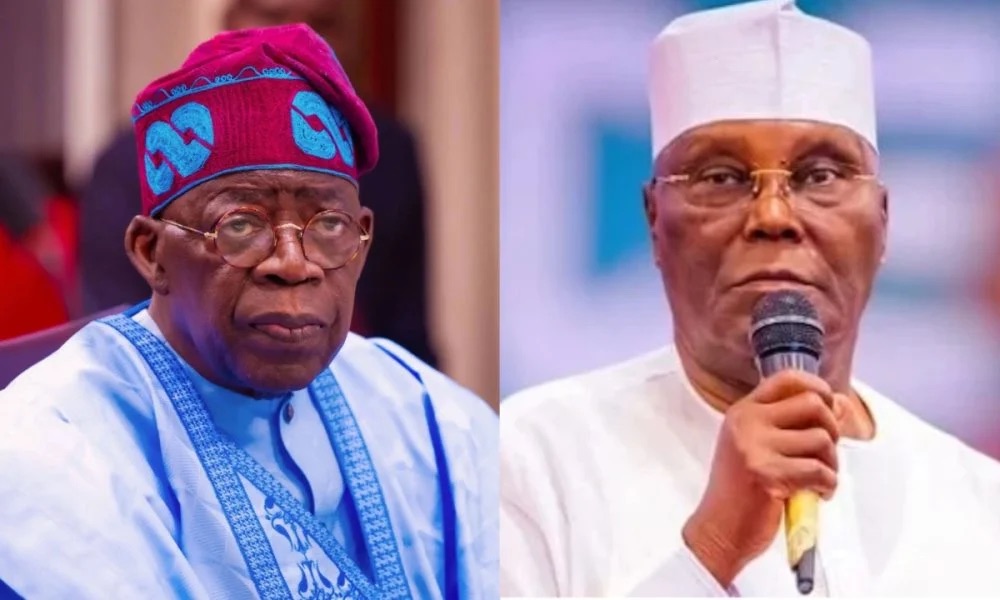
Paul Ibe, Media Adviser to former Vice President Atiku Abubakar, has criticised the Bola Tinubu administration for focusing on macroeconomic indicators while ordinary Nigerians face sharply higher living costs.
In a Facebook post on Wednesday, Ibe said the government continues to celebrate GDP growth, trade figures, revenues and other statistics as proof that its economic policies, often called ‘Tinubunomics,’ are working.
He argued that these figures do not reflect the daily reality of most citizens.
“Nigerians don’t live inside GDP tables. They live in the market. And the market is telling a very different story,” Ibe stated.
He cited data released by the National Bureau of Statistics (NBS) showing the average petrol price at ₦238.11 per litre in May 2023. Petrol now sells around ₦1,350 per litre at many outlets, a level confirmed by recent market reports placing retail prices commonly between ₦1,280 and ₦1,350.
Ibe noted that headline inflation has fallen from 22.41 per cent in May 2023 to 15.43 per cent, a figure matching the NBS July 2026 report.
He attributed the decline partly to rebasing of the Consumer Price Index and GDP, while stressing that prices continue to rise, only more slowly.
Food inflation stood at 20.31 per cent in July 2026, according to the same NBS data.
He pointed to rice prices as an example of everyday pressure. NBS recorded 1kg of locally sold rice at about ₦555 in May 2023; by May 2024 it had risen to ₦1,608.89.
Other News
The national minimum wage increased from ₦30,000 to ₦70,000, a 133 per cent rise. Ibe said this nominal gain means little if the cost of food, transport and housing has risen faster, reducing purchasing power.
On the currency, he recalled that the naira traded around ₦461 to the dollar on May 29, 2023. The current market rate is now around ₦1,323, with official rates near ₦1,320–₦1,330 and parallel-market rates higher in recent trading.
Ibe also referred to World Bank estimates that about 63 per cent of Nigerians, nearly seven in ten, lived below the national poverty line in 2025, with another seven million people estimated to have fallen into poverty that year. World Bank reports from early 2026 confirm the 63 per cent figure for 2025.
“Economic growth matters. But GDP is a means, not the end,” he said.
The real questions, according to Ibe, are whether Nigerians can afford food, rent, transport, school fees and medicine, and whether small businesses can survive.
“Nigerians don’t eat GDP no matter how delicious it may be. They don’t spend trade statistics at the market. They don’t pay their children’s school fees with foreign reserves. They don’t cook with economic growth,” he stated.
Ibe maintained that the ultimate test of the administration’s economic policy is whether the average Nigerian is better able to live, eat, work and provide for their family than on May 29, 2023.
He said the government should answer that question rather than focus on presentations of positive statistics.