Follow Us on Google
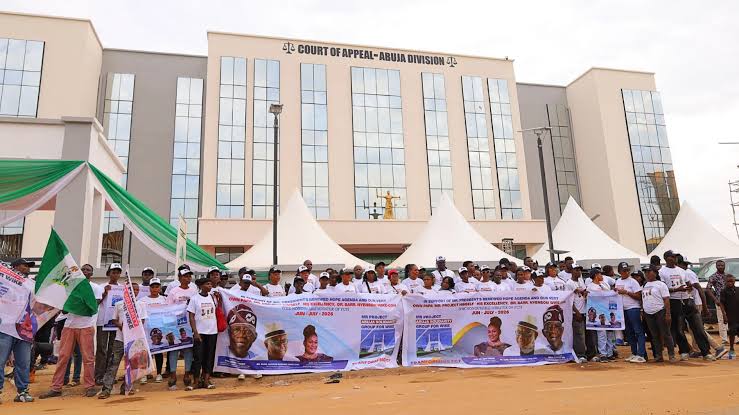
- Urges justices: “Let justice be swift, fair, blind to status, tribe or purse”
- says Wike is Mr Project indeed
- Court president: 10 courtrooms will enable 20 panels a day
From Juliana Taiwo‑Obalonye, Abuja
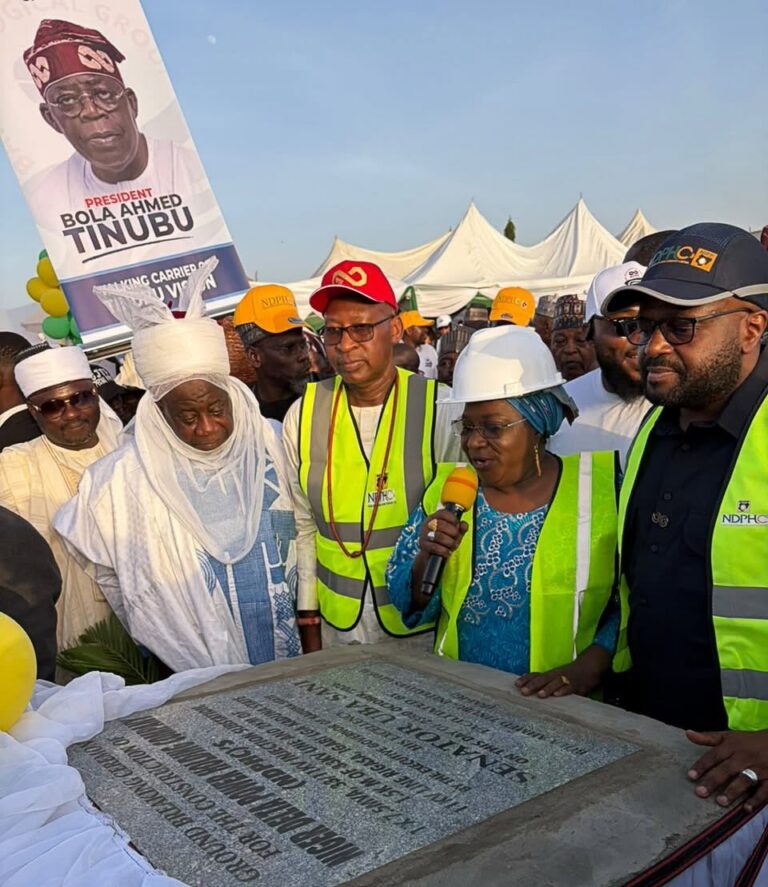
President Bola Tinubu on Monday commissioned the new Court of Appeal, Abuja Division Building Complex at Dakibiyu, and delivered a direct charge to the bench: “To My Lords Justices, as you move into this complex, Nigeria asks one thing of you: let justice be swift. Let it be fair. Let it be blind to status, tribe, or purse. Let the common man feel that this Court is truly his last hope.”
Represented by Vice‑President Kashim Shettima, the president framed the facility as proof that under the Renewed Hope Agenda, “the rule of law will have a befitting home.” He said: “This is not just a building. This is a statement. A statement that under the Renewed Hope Agenda, the rule of law will have a befitting home.”
He recounted the Division’s long struggle with inadequate space: “My Lords, for too long, the Abuja Division of this Court operated from a cramped, temporary space. That was unacceptable. A nation that seeks justice must respect the temple of justice. When I visited and saw the condition, I gave a simple instruction: fix it. Today, we have fixed it.”
Tinubu praises Wike as “Mr Project”
Tinubu praised the FCT Minister for delivering the project in record time: “Let me specially commend the Honourable Minister of the FCT, Nyesom Wike. Wike, you are truly ‘Mr. Project’. When I appointed you as the Minister of the FCT, I knew you would not sleep. You took the assignment to deliver this project in May 2024. By July, contractors were on site. You promised 16 months. You delivered in record time. No excuses. No variation. Just results. Nigerians can see the difference. Well done.”
On the complex’s design and impact, Tinubu said: “This complex is world‑class. With two large and eight smaller courtrooms, legal cases will now receive speedy attention. This will go a long way to ensure that there is justice for all, uphold the rule of law, maintain law and order in the Federal Capital Territory, and reduce congestion in our correctional centres. This is how you honour the Judiciary. This is how you strengthen democracy.”
He framed the work as a broader national project: “The Renewed Hope Agenda is not a slogan. It is action. We said we would restore the dignity of our institutions. We are doing it for the Judiciary. We are doing it in health, in education, in roads, in power. Brick by brick, we are rebuilding Nigeria.”
The President tied the facility to judicial reforms and funding: “This project aligns with our Renewed Hope Agenda, which strives towards improved governance and the rule of law by carrying out judicial reforms, restructuring the judiciary, and increasing funding to ensure a just, rule‑based society.”
He also highlighted the Minister’s concrete steps: “I am therefore pleased by the concrete efforts made by the Minister of the FCT to domesticate this policy thrust by building more courts, constructing befitting residences for judicial officers, digitizing judicial processes in the Territory, and providing solid support for legal education.”
The president’s charge to the bench
Addressing the justices directly, Tinubu said: “My Lords, you serve this nation under immense pressure. The Abuja Division carries a heavy docket. From election petitions to constitutional matters, the eyes of Nigeria are on you. You deserve an environment that matches the weight of your responsibility. This complex is not a favour. It is your right. And we will do more.”
He thanked the contractor Messrs Visible Construction Limited, and linked the project to local capacity: “To Messrs Visible Construction Limited, you have shown what indigenous firms can do. The completion of this building is a testament to our administration’s support for local contractors and for the provision of opportunities for local businesses to thrive and compete in a fair environment. This magnificent edifice shows that local companies have the capacity to deliver high‑quality projects on time. This is the Nigeria we are building.”
Tinubu also thanked FCT residents for their patience: “I also congratulate the good people of the FCT who now have better access to justice, law and order. Thank you for your patience. I know construction in a sensitive area like this comes with its share of inconvenience. But you endured. Today, you have a Court of Appeal complex you can be proud of.”
.
FCT Minister Nyesom Wike: “You can’t talk about independence of the judiciary when the judiciary does not have a fitting environment”
He recounted how the intervention began with the President of the Court of Appeal flagging the Division’s dire conditions. “Your Excellency, let me say that the President and Commander‑in‑Chief just like what the President of the Court of Appeal said in one of the big events which I was fortunate to attend, she did mention the condition where the Court of Appeal Division was facing at the airport. I did promise, like she said, to inform the President, and I did inform the President that you need to intervene,” Wike said.
He quoted Mr. Tinubu’s immediate response: “Mr. President said, ‘Don’t you think also that you have had a lot of complaints about where our justices and judges are residing? I don’t want to stay in areas where you don’t even know where the criminals are. And that we need therefore to start providing befitting accommodation. So you are not only going to intervene in the structure of providing a befitting complex for the Court of Appeal Division, you should also try to see that we start laying foundation, building residences for them.’”
Wike confirmed the scope was expanded beyond the FCT High Court: “I said, ‘Sir, yes that is possible, but I have to do it only for the FCT, since we are only dealing with the FCT Administration. But what about the Federal High Court, the Industrial Court and the Court of Appeal? The beneficiaries of the services they render are the citizens of Abuja and those who carry on their justice in Abuja. So you will not restrict yourself to only providing for the FCT High Court. You must also provide for the Federal High Court, the Industrial Court and the Court of Appeal.’ And we agreed to do that.”
On completion, Wike said: “Again, he said, ‘I hope you know that it will not look like other projects that will be abandoned for other administrations to inherit. Anything we start, we must make sure it is completed.’”
He outlined upcoming handovers: “Today we are here to commission this edifice. I want to also say that we are not only commissioning this edifice, just like I said, we are also completing the projects we started in terms of housing for the justices and judges of the various courts. Tomorrow, we are going to hand over the one for the Court of Appeal. Or when I say, we are going to hand over the one for the Federal High Court. And then on July 7th, we are going to hand over the one for the FCT High Court. Tomorrow, we are going to flag off for the Industrial Court and also for the members of the Code of Conduct Tribunal. The President has guaranteed that they must also benefit from this intervention.”
Linking the campaign to the president’s anniversary, Wike said: “In 2024, when we celebrated the one‑year anniversary of Mr. President, we took out nine days for the commission of projects for Mr. President’s one‑year anniversary – nine days. In 2025, we took out 19 days. For the third year, we are taking out 31 days for the commission of projects.”
On judicial independence, Wike was unequivocal: “The independence of the judiciary – and it is the belief of Mr. President – you can’t talk about independence of the judiciary when the judiciary does not have a fitting environment where they can carry out their functions. How do you talk about independence when somebody cannot comfortably carry out his or her duties, when somebody does not have a fitting room to stay and do their work? And so, if you want to talk about independence of the judiciary, you must, apart from the monuments that are attached to them, provide a fitting environment where they are going to work and give them a comfortable area where they will stay and do their work in terms of their houses.”
He framed the moment historically: “As the Attorney General said, it’s a gift for the 50th year of the Court of Appeal. And I would also say, some people are lucky in life. You are not the first president of the Court of Appeal. You are not the first. But one would ask, why is it their time that Abuja has now come to have a complex of this sort? Why is it their time that now they’re providing houses for their colleagues, their brother judges, and also providing for the courts? Everybody has his own period, and President Bola Ahmed Tinubu has decided that it is his own time all this will come, and we are happy.”
Other News
On development and funding, Wike urged citizens to pay levies: “Development means funding. You cannot have development when you have no fund. So, all of us are happy. We are clapping hands, celebrating this occasion. But have you asked yourself a question? Have you played your own role as a sector of good citizens? How many of us here have paid our ground rents? How many of us here have paid our tenement rates? So, it’s not enough to clap… Ask, where did we get the money from? … If you know you have not paid your ground rents, consider that the land will no longer belong to you. We’ll give it to those who can pay us ground rents for us to build public infrastructure.”
The Attorney‑General of the Federation and Minister of Justice, Lateef Fagbemi, called the day “historic for the Nigerian judiciary and for our democracy.” He said: “That is the 50th anniversary birthday gift, and that is the commissioning of the Court of Appeal Abuja Division Complex. It’s not merely an unveiling of the significant judicial edifice. It is a powerful statement of this administration’s unwavering commitment to the rule of law, judicial independence, and the strengthening of institutions that safeguard our constitutional democracy.”
Fagbemi highlighted the breadth of support: “No administration in Nigeria’s recent history has provided the level of support to the judiciary that we have witnessed under the leadership of President Bola Ahmad Tinubu GCFR. This support has been comprehensive, deliberate, and transformational, covering judicial welfare, infrastructure, institutional capacity, and judicial manpower.”
On remuneration, he said: “One of the most significant achievements of this administration was the historic review of the remuneration and welfare package of judicial officers, resulting in an unprecedented increase of well over 300 percent. This was the first major upward review in decades and represented a bold response to long‑standing concerns regarding the welfare and dignity of judicial officers.”
He reaffirmed Tinubu’s commitment: “By taking this step, Mr. President reaffirmed the importance of judiciary as a core equal arm of government and demonstrated his commitment to ensuring that judicial officers are adequately supported in discharging their constitutional responsibilities.”
On infrastructure, Fagbemi said: “Beyond welfare, this administration … has embarked upon one of the most ambitious judicial infrastructure development programmes in the history of our nation. The Court of Appeal Abuja Division Complex, which Mr. President will commission today, is a shining example of that commitment.”
He clarified the intervention’s nature: “These projects represent special interventions by the federal government distinct from judicially statutory budgetary allocations, which have themselves significant increases under the administration of President Bola Ahmad Tinubu GCFR. Their delivery, therefore, goes beyond the fulfilment of routine funding obligations and demonstrates a deliberate and far‑reaching commitment to strengthening the judiciary through sustained investment in critical infrastructure, thereby enhancing its independence and effectiveness.”
On institutional capacity, Fagbemi noted: “The administration’s support has also extended to strengthen the institutional capacity of the courts. Through the appointment and confirmation of qualified judicial officers, President Bola Ahmad Tinubu government ensured that Nigeria achieved a full complement of the Justice of the Supreme Court as constitutionally envisaged. The critical intervention has enhanced the apex court’s capacity, improved its ability to manage its caseload, and significantly reduced delays in adjudicating matters of national importance.”
Fagbemi also linked the achievements to Tinubu’s record: “What makes these achievements particularly noteworthy is that they are rooted in President Bola Ahmad Tinubu enduring democratic credentials and long‑standing commitment to institutional development. Long before assuming office as president, he had established a reputation as a leader who understood the importance of strong institutions. As governor of Lagos State, he championed priority reforms within the justice sector, invested in judicial infrastructure, supported judicial welfare, and laid the foundation for many of the innovations that transformed Lagos into a model.”
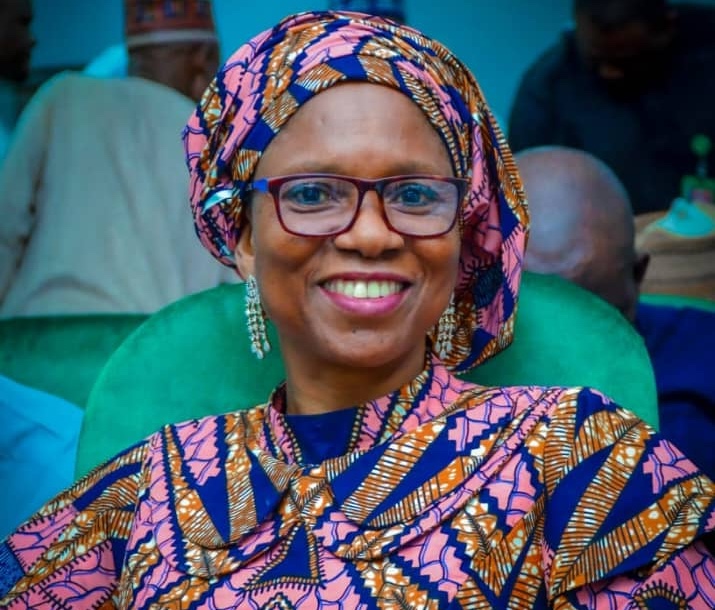
Speaking in the same vein, FCT Minister of State Mariya Mahmoud described the inauguration as “a significant milestone in strengthening Nigeria’s democratic institutions and enhancing access to justice.”
She said: “The edifice represents more than a physical structure, noting that it symbolizes the nation’s unwavering commitment to the rule of law, fairness, and judicial excellence.”
She expressed optimism: “The Minister expressed optimism that the new judicial complex would remain a sanctuary where fairness triumphs over favour, truth prevails over falsehood, and justice is dispensed without delay, reinforcing public confidence in the nation’s judicial system.”
President of the Court of Appeal, Justice Monica Domgbam‑Mercy, thanked fellow chief judges for lending their courtrooms during the Division’s cramped period: “I express deep appreciation to the Honorable Chief Judge of the Federal High Court, the President of the National Industrial Court, the Chief Judge of the FCT High Court, and the President of the Customary Court of the FCT for their continuous support. Sometimes they suspended their own sittings to accommodate us. From today, they are relieved of that burden. We thank God.”
She noted the commissioning’s historical timing: “This comes as we celebrate the Court’s 50th anniversary. For 50 years, we have upheld justice and the rule of law. This landmark reminds us that the future requires greater vision. The judiciary must keep pace with the FCT’s expansion. While other arms of government have received major infrastructure investments, the judiciary still needs intentional strengthening.”
On priorities for the next 50 years, she said: “We must invest in modern court buildings, digital systems, and judicial officers’ welfare. The Attorney General is committed to digitalizing our courts, and the Chief Registrar is training staff in anticipation of this.”
She framed the upgrades as practical: “These are not symbolic. They are foundations of a justice system aiming for excellence. Strengthening them today secures a stronger court that attracts professionals, builds public trust, and serves Nigeria with fairness, courage and integrity for generations.”
Justice Domgbam‑Mercy detailed the capacity boost: “With 10 modern courtrooms, we can sit in 20 panels a day—10 in the morning and 10 in the afternoon for urgent matters—unlike the previous two courts. This is a great jump.”
On technology, she said: “The complex supports digital systems: electronic filing, digital record management, and hybrid hearings. This will reduce paper dependence and long‑standing delays.”
She concluded the complex is a “timely and important solution” that will help the Court fulfill President Tinubu’s mandate: swift, fair justice blind to status, tribe or purse, so the common man sees it as truly his last hope.