Follow Us on Google

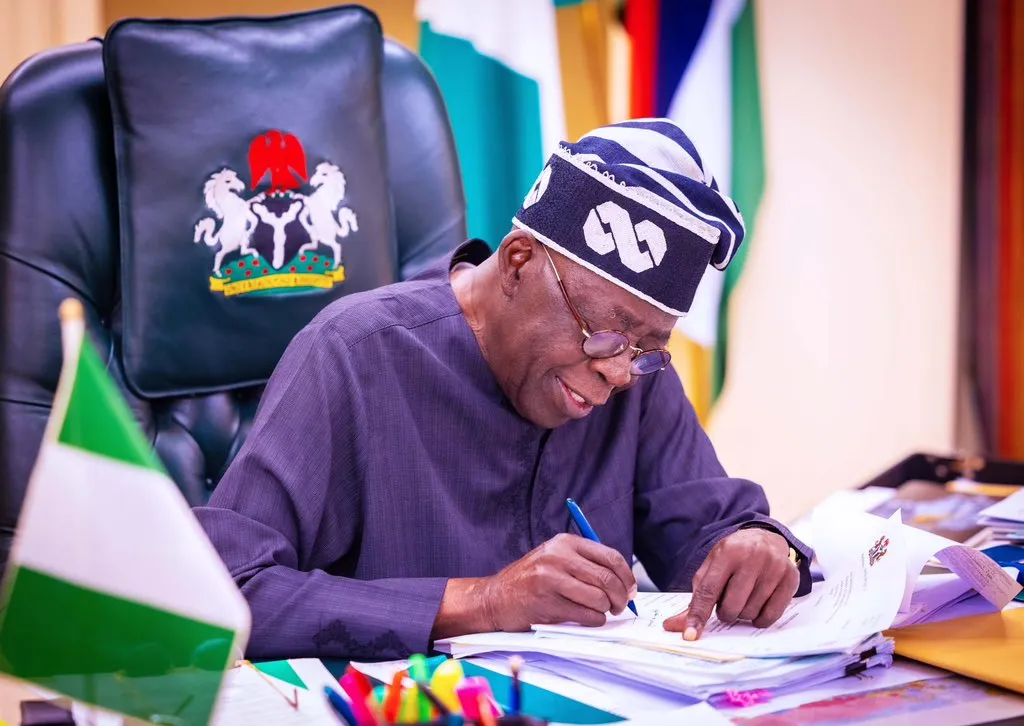
President Bola Tinubu has asked the House of Representatives to approve the implementation of the Federal Government’s ₦10.79tn external borrowing plan contained in the 2026 Appropriation Act.
The request, which was conveyed in a letter read by Speaker Tajudeen Abbas during Wednesday’s plenary, covers $7.71bn at the budget exchange rate of ₦1,400 to the dollar.
Tinubu said the proposed borrowing would help finance part of the Federal Government’s budget deficit and comply with Sections 21(1) and 27(1) of the Debt Management Office (DMO) Establishment Act, 2003.
He explained that the external borrowing was already captured in the 2026 Appropriation Act as part of the ₦29.22tn approved new borrowing for the year. The amount comprises ₦18.28tn in domestic borrowing and ₦10.79tn in external loans.
In the letter, the President said: “I write to request for the permission of the House of Representatives to implement the new external borrowing plan contained in the 2026 Appropriation Act in the sum of ₦10,790,366,835,481, which is equivalent to $7,707,404,882.49 at the budget exchange rate of $1 to ₦1,400, for the part financing of the budget deficit.”
Tinubu said the government would explore different financing options simultaneously, taking into account borrowing costs and the time required to access the funds. However, he indicated that priority would be given to Eurobond issuance because of its relatively faster completion.
“All options will be pursued simultaneously considering the cost of benefit to the country as well as the time required to access the funds. In view of this, emphasis will be on the issuance of Eurobonds which is typically faster to conclude,” he said.
He added that the final terms of the Eurobond issuance would depend on prevailing market conditions when the funds were raised.
The Ministry of Finance and the DMO, he assured, would work to secure favourable terms in the international market.
According to the President, the proposed external loans would finance projects and programmes in the 2026 budget, particularly in defence and security, transportation, agriculture, power, education and health.
He also said the funds would help strengthen Nigeria’s external reserves and support the naira, adding that the proceeds would be received by the Central Bank of Nigeria on behalf of the Federal Government.
Tinubu asked the House to authorise the government to raise the funds through multilateral and bilateral institutions, conventional and commercial lending windows, the International Monetary Fund, bridge financing facilities and Eurobond issuance.
He also sought approval for the Minister of Finance and Coordinating Minister of the Economy, working with the DMO, to take the necessary steps to implement the borrowing arrangement.
However, Abbas clarified that the President was not seeking approval for a fresh borrowing plan, explaining that the ₦10.79tn external component had already been approved by the National Assembly and provided for in the 2026 Appropriation Act.
The Speaker said the request was intended to fulfil the statutory requirement for parliamentary approval of the terms and conditions of external loans before the government could proceed with implementation.
He cited Section 21(1) of the DMO Act, which requires the terms and conditions of external borrowing to be presented to the National Assembly for approval by resolution, as well as Section 27(1), which provides for legislative approval of standard terms and conditions for negotiating and accepting external loans.
Abbas also distinguished the request from a separate proposal by the President for additional borrowing, insisting that both matters would be considered independently.
“For the avoidance of doubt, this request is distinct from the president’s more borrowing request. It neither supersede nor withdraw that request which remain subject to consideration on its own merit,” he said.
The clarification comes amid growing scrutiny of the Federal Government’s borrowing requirements and their implications for debt sustainability and public finances.
Nigeria’s 2026 budget provides for a deficit of ₦31.55tn, with ₦29.22tn in new borrowing identified as a major source of financing. The latest request seeks the legislative authorisation required to access the external component of that borrowing.