Follow Us on Google
From Juliana Taiwo-Obalonye, Abuja
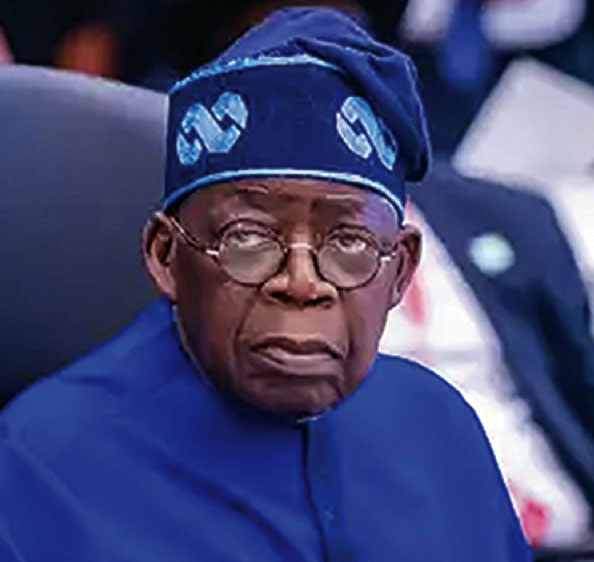
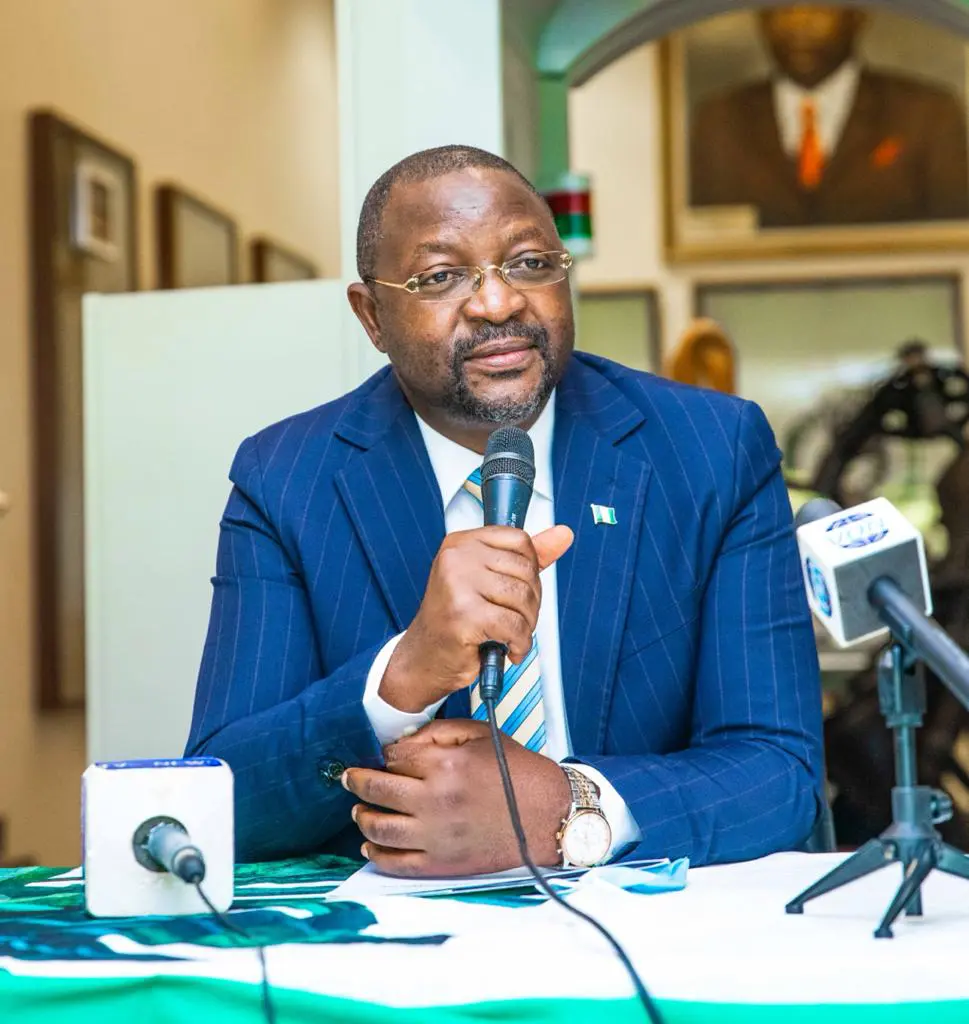
The Special Adviser to President Bola Tinubu on Media and Public Communications, Sunday Dare, has described the president as three things at once: a seasoned politician, a relentless tinkerer with systems, and a “Houdini of political and economic survival” who keeps emerging from scenarios designed to drown him.
In his new collection of essays, One Thousand and Ninety-Five Days, Dare frames Tinubu’s first 1,095 days in office not just as a reform era but as a masterclass in survival against political and economic odds.
“President Bola Ahmed Tinubu — the Reformer-in-Chief — is who I call the architect of democratic survival and political reinvention and a man I have since come to regard as the Houdini of political and economic survival, perpetually emerging from orchestrated scenarios that were designed to politically drown, constrain, and ultimately asphyxiate him,” Dare wrote.
The presidential aide said his view of Tinubu comes from 28 years of close association — long before Aso Rock, during opposition years, and now at the peak of federal power.
“I have known Asiwaju for twenty-eight years, long before and in between power: in the trenches of opposition politics, through the difficult years of political reorganisation and coalition building after office, and still with him now again amid the turbulence of economic reform and national rebirth,” he said.
He described Tinubu as a grassroots mobiliser with an unmatched instinct for political organisation.
“Long before Aso Rock, before the presidential paraphernalia and the immense machinery of federal power, I worked closely beside him during years when the klieg lights were off, when there were no state instruments to command, no ceremonial grandeur to rely upon, and no guarantees that the opposition journey would culminate in national victory,” Dare wrote.
“I had the rare privilege of watching him build political structures from ashes. I watched him organise men and ideas with unusual patience and strategic clarity. I watched him pacify the aggrieved, manage divergent ambitions, absorb betrayals, nurture talent, and steadily construct one of the most formidable political coalitions in Nigeria’s democratic history,” he said.
Dare called Tinubu “a political clearinghouse for aspiration — a patron of the gifted, the daring, and the upwardly mobile”.
“He possessed an uncanny ability to identify talent long before public recognition arrived, nurturing competence, rewarding loyalty, encouraging intellectual independence, and assembling networks of capable people across regions, professions, and generations,” he noted.
Beyond the politician, Dare sees Tinubu as a man obsessed with how systems work, why they fail, and how they can be redesigned.
“I observed a man deeply fascinated by process and profoundly impressed by systems — working systems: how they function, why they fail, and how they can be recalibrated to produce different outcomes,” he wrote.
This, Dare said, is why he calls Tinubu the “Tinkerer-in-Chief”.
“This is why I describe him as the Tinkerer-in-Chief. Not because governance is experimental in a careless sense, but because he governs with a restless instinct toward recalibration, adjustment, institutional redesign, and strategic refinement. He is rarely static in thought. He constantly reassesses systems. He believes structures can be rebuilt. He understands that governance is not a frozen doctrine but an evolving process requiring intervention, adaptation, and persistence,” he said.
Tinubu’s approach to governance, Dare argued, is to alter course mid-turbulence rather than drift with the tide.
“The easiest thing in governance is to drift with the tide. The hardest is to alter course in the middle of gathering turbulence. It was within this context that President Bola Ahmed Tinubu assumed office — with the burden of navigating the Nigerian ship away from dangerous currents that threatened its stability, sustainability, and long-term direction,” he said.
The Houdini image, Dare said, captures Tinubu’s repeated ability to survive political and economic scenarios that should have ended his tenure.
“Many have experienced Bola Ahmed Tinubu at the peak of political power — in Alausa or Aso Rock. I have known Asiwaju for twenty-eight years, long before and in between power… and still with him now again amid the turbulence of economic reform and national rebirth.”
He pointed to Tinubu’s survival after the 2003 general elections, when the Alliance for Democracy (AD) lost five South-West governorship seats, leaving only Lagos standing.
Other News
“I saw it during the difficult years following the 2003 general elections, when the Alliance for Democracy (AD) lost five South-West governorship seats to the then ruling party, leaving only Lagos standing. The enduring lesson from Asiwaju in the course of that political tsunami was simple: what ultimately matters is not the size of the dog in the fight, what matters is the size of the fight in the dog,” Dare recalled.
The presidential aide recalled that he saw the same tenacity again when many doubted the possibility of dislodging the PDP’s entrenched dominance.
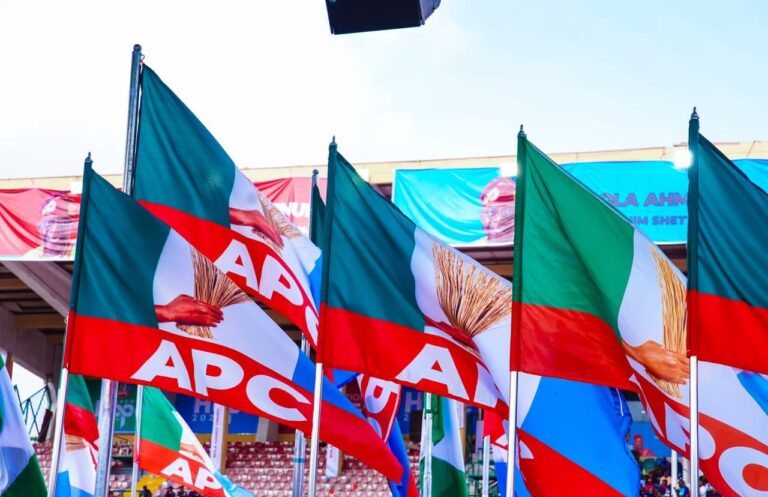
“I saw such tenacity and dexterity again in moments of uncertainty, when many doubted the possibility of dislodging the entrenched political dominance of the Peoples Democratic Party (PDP). I witnessed the painstaking effort required to assemble and sustain a coalition of divergent personalities, competing regional interests, ideological tendencies, and powerful political ambitions under what would eventually become the All Progressives Congress (APC),” he wrote.
Dare linked Tinubu’s survival instinct to his willingness to confront economic realities that successive governments postponed.
“The tragedy of many nations is not ignorance of their problems. It is the repeated postponement of difficult decisions. For years, successive administrations recognised the unsustainability of many aspects of Nigeria’s economic architecture. Fuel subsidies had become fiscally dangerous. Multiple exchange rates incentivised arbitrage over productivity,” he said.
“Revenue leakages weakened state capacity. Public expenditure burdens expanded while productive growth struggled to keep pace. The political class understood many of these realities, yet the difficult decisions to confront these head-on were repeatedly deferred because reform is not politically expedient and often carries immediate electoral reprisals. But Tinubu proved unusually willing to confront those deferred realities,” Dare added.
“Eventually, every nation must confront the consequences of delayed decisions… President Tinubu chose the latter,” Dare declared, referring to the choice to embrace difficult reforms for long-term stabilisation.
Dare emphasised that leadership at Tinubu’s level is “profoundly lonely”, with every policy creating competing reactions.
“Public office often appears glamorous from a distance, but difficult governance can be profoundly lonely. Every policy decision creates competing reactions. Every adjustment affects millions differently. Every reform generates resistance from those invested in previous arrangements. Leadership at that level demands unusual stamina and tenacity,” he said.
Dare added that he saw traces of that stamina long before the presidency.
“I saw traces of that stamina long before this presidency. I saw it during the difficult years following the 2003 general elections… I saw such tenacity and dexterity again in moments of uncertainty,” he said.
Dare does not dismiss criticism of the administration.
“No administration is beyond criticism. No reform process is beyond refinement. Governance remains an imperfect human enterprise,” he added.
But he argued that Nigerians must also accept responsibility for supporting inefficient structures in the past.
“Above all, I learned that national transformation requires not only leadership but followership. Citizens too bear responsibilities in democratic development. We cannot desire modern economies while defending inefficient structures. We cannot seek prosperity while resisting productivity. We cannot demand institutional strength while normalising leakages and distortions. Reform ultimately requires collective national maturity,” he wrote.
Dare concluded that Tinubu’s first 1,095 days may be remembered not as an era of easy popularity but as the beginning of a difficult correction.
“As I reflect on these one thousand and ninety-five days, I remain convinced that history may ultimately interpret this period not as an era of easy popularity but as the beginning of difficult correction — a period when Nigeria finally began confronting realities postponed for decades,” he said.
He framed Tinubu’s enduring legacy as a leader who chose to bear the burden of leading a nation “long trapped between immense potential and persistent structural contradiction”.
“For beneath the turbulence of transition and beneath the noise of politics stands a leader attempting one of the most difficult assignments in modern Nigerian history: to re-engineer the trajectory of a nation long trapped between immense potential and persistent structural contradiction,” Dare wrote.
“History will ultimately render its own verdict. But from where I have stood — from the years before power till date — I remain persuaded that Nigeria has begun a consequential journey of correction and recovery,” he said.