Follow Us on Google

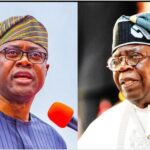
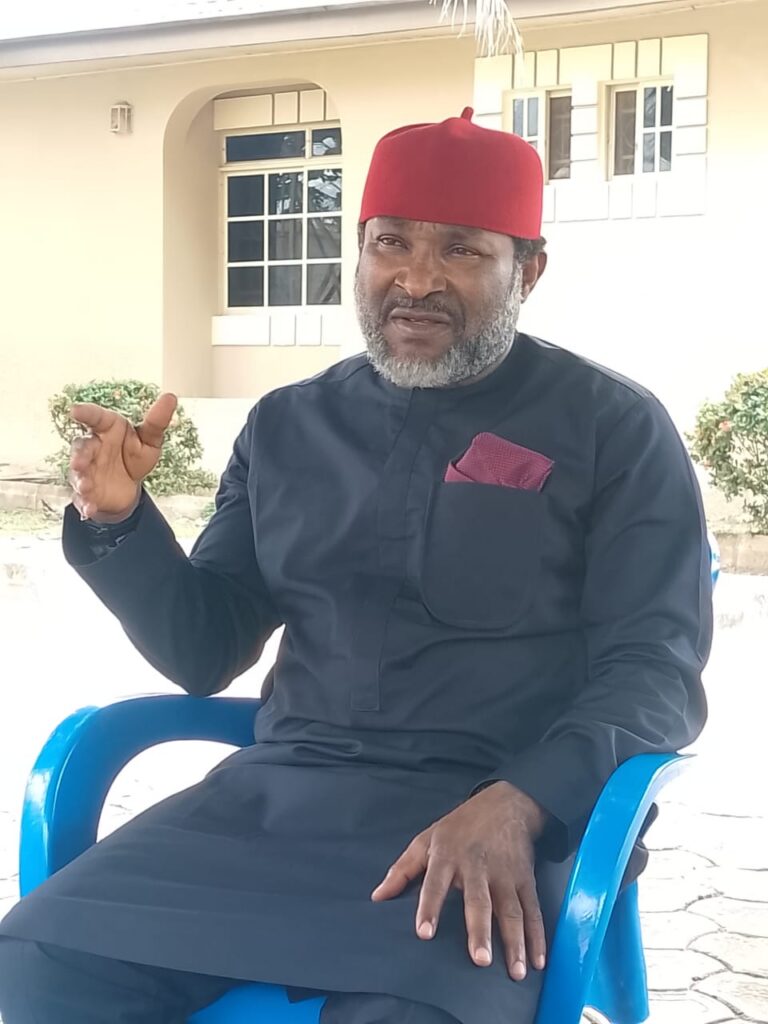
Governor of Sokoto State, and Chairman of the Peoples Democratic Party(PDP) Governors Forum, Aminu Tambuwal has said that Nigerians would resist any attempt by the All Progressives Congress(APC) to rig the 2023 general elections. He urged President Muhammadu Buhari to sign the amended Electoral bill and not test the will of the people. In this interview with WILLY EYA, he spoke on various issues, saying that at the moment, he is the right person to lead Nigeria out of the woods she has found herself.
The first question is why do you want to be the president of Nigeria?
It is not about why I want to be the president of Nigeria. First let me tell you; as far back as 2012, 2013, seeing how I have been able to preside over the National Assembly of the Federal Republic of Nigeria, very many well meaning Nigerians began to approach me on the idea of running for the president of Nigeria. So, it is not just about me wanting to be. It is also about people identifying some of these qualities that they think are needed in the president of Nigeria in my person. So, I believe that first and foremost, I have the requisite competence and understanding of the dynamics and complexities of Nigeria for me to be able to preside over that office of the president of the Federal Republic of Nigeria. As I have said, I have traversed everywhere even before I became the Speaker of the House of Representatives.
As a lawyer that had been practising and very active in the politics of Nigeria and subsequently a member and Speaker of the House of Representatives, I have traversed the length and breadth of this country. I have established contacts; I have established friendships; I know and appreciate the diversity of the people of this country and I quite understand the differences in quote amongst the people of Nigeria. And the Nigeria of today, you need someone that really understands the country in terms of the diversity, the people, their mores, cultures and traditions. It must be someone that the people of this country can say look, this person has done something which we believe while doing it demonstrated capacity and competence in providing that leadership for the country. His pedigree must convince the people to say look, once this person is there, we can say that we are comfortable that every section of this country will be looked after. There would not be ethnic chauvinism; there would be inclusiveness, good governance and you bring some freshness into the system. So, I believe that these are some of the qualities that quite a number of Nigerians are seeing in me and talking to me about running for the office of the president.
I am convinced that if given the opportunity, we can together with the right team run a government of the Federal Republic of Nigeria that Nigerians should be comfortable with; that Nigerians would appreciate as their own government and not one that is tilted towards a particular section or religion. It would be a government that would be there for all sections of this country and that understands also the issues and challenges of the nation. Today, we are very divided; that is the truth. This country needs a unifier; someone who can bring all the tendencies together and bring back our unity; it is key; not only a unifier but someone who knows the issues and understands the country itself. He must understand the issues of insecurity, challenges in terms of healthcare, education, youth employment and women issues; someone who has not only the training in terms of academic laurels but also the practical experience of governance. You do not get it off the shelf.
You need that experience; you cannot take away the need for experience in running governments especially in a country like Nigeria where the institutions are very weak if they are there at all and in some cases, they are not even there. So, you need someone with that basic experience of governance and not only governance but democratic governance to be on the driver’s seat. So, these are some of the reasons why I believe that a number of people are saying that being a lawyer by training, and being someone who was in the legislature for 12 uninterrupted years; a deputy chairman of a committee, minority leader, deputy whip of the House of Representatives and then Speaker of the House of Representatives and now governor of Sokoto State in the executive arm for almost seven years and upwards to eight years by the grace of God, that experience is there. And of course, when you are talking about this age bracket and issues, when you look around, of all those that are being mentioned, I am probably the youngest in terms of age. I believe that with all of these put together, we can make things happen in this country.
The insecurity in the country has become a viable business for some including highly placed people; we now have crises entrepreneurs in Nigeria. Do you think it is possible to overcome the ugly trend?
Sure; first as the president and Commander in-Chief, you must select the right people that can do the job as service chiefs. And identifying them should not be difficult because reasonably, we know ourselves; who can do what and who cannot do what in this country even in those services. So, if as President and Commander in-Chief, you recruit the right leadership. That should be the beginning. With that, you can now work out the framework for implementation. How to go about it, new ideas to be brought in; I do not see any reason why in Nigeria, we should still remain where we are in terms of the number of personnel that we have in the various security forces. Meanwhile, there are so many hundreds of thousands of able bodied young men that are willing and patriotic enough to be enrolled in these services and yet the Federal Government is not looking at that. It is one area that one must pay attention to; dutiful, diligent recruitment process of manpower. This is because now, it is a well known fact that we do not have manpower in the security services of Nigeria. You need to have manpower. Those that are there, that can be retrained especially on the new trends of criminality, you train them. And give them tasks. You must deploy technology; I have said that several times.
The incoming Federal Government must look at a way of deploying technology in addressing these challenges. I made the comment recently and someone was asking me why don’t I bring it to Sokoto. But as governor of Sokoto State, I have my limitations. I cannot even bring in some of these equipment without clearance from the Federal Government. So, the Federal Government should be able now to get the right equipment for the armed forces and various security personnel and also take care of their welfare. These are some of the steps that any government that is serious must take and the Commander in-Chief must be hands on. And whether we like it or not, we must devolve some of these security powers to the states. Whether we like the idea or not, state police is one of the options with some measure of refinement, control and checks. I know that so many people are already concerned about governors taking charge of the state police but there must be a way that we can now oversight even what the governors are doing with the state police.
So, it is not the right thing that people should just discard the idea of state police because they feel that someone somewhere would take advantage of it. We must come up with a mechanism that would suit our own local situation and provide state police and devolve security to that tier of government. State governments are in charge of people. We have countries where even universities have campus police. So, it is about how we really come up with the idea and how it is being implemented. So, I believe that all of these put together would engender a better and safer Nigeria for all of us.
With the world now as a global village, as a governor whose state is at the border with another African country, I want to know if you as president would continue with making Africa the centre point of your foreign policy just as successive governments in Nigeria have done?
We have to be as dynamic as the world. We cannot remain static; we cannot just say for saying sake that Africa is the centre point of our foreign policy without any result to show for it. Yes, we shall pay attention to Africa but I believe that as Nigeria and where we are today, our centre of focus should be on those countries and those issues that can help Nigeria address her current challenges. What is it that we want to achieve in our foreign policy drive? Is it bringing in people that could help turn around for example the power sector that I believe that if you do that, 50 per cent of the problems we are facing in Nigeria would have been addressed. Which countries are ready to help Nigeria resolve its power problems? I will do business with those countries. I would rather have foreign policy ideas and ideals of my administration centred on certain areas of our development and cultivate friendship with those countries that can help us resolve those issues. I have given you the example of power. On employment, how do we bring in industrialisation? Which are those countries that can help Nigeria within a record time realise its industrial opportunity and potential? We shall open direct communication with those countries. So, for me, while Africa remains a critical centre point, I believe that we should be dynamic the way the world is going.
The world is a global village. What they do any moment for example in Ukraine will have a direct consequence on what is happening in Nigeria. At the very least, it will affect the oil price. So, we must be dynamic. We cannot remain and continue to say that Africa is the centre point of our foreign policy and then our problems remain with us. We would rather come up with policies that would now aim at supporting us as a country to solve our problems. We have too many problems in this country. I would not do like former United States President, Donald Trump who said America first. What I am saying is that whatever foreign policy that we are coming up with or implementing must bring in results and have direct bearing on addressing our challenges back home.
One of the biggest issues that people have been talking over the years is the structure of the country. What would you do if you become the president of Nigeria? Will you restructure the country?
First, there has always been this misunderstanding of the concept or people seeing it from their own perspective of restructuring. But I believe that from whatever standpoint one looks at it, there is a need for us to look at Nigeria and restructure. I was just talking about the police and the need to devolve power to the states. It is part of restructuring. Now, while as the Speaker of the House of Representatives, when the 7th Assembly was carrying out the process of constitutional amendment, we came up with one idea of conducting public hearing in 360 constituencies of this country. It was never done. And no member, including myself as Speaker, was allowed to drive the process in his constituency. We brought in civil society groups including labour, Nigerian Bar Association, medical practitioners association and all of those civil society associations; they were the ones that formed the committees that drove the process of the public hearing in the 360 constituencies. The member would just be there to collate the outcome of the public hearing. So, one of the issues that came back to the House of Representatives which it then passed but which unfortunately the president then did not sign into law, was in terms of fiscal issues. It was to make the Accountant General of the Federation separated from the office of the Accountant General of the Federal Government. That is the restructuring of the office of the Accountant General of the federation. This is because as the system is now, the accountant General of the federation is the Accountant General of the federation and the Accountant General of the Federal Government. So, he is not in a position to be fair to other tiers of government –the states and local governments. If you have the Accountant General of the Federation and Accountant General of the Federal Government, the Accountant General of the Federation would now be answerable to both the federation, the state and local governments which will in turn also kind of bring about some kind of transparency in how the revenue and resources of the Federal Government and federation are being distributed. Now, part of what I believe should have been done is also to allow states to nominate commissioners into the Federal Revenue Mobilisation agencies. A situation whereby we have what we have today- a president will stay in Abuja and nominate his cronies is unhealthy. It is against the spirit of federalism but if you allow states, the governor would nominate, the State Assembly would clear the nominee that would now come and represent the state. They would monitor him to know whether he is doing well or not.
That is also restructuring in my own context and by my understanding. If you have nominees to the population commission, being screened by the state House of Assembly and nominated by the governors, and being sent to the population commission for example or the federal character commission, it is also restructuring.
This is because they are there to represent the interest of the state. So, some of these amendments, we attempted them but unfortunately, former President Goodluck Jonathan did not sign them into law. Of recent, I heard that the National Assembly is trying to now separate the office of the Attorney General and Minister of Justice. Of course, by the constitution, for you to be a minister of the Federal Republic of Nigeria, you must be a card carrying member of a political party. Now, you as the Attorney General of the Federation and Minister of Justice, you are already biased because you are a member of a political party; you are partisan. So, we also accepted to separate the office of the Attorney General from that of the Minister of Justice. The Attorney General of the Federation need not be a member of a political party and we are saying that his appointment should even be sanctioned by the agency and he would be screened by the National Assembly. So that if the president nominates him, the agency would now also have an input and then the National Assembly would now screen him.
By so doing, you would have strengthened the office of the Attorney General of the Federation and made it independent. It is also restructuring. I am sure most of the people talking about restructuring are not talking about physical or geographical restructuring of the country. If you are talking about that one, it is going to be extremely difficult because I am sure for example that the people of Ado Ekiti would not want to go back to Akure as their state capital; not to talk of going back to Ibadan. The people in Abakaliki as close as Enugu is would not want to contemplate going back to Enugu as either state capital or regional capital. This is not to talk of people in Asaba; to ask them to come back to Bendel or people in Kebbi and Zamfara and ask them to come back to Sokoto.
So, I believe that we are not talking about physical or geographical restructuring of the country; we must be talking about what are the steps we would take in restructuring governance structure in Nigeria to make the government of Nigeria work for all in terms of fiscal policies or federal appointments and all of that. So, this is what I believe is all about or should be about on how to make things work. It should be so. For example, what stops us from moving up the entirety of power from the Exclusive legislative list to the Concurrent list so that states can generate, transmit and distribute power? These are steps of restructuring of some of these sectors that I believe if well articulated and carried out will give us better results and Nigeria would be better for it. I believe that we must do some form of restructuring in this country; in security, power generation and distribution, infrastructure, railway and a number of sectors.
You were earlier sharing your thoughts on what the Nigerian foreign policy would be but one of the things that would discourage countries from doing business with us is our inconsistent monetary policies. What would you do to ensure that we have a consistent monetary policy?
At the beginning of this interview, I mentioned that as a leader and president, you need the right team to work with. From the very beginning, as the president, you need an economic team with clearly defined economic policies that you pursue. Part of the problem with this administration is that there was no clear economic team or direction and the Central Bank of Nigeria(CBN) was just doing whimsically what they wanted and what they like in the country. So, it is about coming out with a team and monetary policies for the government and the CBN. This is an area I would really like us to take some time and discuss. We must sit down and discuss this issue of the economy and economic policies at an appropriate time.
What would you do in the area of education which is a strategic subsector of the economy especially with regards to all the ASUU strikes hampering tertiary education in the country?
It is for all of us to articulate what to do in the education sector. It is to really sit down and address this issue of ASUU strike. In fairness, the problem of ASUU and the Federal Government did not start from the administration of President Buhari. I recall that some of these agreements and terms were signed when Attahiru Jega was still the president of ASUU. So, we must realistically sit down and address these issues. One, are we really running our university system the way we are supposed to run it? There are fundamental issues that we need to address and we can only do that if we are sincere with ourselves. It is for the President, ASUU itself, university managers, Minister of Education to sit down together, not passing the buck and coming up with solutions. Most or virtually all the structures in the universities are dilapidated.
The learning materials are very inadequate and the academic environment itself is not as conducive as it should be. What do we do? ASUU must not see itself as being part of the problem but must be part of the solution. If the government should be getting more money, thinking out of the box to address the issues, why not? After all, the Federal Government is doing interventions and some of us are not seeing the results; I am talking about interventions like the Trader Moni and N-Power. Why don’t you take a large chunk of these monies and address the issues of ASUU? I was told that the Minister of Humanitarian Affairs said they spent hundreds of billions on some of these social interventions. Why didn’t the Federal Government make serious interventions in addressing the problems of the tertiary institutions, particularly the university system in Nigeria? In particular, those issues in agreement with ASUU and the Federal Government; how much do they need and how much have been spent in quote by the Minister of Humanitarian Affairs and her team in those interventions? If you are addressing the issues, they are also reasonable and they would know that something has been done.
My appeal is that ASUU should find a way of expressing their grievances and not by going on strike all the time especially by sending our children back home and affecting the academic calendar of the universities.